
Lesson 24
24.1. The Dative (चतुर्थी = "fourth case ending")
1. To express the purpose or intention ("in order to") of an action, instead of the infinitive (तुमुन्), one can also use a noun with a kṛt suffix, which denotes an action or state, in the dative (चतुर्थी = "fourth case ending").
Example:
instead of:
रामो गुरुवचनं श्रोतुं गतः ।
one can also say:
रामो गुरुवचनस्य श्रवणाय गतः ।
or:
रामो गुरुवचनश्रवणाय गतः ।
= "Rāma has gone to hear the teacher's speech."
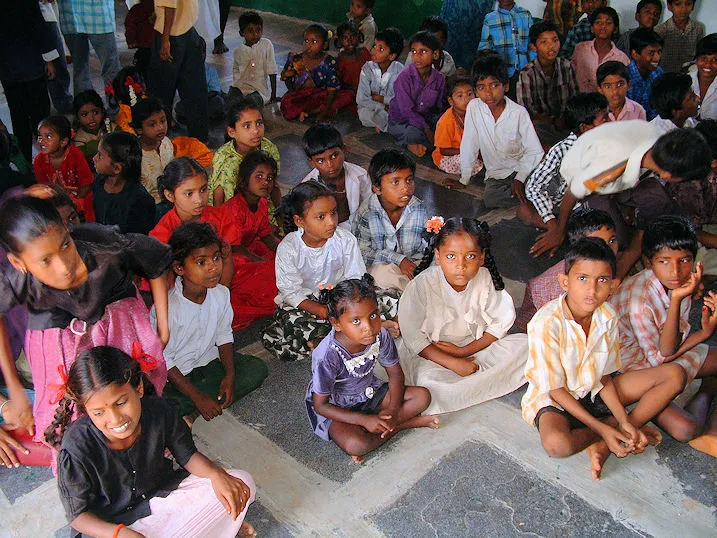
Fig.: बाला गुरुश्रवणाय गताः
(Image source: Details)
2. The dative (चतुर्थी) can also denote the object of an infinitive of purpose to be supplied:
Example:
फलेभ्यो ग्रामं गच्छति = "He goes to the village for the purpose of fruits = He goes to the village to fetch fruits."
In the same way, the dative (चतुर्थी) denotes the purpose of a thing or an action:
Example:
यज्ञायान्नम् = "Food for the purpose of a sacrifice = Food for a sacrifice"
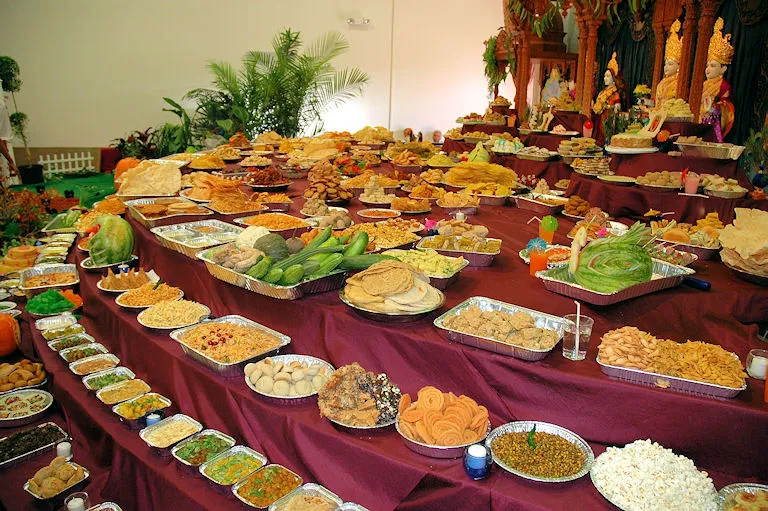
Fig.: यज्ञायान्नम्
'Annakut' [अन्नकूट = गोवर्धन पूजा] is a traditional Hindu event that takes place on the Hindu New Year celebrations at all BAPS [બોચાસનવાસી અક્ષ૨ પુરુષોત્તમ સ્વામિનારાયણ સંસ્થા = Bochasanwasi Akshar Purushottam Swaminarayan Sanstha] mandirs. Hundreds of vegetarian dishes are offered to Bhagwan Swaminarayan [સ્વામિનારાયણ] on this day.
(Image source: Details)
3. The dative (चतुर्थी) also denotes the person or thing for which the object of an action is intended (indirect object; question: to whom?). (But note the verbs with double accusative (द्वितीया)!)
Example:
रामाय फलं ददाति = "He gives Rāma a fruit." (Root दा 3. Present class)
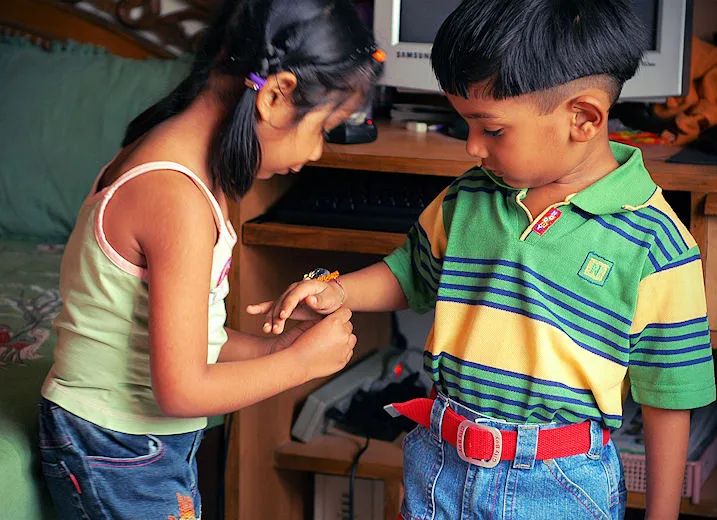
Fig.: बाला बालाय रक्षबन्धनं ददाति
Raksha bandhan is celebrated with fervour and joy all across India. This festival epitomizes the unconditional love between brothers and sisters.
(Image source: Details)
4. The dative occurs with some verbs (and some other words) similarly to German, answering the question "to whom?":
Examples:
क्रुध् : देवो नरेभ्यो क्रुध्यति = "The god is angry with the men."
अलम् Adverb: "enough, sufficient, equal to": अलं योधो योधाय = "a warrior is equal to another warrior"
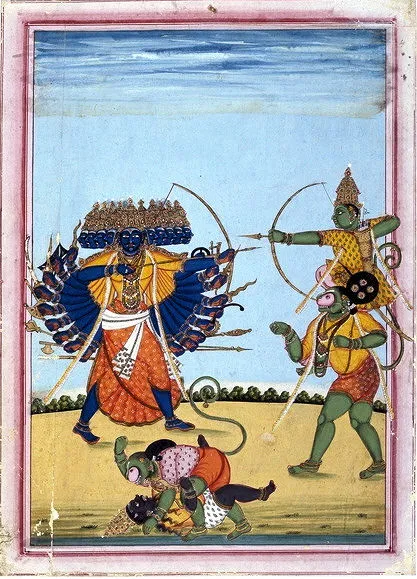
Fig.: अलं योधो योधाय
"Rama (right) seated on the shoulders of Hanuman, battles the demon-king Ravana." ca 1820
(Image source: Details)
Further uses of the dative later.
24.2. Formation of the Dative (चतुर्थी)
The regular endings of the Dative are:
- Singular: -e ; vowel-ending feminine stems: -ai
- Plural: Dative and Ablative पञ्चमी: -bhyas
24.2.1. Consonant Stems
| Dative Singular | Dative Plural | |
|---|---|---|
| यजन्त् | यजते yaja-t-e | यजद्भ्यस् aus yaja-t-bhyas |
| महान्त् | महते | महद्भ्यस् |
| पशुमन्त् | पशुमते | पशुमद्भ्यस् |
| गुणवन्त् | गुणवते | गुणवद्भ्यस् |
24.2.2. Interrogative Pronouns
| Masculine / Neuter | Feminine | |
|---|---|---|
| Dative Singular | कस्मै | कस्यै |
| Dative Plural | केभ्यस् | काभ्यस् |
24.2.3. Demonstrative Pronouns
| तद् | एतद् | इदम् | ||
|---|---|---|---|---|
| Masculine / Neuter | Dat. sg. | तस्मै | एतस्मै | अस्मै |
| Dat. pl. | तेभ्यस् | एतेभ्यस् | एभ्यस् | |
| Feminine | Dat. sg. | तस्यै | एतस्यै | अस्यै |
| Dat. pl. | ताभ्यस् | एताभ्यस् | आभ्यस् |
24.2.4. Vowel Stems
Vowel Stems
- Masculines / Neuters in -a: देव
- Dat. sg. देवाय
- Dat. pl. देवेभ्यस्
- Masculines in -i: कवि
- Dat. sg. कवये
- Dat. pl. कविभ्यस्
- Masculines in -u: पशु
- Dat. sg. पशवे
- Dat. pl. पशुभ्यस्
- Feminines in -ā: देवता
- Dat. sg. देवतायै
- Dat. pl. देवताभ्यस्
- Feminines in -ī: देवी
- Dat. sg. देव्यै
- Dat. pl. देवीभ्यस्
- Feminines in -i: श्रुति
- Dat. sg. श्रुतये or श्रुत्यै (i.e., like कवि or like देवी)
- Dat. pl. श्रुतिभ्यस्
- Feminines in -u: धेनु
- Dat. sg. धेनवे or धेन्वै
- Dat. pl. धेनुभ्यस्
24.3. Sandhi of final -ai and -au
Sandhi of final -ai and -au
- -ai before a vowel-initial word is generally replaced by -ā (rarely by -āy as within a word)
- -au before a vowel is generally replaced by -āv (rarely by -ā)
Example:
तस्मै + अग्नये » तस्मा अग्नये = "to this fire"
24.4. Vocabulary List
अलम् Adverb: enough, sufficient, equal to (someone, something); with Dative: enough for, sufficient for, equal to; with Instrumental: enough with, desist from, e.g. अलं क्रोधेन = "enough with the anger = desist from anger!"
In the same way as अलम् with the Instrumental is used:
कृतम् : कृतं क्रोधेन = "It is done with the anger = desist from anger!"
अलम् + कृ 8U अलंकरोति : to adorn
अलंकार m.: ornament, means of adornment (in poetry)
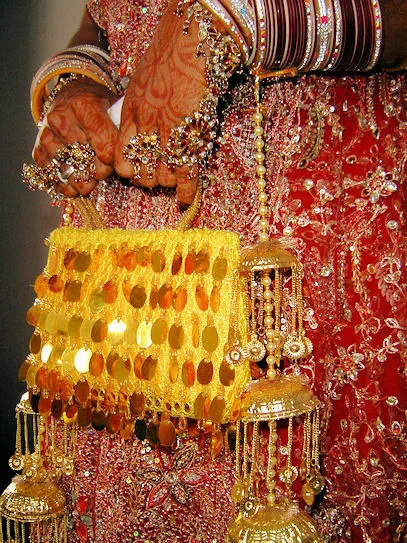
Fig.: अलंकारः
(Image source: Details)
हेतु m.: motive, incitement, cause, reason; हेतुना, हेतोस्, हेतवे with Genitive or as the second member of a compound = "for the sake of ..., because of"
प्रतिमा f.: portrait, image
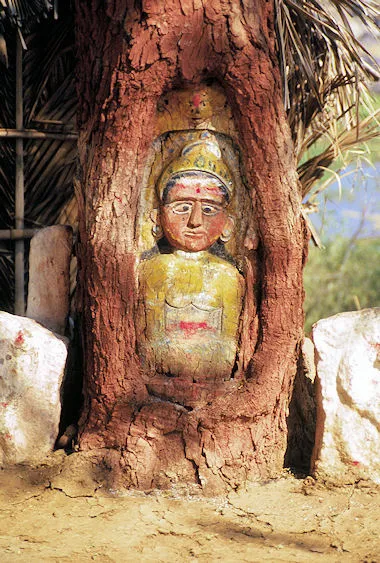
Fig.: देवीप्रतिमा
Hampi = ಹಂಪೆ, Karnataka = ಕರ್ನಾಟಕ
(Image source: Details)
वृत् + प्र 1Ā प्रवर्तते : occur, happen, arise
From वृत्:
वृत्ति f.: behavior, activity, way of life
वृत्त n.: behavior
अभि Pref.: be-, after - towards, to - towards, against, in - into, with regard to, on, over, at
नि Pref.: downwards, down, into, backwards
आ Preposition / Postposition: before Ablative or after Accusative: as far as, up to ; with Ablative: from, from, since
अतस् Indeclinable: from there, then, therefore, hence (Pronominal stem a- "this" + Ablative suffix -tas)
अध्यक्ष m.: supervisor, department head ; eyewitness
इन्द्रिय n.: power, sense organ
ऊह m.: consideration, argumentation
thereof
अपोह m.: negation (अप + ऊह)
ऊहापोह m.: discussion of the pros and cons
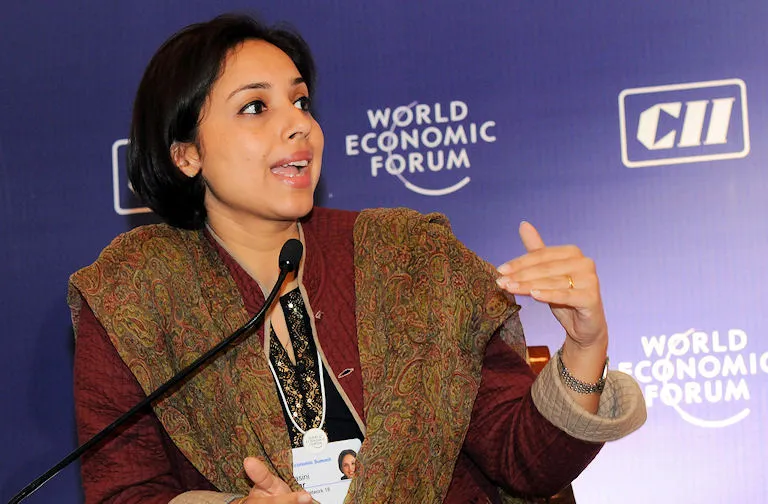
Fig.: ऊहापोहः
"NEW DELHI/INDIA, 16NOV08 - Suhasini Haidar, Deputy Foreign Editor, CNN-IBN Network 18, India, moderates a panel discussion at the World Economic Forum's India Economic Summit 2008 in New Delhi."
(Image source: Details)
औपकारिक 3 f.: -ई : useful
कुप्य n.: forest product, metal (not precious metal)
ख्या 2P ख्याति PPP ख्यात : see, become visible ; name, explain, communicate
ख्या + आ 2P आख्यात : tell
thereof:
आख्यान n.: narrative
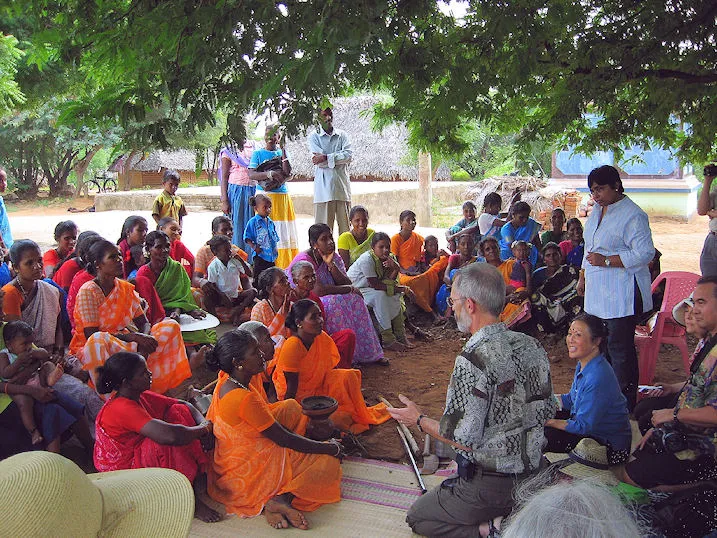
Fig.: आख्यानम्
"San Francisco storyteller Jeff Byers shares a story with the residents of Chenneri, an Irula village. Storyteller Jeeva Raghunath translates into Tamil for the villagers."
(Image source: Details)
ख्या + सम् 2P संख्याति : count up, calculate
thereof:
संख्या f.: counting, enumeration ; सांख्य n.: one of the six philosophical systems (short: Basham, Wonder p. 326f.)
ग्रहण n.: grasping
चौल n.: ceremony (संस्कार) of hair cutting (at the age of 3 years)
तत्त्व n.: true nature, truth, reality (तद् + त्व = this-ness)
स्वस्ति f.: happiness, salvation (nominal formation from सु अस्ति = "it is good")
नमस् n.: bowing, reverence, greeting (declension later). Greeting formula: नमो नमः
thereof:
कृ + नमस् 8 नमस्करोमि : bow, revere, greet
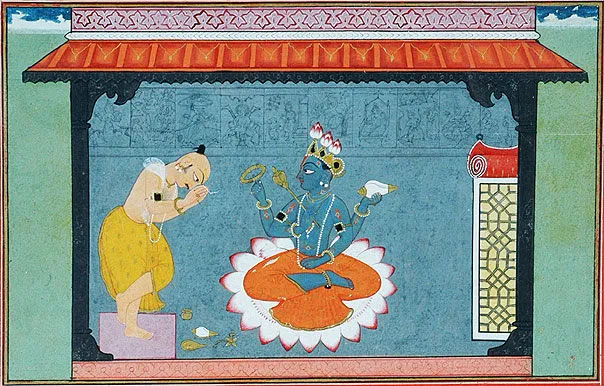
Fig.: जयदेवकविर्विष्णुं नमस्करोति
Manuscript of the गीतगोविन्द, 1730 AD
(Image source: Details)
स्वागत n.: welcome (from su-ā-gata)
तृण n.: blade of grass
पुनर् Adverb: again, back, but
24.5. Exercise
A) Form the Dative Singular and the Dative/(Ablative) Plural and give the meaning of the nominal stem:
- श्रव
- भवन
- गति
- ऋषि
- सुख
- गमन
- जय
- साधु
- धेनु
- शुद्रा
- ब्राह्मणी
- अग्नि
- एतद् ३
- सन्त्
- बुद्धिमन्त्
- यज्ञ
- वचन
- सत्यवन्त्
- स्मृति
- सर्ग
- स्वर्ग
- दर्शन
- सृष्टि
- अर्हन्त्
- भक्ति
- दोष
- पूजा
- दासी
- गुरु
B) Translate and resolve the following Sanskrit compounds:
ब्राह्मणो देवप्रतिमादर्शनाय गर्भगृहं विशति ॥१॥
नरा धनलाभाय व्रतानि चरन्ति ॥२॥
गुरुर्धर्मोपदेशाय नगरं गतः ॥३॥
बाला अपि गुरुवचनश्रुत्यै नगरं गताः ॥४॥
देवप्रतिमायै गृहं गर्भगृहम् ॥५॥
स्वर्गेभ्यो नराः पुण्यं कर्तुमिच्छन्ति ॥६॥
मोक्षार्थं बुद्धगता बुद्ध्याप्तिमिच्छन्ति ॥७॥
देवास्तेभ्यो ऽकृतपूजाब्राह्मणेभ्यः क्रुध्यन्ति ॥८॥
मरणाय जना जायन्ते ॥९॥
C) Render sentences A) 1-4 into Sanskrit by replacing the dative infinitives (तुमुन्). Note that the infinitive governs the same case as the corresponding verb.
D) In sentence A) 7, replace the construction with -अर्थ with an equivalent dative.
E) In sentence A) 6, replace the dative construction with an equivalent construction using -अर्थ
24.6. Further exercises on the use of the dative
Translate into Sanskrit:
3. Now it’s enough = Enough with the patience.
3. Now it’s enough = Enough with the patience.
3. Now it’s enough = Enough with the patience.
4. That is good (हित, सुख) for a Brāhmaṇa.
5. Veneration (नमस्) be to Śiva! Veneration be to Śrī Gaṇeśa!
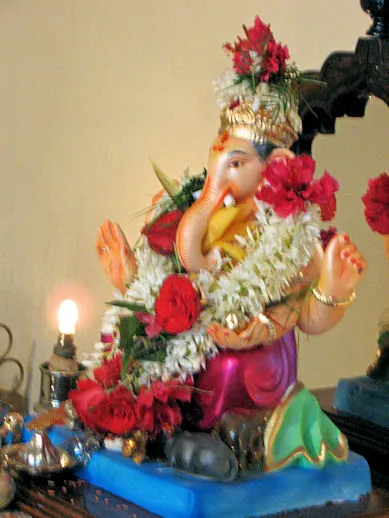
Fig.: श्रीगणेशाय नमः
(Image source: Details)
6. Goodbye! (= Well-being (स्वस्ति f.) to you!)
7. This fruit is sufficient for eating.
8. A warrior is matched by the (other) warrior (शक्त).
9. Even Viṣṇu does not surpass (प्र-भू + Dat.) Śiva.
After I have bowed before the three sages (Acc.) (नमस्कृ)... He bows before Narasiṃha (Dat.).
Explanation: मुनित्रयम् "the triad of sages = the three sages" = the grammarians पाणिनि, कात्यायन, पतञ्जलि
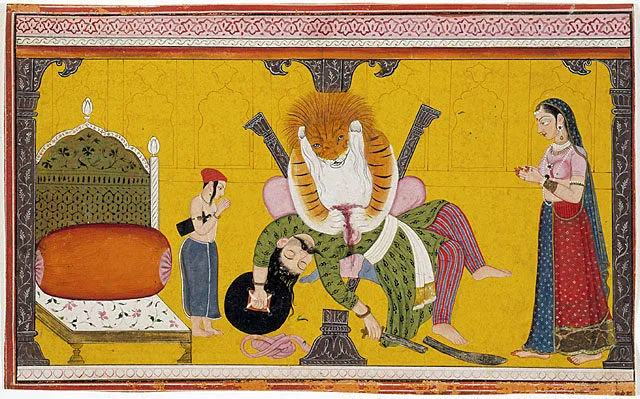
Fig.: नरो नरसिंहाय नमस्करोति
नरसिंह tears apart हिरण्यकशिपु, page from a manuscript of the भागवतपुराण
(Image source: Details)
11. Welcome (स्वागतम्) to you. Welcome to the Queen.
12. I wish you well-being (कुशल) = Well-being to you!
13. He does not regard him as a blade of grass.
14. A single fruit suffices for food, and water for drinking.
15१५. Farewell! (Neo-Sanskrit: पुनर्दर्शनाय)
lekt2401: 'Annakut' [अन्नकूट = गोवर्धन पूजा] is a traditional Hindu event that takes place on the Hindu New Year celebrations at all BAPS [બોચાસનવાસી અક્ષ૨ પુરુષોત્તમ સ્વામિનારાયણ સંસ્થા = Bochasanwasi Akshar Purushottam Swaminarayan Sanstha] mandirs. Hundreds of vegetarian dishes are offered to Bhagwan Swaminarayan [સ્વામિનારાયણ] on this day. [Image source: chiragkpatel. -- http://www.flickr.com/photos/chiragkpatel/61224686/. -- Accessed on 2008-12-14. -- Creative Commons License (Attribution, non-commercial use)]
lekt2402: Raksha bandhan is celebrated with fervour and joy all across India. This festival epitomizes the unconditional love between brothers and sisters. [Image source: yogu. -- http://www.flickr.com/photos/meethi/1266237363/. -- Accessed on 2008-12-14. -- Creative Commons License (Attribution, non-commercial use, share alike)]
lekt2403: "Rama (right) seated on the shoulders of Hanuman, battles the demon-king Ravana." ca 1820 [Image source: Wikipedia, Public domain]
lekt2404: [Image source: nolasknab. -- http://www.flickr.com/photos/nolasknab/110920752/. -- Accessed on 2008-12-14. -- Creative Commons License (Attribution, no derivatives)]
lekt2405: [Image source: sarboo. -- http://www.flickr.com/photos/sarboo/320741523/. -- Accessed on 2008-12-14. -- Creative Commons License (Attribution, non-commercial, no derivatives)]
lekt2406: Hampi = ಹಂಪೆ, Karnataka = ಕರ್ನಾಟಕ [Image source: thaths. -- http://www.flickr.com/photos/thaths/862012190/. -- Accessed on 2008-12-14. -- Creative Commons License (Attribution, non-commercial)]
lekt2407: "NEW DELHI/INDIA, 16NOV08 - Suhasini Haidar, Deputy Foreign Editor, CNN-IBN Network 18, India, moderates a panel discussion at the World Economic Forum's India Economic Summit 2008 in New Delhi." [Image source: World Economic Forum / Photo by Dana Smillie. -- http://www.flickr.com/photos/worldeconomicforum/3040064901/. -- Accessed on 2008-12-14. -- Creative Commons License (Attribution, share alike)]
lekt2408: "San Francisco storyteller Jeff Byers shares a story with the residents of Chenneri, an Irula village. Storyteller Jeeva Raghunath translates into Tamil for the villagers." [Image source: ereneta. -- http://www.flickr.com/photos/tereneta/3062024840/. -- Accessed on 2008-12-14. -- Creative Commons License (Attribution, non-commercial)]
lekt2409: [Image source: Redtigerxyz / Wikipedia, GNU FDLicense]
lekt2410: नरसिंह tears apart हिरण्यकशिपु, page from a manuscript of the भागवतपुराण [Image source: Wikipedia, Public domain]
lekt2411: Manuscript of the गीतगोविन्द, 1730 CE. [Image source: Wikipedia, Public domain]