
Lesson 22
22.1. The Absolutiv (क्त्वा । ल्यप्)
If one wishes to express in Sanskrit that an action of the agent (कर्तृ) precedes another action of the agent or accompanies it as a circumstantial factor, one uses the Absolutiv (क्त्वा । ल्यप्). Thus
"after he has done that, he does the other"; "he does that, then he does the other"; "as a result of this, he does the other"; "I came, saw, and conquered" etc.
The Absolutiv is a verbal adverb, i.e., it is neither conjugable nor declinable, but it always has — with few exceptions — the same agent (कर्तृ) as the action whose action precedes or accompanies it, as designated by the Absolutiv. The agent of the Absolutiv is therefore in the Nominativ (प्रथमा) or Instrumentalis (तृतीया).
Besides the compounds, the Absolutiv is one of the most frequent means of expression in Sanskrit.
When translating into German, one should avoid constantly saying "after." Instead, one should use the common German expressions for temporal sequence.
Schema:
(nearer determination of the Absolutiv: adverbial determination, object, etc.) - Absolutiv - Absolutiv - ... - Absolutiv - ... Agent + verbal sentence (in active or passive voice)
Examples:
गृहं प्रविश्य बालां दृष्ट्वा नरो वदति = Passive construction: गृहं प्रविश्य बालां दृष्ट्वा नरेणोद्यते
"The man enters the house, sees the little girl, and speaks to her."
Plural: गृहं प्रविश्य बालां दृष्ट्वा नरा वदन्ति ।
22.2. Formation of the Absolutiv
Formation of the Absolutiv
- Verbs without prefix: Absolutiv ending in -tvā
- Verbs with prefix: Absolutiv ending in -ya or -tya
22.2.1. Verbs without prefix: Absolutiv ending in -त्वा
Formation:
(mostly) strong-grade root in the form it has before the PPP + -tvā (-त्वा)
Only the negative a- / an- is compatible with the suffix -त्वा: अकृत्वा "without having done"
Examples:
आप्त्वा "after he / she / it / I / you / we / they / we two / you two / they two has / have reached"
आसित्वा "after he (...) has / had sat"
इत्वा "after he (...) has / had gone"
स्थित्वा "after he (...) has / had stood"
जित्वा "after he (...) has / had conquered"
उक्त्वा "after he (...) has / had spoken"
22.2.2. Verbs with prefix
22.2.2.1. Roots with long vowel (except -ā) or with consonant
(mostly) strong-grade root + -ya
Examples:
उपनीय "after he (...) has / had led"
प्रभूय "after he (...) has / had protruded" "after he (...) had power"
प्राप्य "after he (...) has obtained / had obtained"
22.2.2.2. Roots ending in -ā
unchanged strong-grade root + -ya
Example:
उपस्थाय "after he (...) had stepped / has stepped" ; (but without preverb: स्थित्वा)
22.2.2.3. Roots that end in short -i, -u, -ṛ in the weak grade
weak-grade root + -tya
Examples:
प्रस्तुत्य "after he (...) has loudly praised / had loudly praised"
विस्मृत्य "after he (...) has forgotten / had forgotten"
संस्कृत्य "after he (...) has prepared for the sacrifice / had prepared for the sacrifice"
22.2.2.4. Roots ending in -am / -an, which end in -a in the weak grade
Optional:
Root ending in -am / -an + -ya
or:
Root ending in -a + -tya
Example:
विगम्य or विगत्य "after he (...) has passed / had passed"
22.3. Word List
काम m.: wish, desire; desired gift, sensual pleasure, love, god of love
कामम् Acc. adverbially: according to wish, according to one's heart's desire
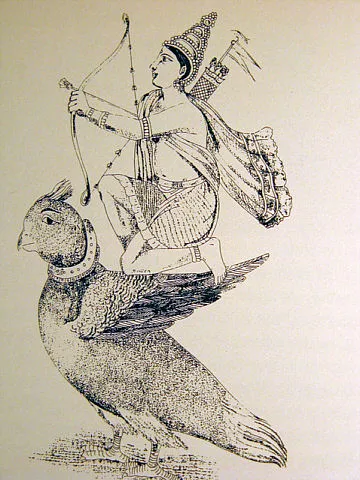
Fig.: कामदेवः
19th c.
(Image source: Details)
शक् 5 P शक्नोति Pass. शक्यते PPP शक्त Inf. शक्तुम् : to be able, to be capable
thereof:
शक्ति f.: ability, power, capability, strength; also: divine power, personified as female companion especially of शिव
शक्र m.: the powerful (epithet of इन्द्र)
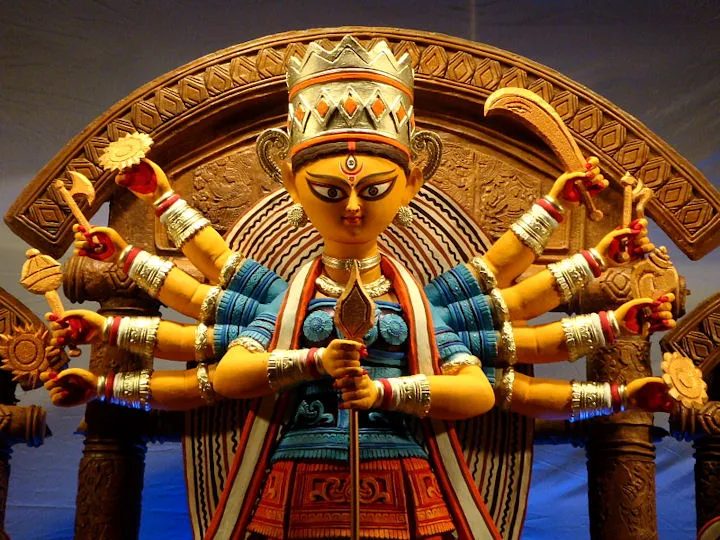
Fig.: दुर्गाशक्तिः
Kolkatta = কলকাতা
(Image source: Details)
अर्ह 1 P अर्हति Pass. अर्ह्यते PPP अर्हित Inf. अर्हितुम् : to deserve (to be worthy of something), to be allowed, to be obliged to, should (in the 2nd person, अर्ह् + infinitive is often used as a mild command: "You should")
अर्हन्त् 3 Pres. Part. P: a worthy one. In Buddhism and Jainism: someone who has attained final liberation
व्रत n.: vow, religious duty, religious observance (one promises something to the deity in order to obtain something from it. Example: a mother promises to dedicate her daughter as a temple prostitute (देवदासी) if her daughter recovers. Important व्रत today: fasting; abstention from foods one loves; sexual abstinence; reading sacred texts; performing certain rituals; feeding Brahmins, etc. Briefly on व्रत: Walker, Hindu World Vol. II, p. 581f. Detailed: P. V. Kane: History of Dharmaśāstra Vol. 5,1 p. 1 - 462. There p. 253 - 462 list of व्रत and religious festivals ("the following list ... does not claim to be thoroughly exhaustive" !!!)
चर् 1 P charati Pass. charyate PPP charita Inf. charitum (Sanskrit: चर् 1 P चरति Pass. चर्यते PPP चरित Inf. चरितुम्) : to graze, to wander, to move, to act, to exercise, to perform (e.g. व्रतं चर्: to practice a vow, especially sexual abstinence)
of:
चर ३: mobile; n.: the mobile = animals (in contrast to plants)
चरण n., m.: foot
चरित n.: way of life, life deeds
ब्रह्मचर्य n.: performance of the Veda (ब्रह्मन्) = study of the Veda in the first stage of life (that of the ब्रह्मचारिन्), which requires strict sexual abstinence; therefore also: sexual abstinence, celibate way of life
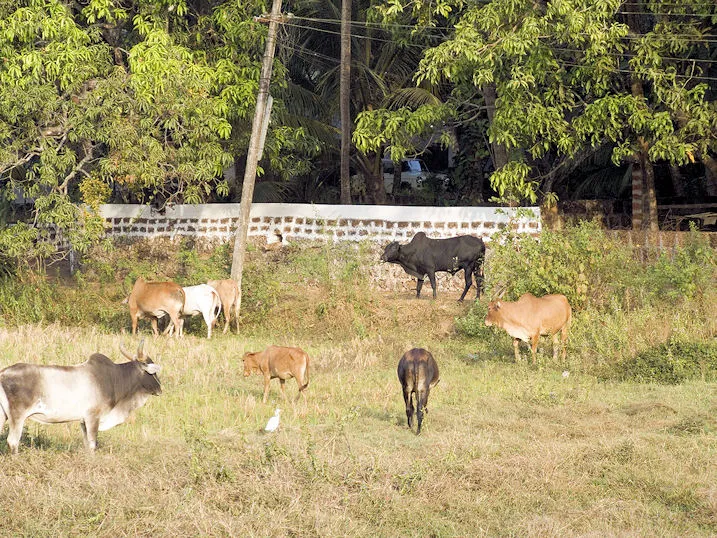
Fig.: धेनवश्चरन्ति
Goa = गोंय
(Image source: Details)
22.4. Exercise
A) Form and translate the Absolute to the following verbs:
- आप्
- प्राप्
- समास्
- आस्
- समि
- संस्कृ
- कृ
- गम्
- उपगम् (2 forms)
- जि
- विजि
- तन्
- दह्
- उपदिश्
- नी
- पच्
- उपपद्
- पा १
- प्रच्छ्
- बुध्
- सम्बुध्
- भज्
- भू
- प्रभू
- मन्
- मुच्
- विमुच्
- मृ
- यज्
- लभ्
- उपलभ्
- वच्
- प्रवच्
- वद्
- प्रवद्
- हन्
B) Translate and resolve the compounds in Sanskrit:
अन्नं पक्त्वा ब्राह्मणदासो ऽत्ति ॥१॥
इष्टदेवतापूजां कृत्वेन्द्रादिदेवान्सद्ब्राह्मणाः स्तुवन्ति ॥२॥
प्रस्थाय रामः सपुत्रः सद्गुरुश्रवणार्थेन ब्राह्मणग्रामं गच्छति ॥३॥
अनिष्ट्वा नरो भगवद्भक्तिमात्रेणापि मोक्षमाप्नोति ॥४॥
गृहगर्भं प्रविश्य ब्राह्मणपुत्रमुपस्थाय क्षत्रियशूरो वक्ति ॥५॥
सम्बुध्य दुःखाद्यार्यसत्यानि प्रोच्य सुगतो मोक्षमार्गेण नरान्नयति ॥६॥
मन्त्रं विस्मृत्य यजन्यज्ञदोषं करोति ॥७॥
धनं प्राप्य बुद्धमार्गभिक्षवो दुष्यन्ति ॥८॥
अनार्यशत्रुभिः संगत्य नरसिंहा विजयन्ते ॥९॥
पुण्यं कृत्वा सत्यमेवोदित्वा नरो नरकं नोपपद्यते ॥१०॥
C) Make passive constructions from the above sentences (except sentences 8 and 10)
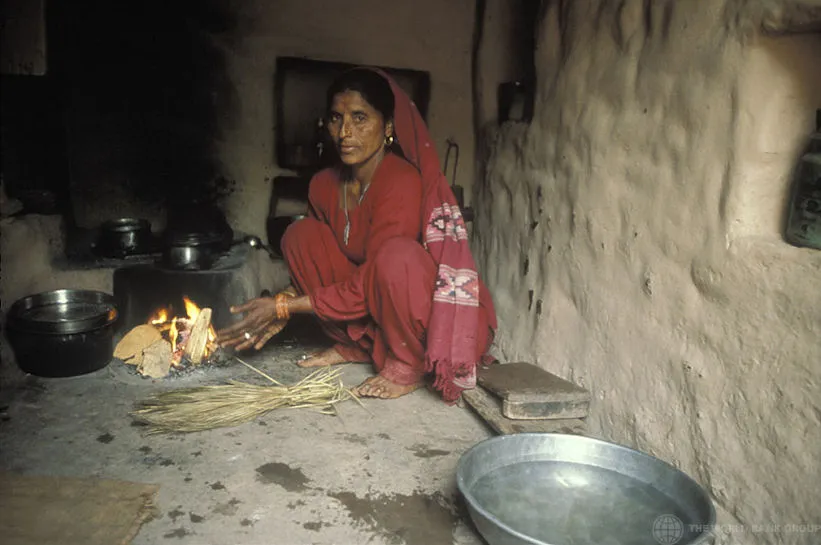
Fig.: अन्नं पक्त्वा
(Image source: Details)
lekt2201: Goa = गोंय [Image source: Veebl. -- http://www.flickr.com/photos/veebl/2322214162/. -- Accessed on 2008-12-12. -- Creative Commons License (Attribution, non-commercial use, no derivatives)]
lekt2202: 19th century [Image source: Wikipedia, Public domain]
lekt2203: Kolkata = কলকাতা [Image source: The Eternity. -- http://www.flickr.com/photos/the_world_in_my_eyes/2914301330/. -- Accessed on 2008-12-12. -- Creative Commons License (Attribution, non-commercial use, no derivatives)]
lekt2204: [Image source: Curt Carnemark / World Bank. -- http://www.flickr.com/photos/worldbank/2183558378/. -- Accessed on 2008-12-12. -- Creative Commons License (Attribution, non-commercial use, no derivatives)]