
Lesson 18
A) Translate the सुभाषित at the beginning of the lesson.
नास्ति कामसमो व्याधिर्
नास्ति मोहसमो रिपुः ।
नास्ति क्रोधसमो वह्निर्
नास्ति ज्ञानसमं सुखम् ॥
There is no disease like love,
There is no deceiver and enemy like delusion,
There is no fire like anger,
There is no happiness like knowledge.
B) Translate the following Tatpuruṣa compounds:
१. सुकर ३ — easy to do
२. सुकुल n. — good family
३. सुकृति f. — good deed
४. अकरण n. — non-doing
५. दुरिष्ट n. — evil desire
६. दुरिष्टि f. — faulty sacrifice
७. सुखादित 3 — well-chewed
८. दुष्कर 3 — difficult to do
९. दुर्जय 3 — difficult to conquer
१०. सुगत m. — well-gone (through the rebirths) (= Buddha)
११. सुजन m. — good person
१२. दुरुक्ति f. — harsh speech
१३. दुरुपदेश m. — bad instruction
१४. सुजात 3 — well-born
१५. सुguru 3 — very difficult
१६. अनाप्त 3 — unsuitable
१७. अनीति f. — improper behavior
१८. अनीश्वरत्व n. — not-being-LORD
१९. सुदुःख n. — great suffering
२०. दुर्जन m. — evil person
२१. दुर्दग्ध 3 — badly burnt
२२. अतिकृत 3 — excessive
२३. सुपुत्र m. — good son
२४. सुबुद्धि f. — good insight
२५. दुष्पुत्र m. — bad son
२६. दुष्प्रणीत 3 — badly executed
२७. सुमति f. — friendliness
२८. दुर्लभ 3 — difficult to obtain
२९. दुर्वच 3 — difficult to say
३०. दुर्वचन n. — bad speech
३१. अमृत n. — immortality, food of immortality, drink of immortality

Fig.: नास्ति कामसमो व्याधिः
(Image source: Details)
Additional Exercises
A) Resolve the following compounds into Sanskrit and provide translation suggestions:
१. अन्तगत ३ । अन्तं गतः । — ended, Grammar: final
२. क्षमाकर ३। क्षमा-करः । — one who is patient, patient action
३. क्षेमेन्द्र m.। क्षेमस्येन्द्रः । — Lord of peace / well-being / tranquility
४. शस्त्रकोपनिरोध m. । शस्त्राणां कोपस्य निरोधः । — stopping of anger with the sword = stopping of combat
५. सिंहसंहनन n.। सिंहस्य संहननम् । — killing of one / several lions, killing by one / several lions
६. अरिसिंह m. । सिंह इव अरिः । — lion-like enemy
७. आहारनिद्राभय n. । आहारो निद्रा भयं च । — eating, sleeping, and fear
८. मृतिसाधनी f. । मृतेः साधनी । — causing death
९. कुलोपदेश m. । कुलस्योपदेशः । — family name (reference to the family)
B) Translate using verbs of the 2nd present class:
The Brahmin praises the goddesses.
ब्राह्मणो देवीः स्तौति । (or: स्तवीति ।)The heroes go on the difficult-to-traverse path to the village of the Āryas.
शूरा दुर्गमेण मार्गेणार्यग्रामं यन्ति ।The housemaid milks the cows.
गृहदासी धेनूर्दोग्धि ।The enemies of the Āryas slay the powerful Kṣatriyas.
आर्यारयो बलवत्क्षत्रियान्घन्ति । (or: आर्यशत्रवो...)A ghost eats no fruits.
भूतं फलानि नात्ति ।Thus speaks he who has [well traversed the path through rebirths] to the disciple.
एवं सुगतः श्रावकं वक्ति । (or: ब्रवीति । ब्रूते ।)
C) Provide the definition of Yoga in Sanskrit in two ways: once using a compound, once by resolving the compound.
योगश्चित्तवृत्तिनिरोधः । (योगश्चित्तस्य वृत्तेर्निरोधः ।)
D) Translate:
(धर्मः) सर्वेषामाहिंसा सत्यं शौचमनसूयानृशंस्यं क्षमा च ॥
The duty of all is: non-violence, truthfulness, purity, not murmuring about one's lot, freedom from malice, and patient forbearance.
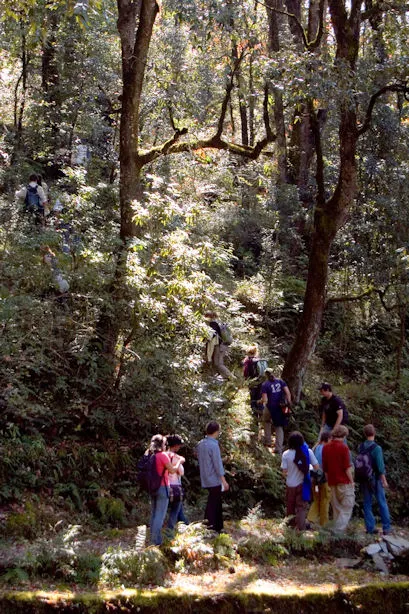
Fig.: दुर्गमो मार्गः
(Image source: Details)