
Lesson 34
34.1. The Perfect (लिट्)
In classical Sanskrit, the perfect stem has only indicative and participle forms.
There are two types of perfect formation:
- the reduplicated perfect = द्वित्वलिट्
- the periphrastic perfect = अनुप्रयोगलिट्
The periphrastic perfect (अनुप्रयोगलिट्) is used:
- in derived conjugations (causative, desiderative, frequentative, denominative)
- with roots that begin with a long vowel (except ā-) or with a vowel (except a-) before two consonants
- with some other roots
34.2. The reduplicated perfect (द्वित्वलिट्)
34.2.1. Stem gradation
Formation:
strong stem: singular parasmaipada
- reduplicated strong-grade or guṇa-grade root + perfect ending
weak stem: all other forms
- reduplicated weak-grade root + perfect ending
Generally (also outside the perfect), roots of the following forms do not undergo stem gradation:
- (consonant)-consonant-long vowel-consonant
- (consonant)-consonant-vowel-consonant-consonant
In the perfect, roots of the following forms additionally do not undergo stem gradation:
- a-consonant
- ā-consonant
34.2.2. The perfect endings
| 3. Singular | 3. Plural | |
|---|---|---|
| Parasmaipada | -a | -ur |
| ātmanepada | -e | -re |
34.2.3. Connecting vowel -i-
Before the ending of the 3.pl.āt (-re), the connecting vowel -i- always appears; before other consonant-initial endings in the plural, for most roots.
34.2.4. Reduplication of consonant-initial roots
The rules given in Lesson 33 apply to the reduplication of initial consonants.
The reduplication vowel for consonant-initial roots is the short root vowel.
Diphthongs before a consonant are reduced to the corresponding short weak-grade vowel.
ṛ, ṝ, ḷ, and final diphthongs are reduplicated with -a-.
Examples:
| Root | 3. sg. Perf. P. |
|---|---|
| भिद् | बिभेद |
| मुच् | मुमोच |
| भृ | बभार |
Some roots beginning with y- or v- reduplicate with i- or u-, which "merges" with the root vowel in the weak forms.
Examples:
| Root | 3. sg. Perf. P. | 3. pl. Perf. P. |
|---|---|---|
| वच् | उवाच u-vāc-a | ऊचुर् u + uc-ur |
| यज् | इयाज i-yāj-a | ईजुर् i + ij-ur |
34.2.5. Reduplication of vowel-initial roots
1. initial a-, ā- is reduplicated with a-, resulting in ā-.
Examples:
| Root | 3. sg. Perf. P. |
|---|---|
| अस् 2 "to be" and अस् 4 "to throw" | आस a + as-a |
2. Roots with initial i- have as reduplication syllable in the strong stem iy-, in the weak stem i-, which "merges" with the root vowel to ī-. The same applies to initial u-.
Examples:
| Root | 3. sg. Perf. P. | 3. pl. Perf. P. |
|---|---|---|
| इ | इयाय iy + ai + a | ईयुर् i + iy-ur |
| इष् | इयेष iy-eṣ-a | ईषुर् i + iṣ-ur |
3. Roots that begin with a- before two consonants or with ṛ- have ān- as reduplication syllable
Examples:
| Root | 3. sg. Perf. P. | 3. pl. Perf. P. |
|---|---|---|
| अञ्ज् | आनञ्ज | आनञ्जुर् |
| एध् | आनर्ध | आनृधुर् |
34.3. Types of the reduplicated perfect
Classification principle: Peculiarities of stem gradation:
- Perfect without stem gradation: Type I
- Perfect with stem gradation: Type II - V
- irregular perfect formations
34.4. Perfect Type I: Perfect without stem gradation
Perfect Type I (without stem gradation) have roots of the types:
- (Consonant)-Consonant-LongVowel-Consonant
- (Consonant)-Consonant-Vowel-Consonant-Consonant
- a-Consonant
- ā-Consonant
Examples:
| Root | 3. sg. Perf. | 3. pl. Perf. |
|---|---|---|
| बन्ध् 9P | बबन्ध ba-bandh-a | बबन्धुर् |
| जीव् 1P | जिजीव | जिजीवुर् |
| आप् 5P | आप a + āp-a | आपुर् |
| अस् 2P "sein" अस् 4 "werfen" | आस a + as-a | आसुर् |
| अश् | आनशे unregelmässige Reduplikation! | आनशिरे |
34.5. Perfect Type II: Strong stem high grade, weak stem low grade
Formed by roots of the form:
- (Consonant)-(Consonant)-i/u/ṛ/ḷ-Consonant
Formation:
- strong stem: high grade
- weak stem: low grade
Examples:
| Root | 3. sg. Perf. P. | 3. pl. Perf. P. | 3. sg. Perf. Ā. | 3. pl. Perf. Ā. |
|---|---|---|---|---|
| भिद् | बिभेद | बिभिदुर् | बिभिदे | बिभिदिरे |
| इष् | इयेष | ईषुर् | ||
| मुच् | मुमोच | मुमुचुर् | मुमुचे | मुमुचिरे |
| वृत् | ववृते | ववृतिरे | ||
| कॢप् | चकॢपे | चकॢपिरे |
34.6. Word list
क्षिति f. = पृथ्वी = मही = भूमी
शस्य = सस्य n. sg. and pl.: seed, crop, grain
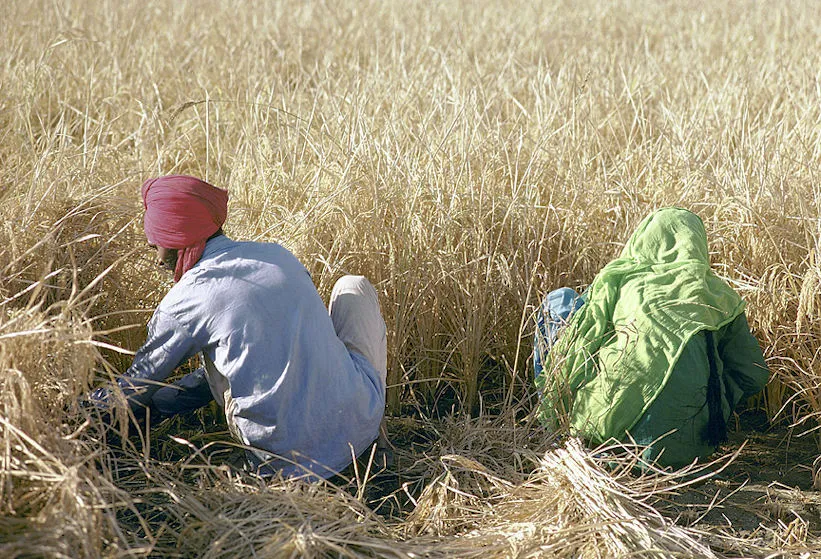
Fig.: सस्यम्
Rice field in India.
(Image source: Details)
यावत् : how long, how big
तावत् : so long, so big
उत्तम 3: highest
द्वीप m.n.: island, continent
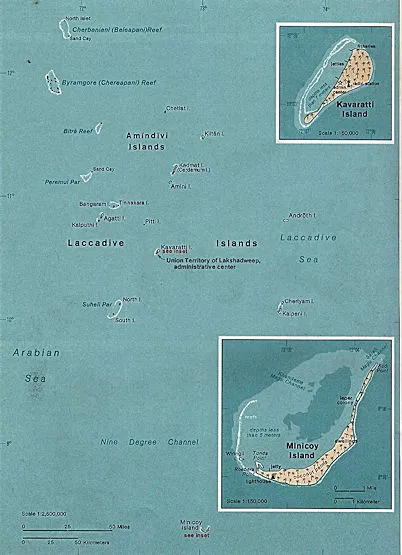
Fig.: लक्षद्वीपाः
Lakshadweep Islands Map.
(Image source: Details)
मर्त्य 3: mortal (to मृ)
तिल m.: sesame (seed) (Sesamum indicum L.)
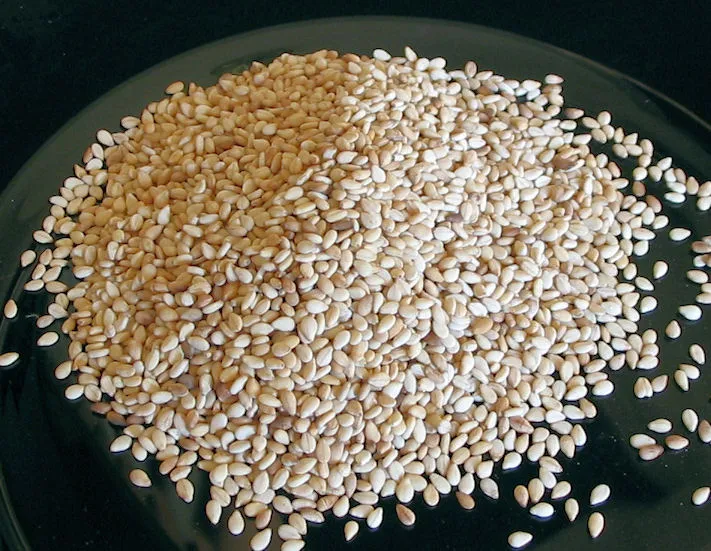
Fig.: तिलाः
Sesame seeds.
(Image source: Details)
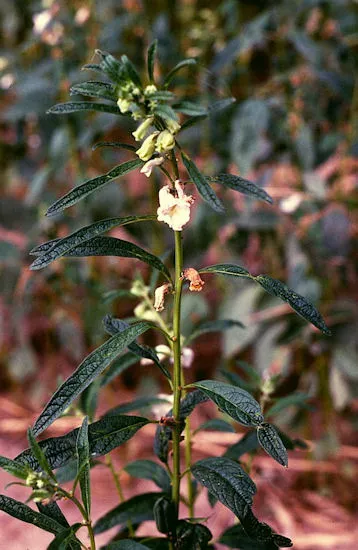
Fig.: Sesamum indicum L.
Sesame plant flowering.
(Image source: Details)
स्वर्ण n.: (beautiful-colored =) Gold
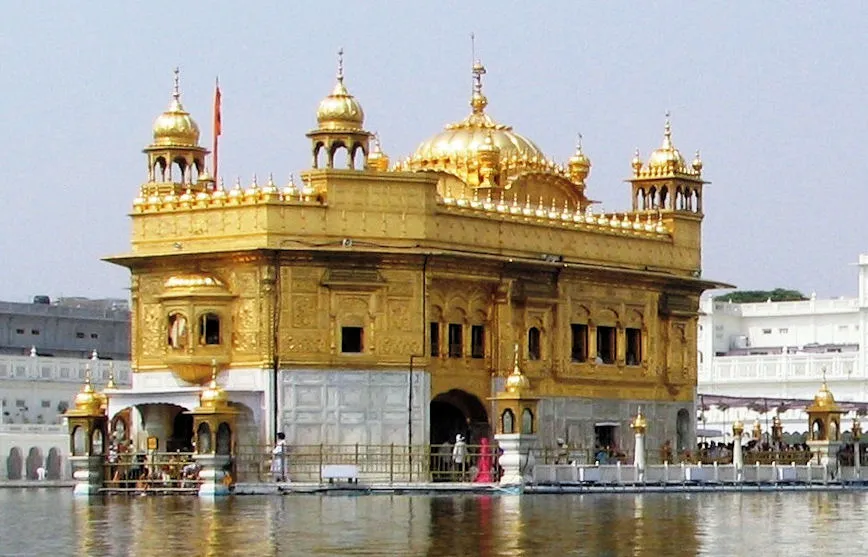
Fig.: स्वर्णम्
Golden Temple (Harmandir Sahib), Amritsar.
(Image source: Details)
निकेतन n.: dwelling place, temple
कोटि f.: tip; 10 million
श्रेष्ठ 3: best
तल m.n.: plain, surface
ऋषभ m.: bull
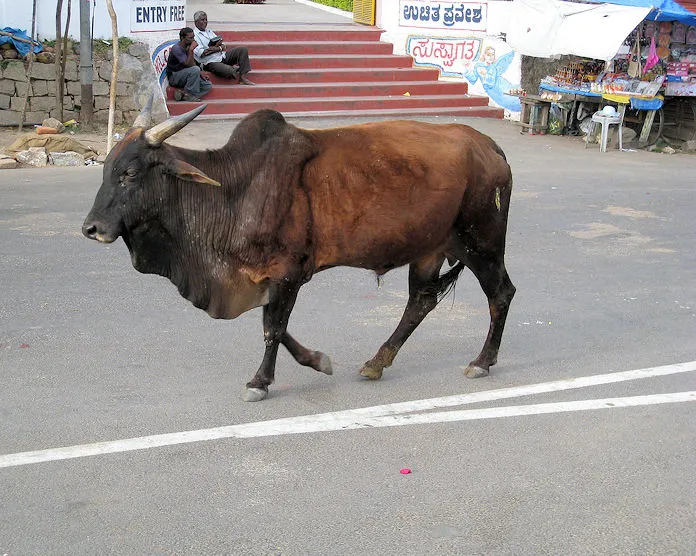
Fig.: ऋषभः
Nandi Bull statue, Chamundi Hills, Mysore.
(Image source: Details)
यम् 1P यच्छति : to restrain, to hold, to offer, to grant
यम् + प्र 1P प्रयच्छति : to hold out, to offer, to deliver
या 2P याति : to go, to travel
कन्या f.: girl, maiden
34.7. Exercise
Form the corresponding perfect forms in person, number, and gender for the following verb forms:
- रक्षिष्यन्ति
- स्रक्ष्यति
- सिञ्चते
- वर्तते
- प्रवेक्ष्यति
- भनक्ति
- लुभ्यन्ति
- रुन्धते
- रोदितi → रोदिति
- बध्नाति
- युध्यन्ते
- युङ्क्ते
- मुह्यन्ति
- मुञ्चते
- जीवन्ति
- भोक्ष्यते
- आप्नुवन्ति
- भिन्त्ते
- भोत्स्यन्ते
- नर्तिष्यति
- अश्नाति
- द्वेष्टि
- पश्यन्ति
- दुग्धे
- सन्ति
- आदेक्ष्यन्ति
- छिनत्ति
- क्रुध्यति
- अस्यति
- कुप्यन्ति
- इच्छन्ति
34.8. Translation Exercise
Translate the following text from the पद्मपुराण regarding gifts to Brahmins:
क्षितिं सशस्यां यो दद्याद्ब्राह्मणाय द्विजोत्तम ।
विष्णुलोके सुखं भुङ्क्ते यावदिन्द्राश्चतुर्दश ॥१॥
सप्तद्वीपां महीं दत्त्वा यत्पुण्यं प्राप्यते द्विज ।
तत्पुण्यं प्राप्नुयान्मर्त्यो धेनुं यच्छन्द्विजातये ॥२॥
तिलप्रमाणं स्वर्णं यो ब्राह्मणाय प्रयच्छति ।
हरिनिकेतनं याति युक्तं कोटिकुलैरपि ॥३॥
सालङ्कारां द्विजश्रेष्ठ कन्यां यच्छति यो नरः ।
स गच्छेद्ब्रह्मसदनं पुनर्जन्म न विद्यते ॥४॥
अन्नं वारि द्विजश्रेष्ठ येन दत्तं महीतले ।
तेन दत्तानि दानानि सर्वाणि च द्विजर्षभ ॥५॥
Explanations:
Vocative sg. of masculines / neuters ending in -a ends in -a: e.g. देव "O God!"
चतुर्दश fourteen
सप्त seven
जन्म Nom./Akk. sg. of जन्मन् n. birth
सर्व 3 "all, whole" (declined according to pronominal declension)
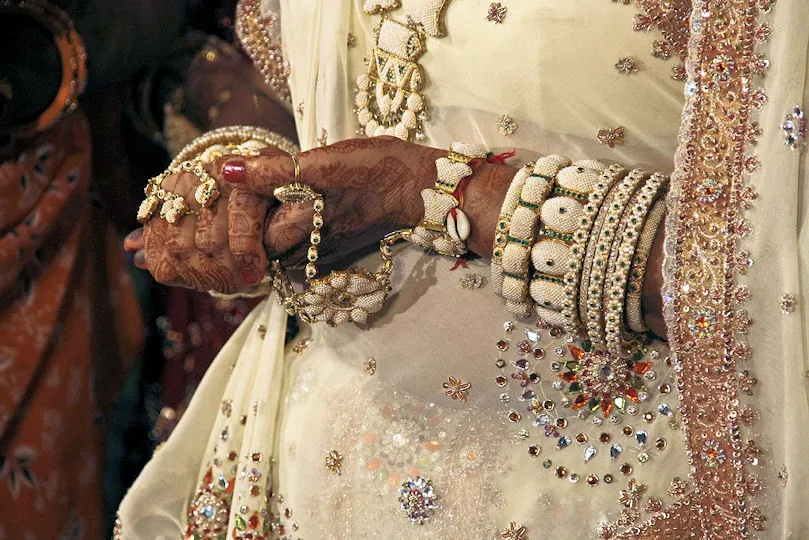
Fig.: सालङ्कारां द्विजश्रेष्ठ कन्यां यच्छति यो नरः । स गच्छेद्ब्रह्मसदनं पुनर्जन्म न विद्यते ॥४॥
Hindu wedding ritual.
(Image source: Details)
lekt3401: Nandi Bull statue, Chamundi Hills, Mysore. [Image source: Luna Park / Flickr. CC BY-NC-ND]
lekt3402: Golden Temple (Harmandir Sahib), Amritsar. [Image source: Wikipedia. GNU FDL]
lekt3403: Sesame seeds. [Image source: Wikipedia. Public domain]
lekt3404: Sesame plant flowering. [Image source: Franz Xaver / Wikipedia. GNU FDL]
lekt3405: Lakshadweep Islands Map. [Image source: CIA World Factbook. Public domain]
lekt3406: Rice field in India. [Image source: Ray Witlin / World Bank. CC BY-NC-ND]
lekt3407: Hindu wedding ritual. [Image source: BriceFR / Flickr. CC BY-NC-SA]