
Lesson 31
31.1. The 7th Present Class (रुधादि = "रुध् etc.")
Formation:
Before the final consonants of the low-grade root, a so-called nasal infix (-na- or -n-) is inserted:
- in the strong stem: -na-
- in the weak stem: -n-
The rules for connecting the final consonants of the root with consonant-initial endings are the same as for the 2nd Present Class.
Examples:
युज् 7U "to connect, to yoke"
| Parasmaipada | Ātmanepada | ||
|---|---|---|---|
| Indicative | 3. sg. | युनक्ति yu-na-j + -ti | युङ्क्ते yu + n + j + te (vor Guttural im Wortinnern werden Nasale durch -ṅ- ersetzt) |
| 3. pl. | युञ्जन्ति yu + n + j-anti | युञ्जते yu + n + j-ate | |
| Optative | 3. sg. | युञ्ज्यात् yu + n + j-yā-t | युञ्जीत yu + n + j-ī-ta |
| 3. pl. | युञ्ज्युर् yu + n + j-y-ur | युञ्जीरन् yu + n + j-ī-ran | |
| Partizip Present | युञ्जन्त्- yu + n + j-ant- fem.: युञ्जती yu + n + j-at-ī |
रुध् 7U "to stop, to bring to a standstill"
| Parasmaipada | Ātmanepada | ||
|---|---|---|---|
| Indicative | 3. sg. | रुणद्धि ru + na + dh + ti | रुन्द्धे ru-n + dh + te |
| 3. pl. | रुन्धन्ति ru-n-dh-anti | रुन्धते ru-n-dh-ate | |
| Optative | 3. sg. | रुन्ध्यात् ru-n-dh-yā-t | रुन्धीत ru-n-dh-ī-ta |
| 3. pl. | रुन्ध्युर् ru-n-dh-y-ur | रुन्धीरन् ru-n-dh-ī-ran | |
| Partizip Present | रुन्धन्त्- ru-n-dh-ant- fem.: रुन्धती ru-n-dh-at-ī |
In the case of some roots, the -n- of the weak present stem has also penetrated into non-present tenses, so that these roots are posited with an infix nasal.
Example:
भञ्ज् 7P "to break"
- Indicative Present
- 3.sg.P. भनक्ति (bha-na + j + ti)
- 3.pl.P. भञ्जन्ति (bha + n + j-anti)
- Future: भङ्क्ष्यति (bha + n + j + sya + ti)
- Passive: भज्यते (either from the original root भज् or from *bhñj-ya-te)
- PPP: भग्न (possibly from *bhñj + na)
31.2. Vocabulary
युज् 7U युनक्ति : to yoke, to hitch, to fasten; Ā also: to strain (= to exert oneself), to connect with, to concentrate on (Locative, सप्तमी)
Fut. योक्ष्यति
Pass. युज्यते
Caus. योजयति
PPP युक्त
Inf. योक्तुम्
from which:
युग n. → युग n.: yoke, pair, age of the world (there are four ages of the world:
- कृत
- त्रेता
- द्वापर
- कलि
The कलियुग began around 3102 BCE, the year of the महाभारत war. Further details in Basham, Wonder p. 323)
योग m.: "yoking, straining", exertion, connection, Yoga (see Basham, Wonder pp. 327ff.)
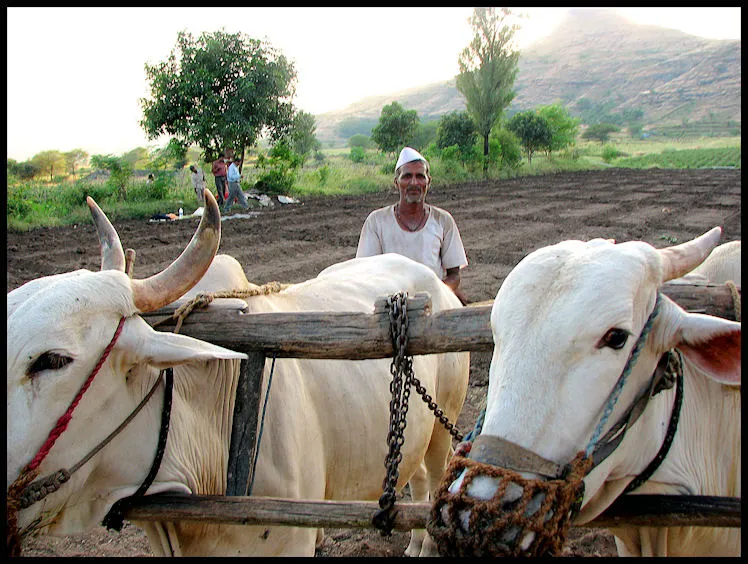
Fig.: योगः
Yoga depiction.
(Image source: Details)
रुध् 7U रुणद्धि : stop, bring to a standstill, hold back = enclose, cover
Fut. रोत्स्यति
Pass. रुध्यते
Caus. रोधयति
PPP रुद्ध
Inf. रोद्धुम्
छिद् 7U छिनत्ति : cut off
Fut. छेत्स्यति
Pass. छिद्यते
Caus. छेदयति
PPP छिन्न
Inf. छेत्तुम्
भञ्ज् 7P भनक्ति : (to) break (something)
Fut. भङ्क्ष्यति
Pass. भज्यते
PPP भग्न
अञ्ज् 7P अनक्ति : anoint, smear
Fut. अङ्क्ष्यति । अञ्जिष्यति
Pass. अज्यते
Caus. अञ्जयति
PPP अक्त
Inf. अञ्जितुम् । अङ्क्तुम्
अञ्ज् + vi → अञ्ज् + वि 7Ā व्यङ्क्ते : smear apart = to apply cosmetics, to distinguish oneself
PPP व्यक्त : distinguished, unfolded
therefrom:
व्यञ्जन n.: means of distinction = cosmetics, spice, sign, consonant (that which distinguishes meanings)
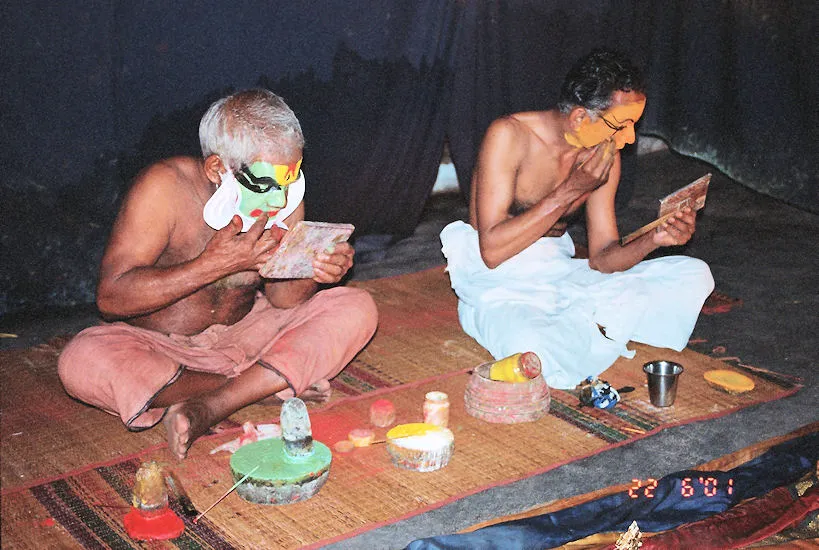
Fig.: व्यञ्जनम्
Preparation for Kathakali dance, Kochi.
(Image source: Details)
भिद् 7U भिनत्ति : split
Fut. भेत्स्यति
Pass. भिद्यते
Caus. भेदयति
PPP भिन्न
Inf. भेत्तुम्
भुज् 7U भुनक्ति : enjoy (e.g., food; "to enjoy the earth" = to rule the earth)
Fut. भोक्ष्यति
Pass. भुज्यते
Caus. भोजयति
PPP bhukt → PPP भुक्त
Inf. भोक्तुम्
therefrom:
भोग m.: enjoyment, food, pleasure, benefit, tax, levy
बन्ध् 9P बध्नाति (!): bind, tie up
Fut. भन्त्स्यति
Pass. बध्यते
Caus. बन्धयति
PPP बद्ध
Inf. बद्धुम्
therefrom:
बन्धन n.: binding, fetter
ज्ञा + प्र 9U प्रजानाति : recognize, understand
therefrom:
प्रज्ञा f.: wisdom, knowledge
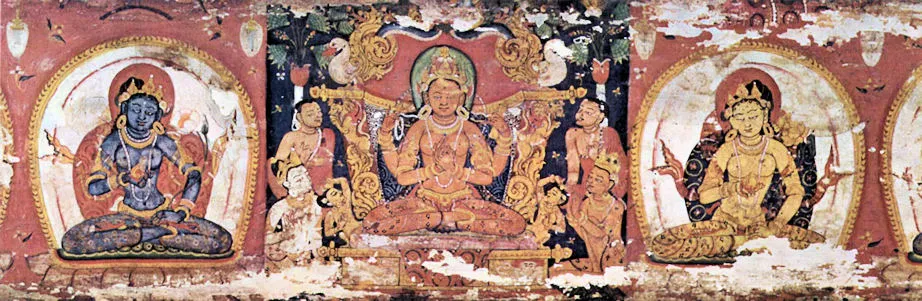
Fig.: प्रज्ञापारमिता
Aus einem Prajñāpāramitā-Manuskript.
(Image source: Details)
भू + सम् 1P सम्भवति : arise, exist
शरीर n.: limb, body
31.3. Exercise
A) Translate the following sentences and resolve the compounds:
प्रज्ञा दुःखसम्भवं रुन्ध्यादिति बुद्धिमानार्यबुद्धमार्गेण गच्छेत् ॥१॥
शस्त्राणि शरीरमेव छिन्दन्ति जीवस्तु न म्रियत इति भगवद्गीतायां भगवतोच्यते ॥२॥
Fig.: शस्त्राणि शरीरमेव छिन्दन्ति जीवस्तु न म्रियत इति भगवद्गीतायां भगवतोच्यते
Tanks of 18th Cavalry (Indian Army) on the move during the 1965 Indo-Pak War.
(Image source: Details)
बुद्ध्या युक्तो दुःखान्मुच्यते तस्मान्मोक्षमिच्छन्नरो योगेन युञ्जीत ॥३॥
पुत्रो जातो बन्धनं जातमिति सुगतो मत्वा कुलबन्धनं भिनत्ति । ततो भग्नबन्धो मोक्षनयन्तीं प्रज्ञामाप्तुमर्हति ॥४॥
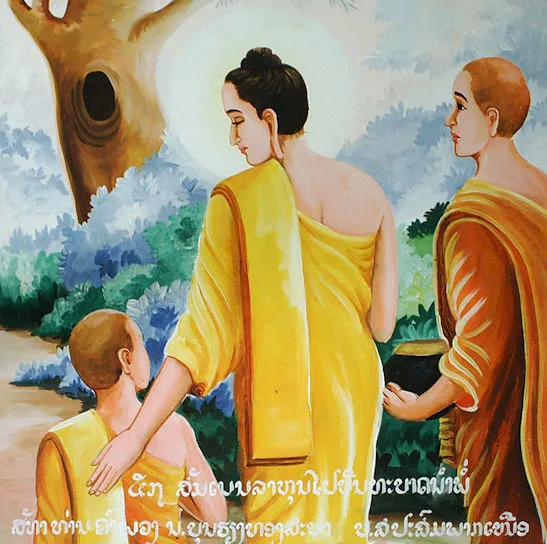
Fig.: राहुलो जातो बन्धनं जातम्
Rāhula, der Sohn Buddhas, Laos.
(Image source: Details)
समोहः स्वन्नानि च सुरूपाश्च भुङ्क्ते वीतमोहस्त्वन्नं च सम्पन्नरूपशरीरां च न लुभ्यति । स हि लोभं च क्रोधं च रुणद्धि प्रज्ञायां च युङ्क्ते ॥५॥
B) Form all 3rd person singular and plural, P and Ā, of the Indicative and Optative Present for the following 7th class roots:
१. छिद्
२. भिद्
३. भुज्
४. अञ्ज् (P only)
५. भञ्ज् (P only)
lekt3101: Yoga depiction. [Image source: Flickr, 2008-12-25. CC BY]
lekt3102: Preparation for Kathakali dance, Kochi. [Image source: winchrisabi. Flickr, 2008-12-25. CC BY]
lekt3103: From a Prajñāpāramitā manuscript. [Image source: zeno.org. Public domain]
lekt3105: Tanks of 18th Cavalry (Indian Army) on the move during the 1965 Indo-Pak War. [Image source: Hari Singh Deora / Wikipedia. Public domain]
lekt3104: Rāhula, the son of the Buddha, Laos. [Image source: Sacca / Wikipedia. GNU FDL]