
Lesson 52
52.1. Neuter of stems in -i and -u
Before endings beginning with a vowel, an -n- is inserted; this is an influence of the n-stems (-in).
| वारि n. "Wasser" | मधु n. "Honig" | |
|---|---|---|
| एकवचनम् | ||
| प्रथमा, द्वितीया | वारि | मधु |
| तृतीया | वारिणा | मधुना |
| चतुर्थी | वारिणे | मधुने |
| पञ्चमी | वारिणस् | मधुनस् |
| षष्ठी | वारिणस् | मधुनस् |
| सप्तमी | वारिणि | मधुनि |
| आमन्त्रितम् | वारि वारे | मधु मधो |
| बहुवचनम् | ||
| प्रथमा, द्वितीया, आमन्त्रितम् | वारीणि | मधूनि |
| तृतीया | वारिभिस् | मधुभिस् |
| चतुर्थी | वारिभ्यस् | मधुभ्यस् |
| पञ्चमी | वारिभ्यस् | मधुभ्यस् |
| षष्ठी | वारीणाम् | मधूनाम् |
| सप्तमी | वारिषु | मधुषु |
52.2. Nominal formation
52.2.1. PPP + -vant: Past participle Parasmaipada
A past participle Parasmaipada is formed as follows:
PPP + -vant / fem.: vatī
Declension like the stems in -vant or f. देवी
PPP + -vant / fem.: vatī
Declension like the stems in -vant or f. देवी
Examples:
कृतवन्त् (kṛta-vant) / कृतवती "one/one, who/that has done"
भिन्नवन्त् "one who has split"
52.2.2. तद्धित-suffix -maya / -mayī
The तद्धित-suffix -maya / f.: -mayī forms adjectives from nouns meaning
- "made of"
- "consisting of"
- "rich in"
Before -maya (as before -मात्र), final plosives of the pause form must be replaced by their corresponding nasal.
Examples:
अन्नमय 3 "rich in food"
चिन्मय 3 (to चित् f. "intellect") "consisting of thought / mind"
वाङ्मय 3 (to वाच् f. "language") "consisting of speech"
सोममय 3 "made of soma, consisting of soma"
Nouns in -maya are occasionally used as neuter nouns and then denote abundance of what is designated by the noun to which -maya is added.
e.g. अन्नमय n. "abundance of food"
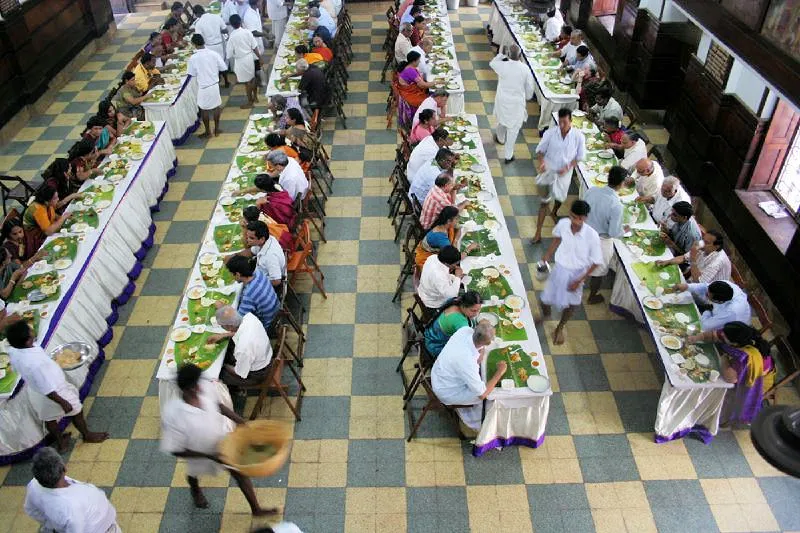
Fig.: अन्नमयम्
विवाहः, Chennai = சென்னை
(Image source: Details)
52.2.3. तद्धित-suffix -eya
The तद्धित-suffix -eya / f.: -eyī occurs, among other things, on feminine nouns in the sense of
- "child of"
- "descendant of"
Guna (वृद्धि) of the first vowel.
e.g. कौन्तेय m. "son of कुन्ती"
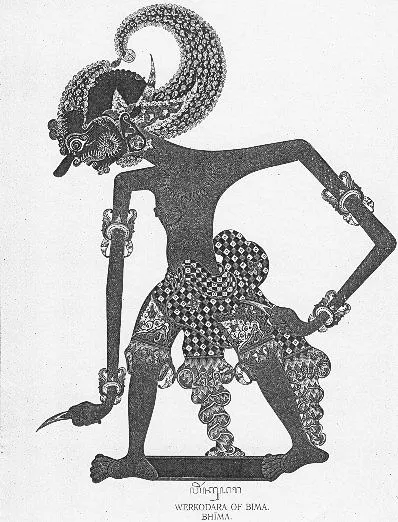
Fig.: भीमः कौन्तेयः
Wayang figure, Java, Indonesia
(Image source: Details)
52.3. Adverbial formation: adverbial suffix -śas
The adverbial suffix -śas forms adverbs from (mainly) distributive meaning:
numerals
Examples:
एकशस् "one by one, each one"
द्विशस् "in pairs, each two"
शतशस् "in hundreds, each hundred"other words
Examples:
भागशस् "part by part"
सर्वशस् "everywhere, all without exception"
नित्यशस् "constant"
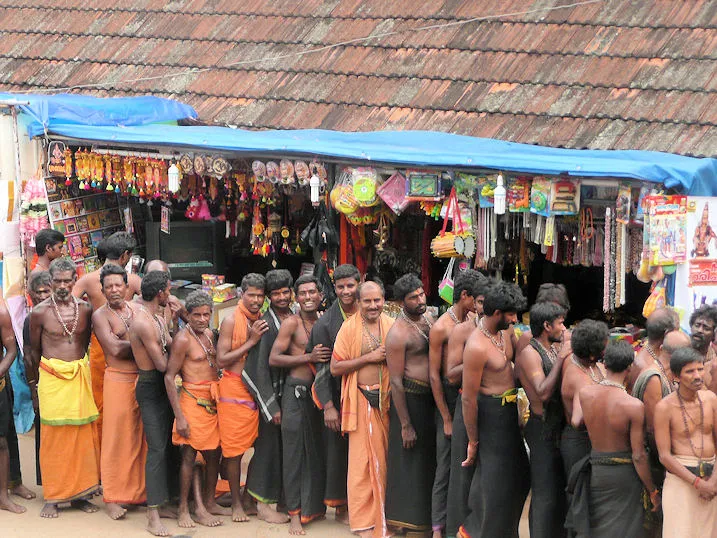
Fig.: अनुक्रमेणैकशः
Queue before temple, Trivandrum = Thiruvananthapuram = തിരുവനന്തപുരം
(Image source: Details)
52.4. Verbal compounds expressing that something becomes or is made into something it was not before (अभुततद्भावः)
52.4.1. cvi formations
Prefixing roots
- कृ 8U "to do"
- अस् 2P "to be"
- भू 1P "to become"
nouns and adjectives can be placed as prefixes to express that someone makes a person or thing into that, or that a person or thing becomes what is denoted by that noun.
The final sound of the noun is treated as follows:
The final sound of the noun is treated as follows:
**final -a and -ā of declinable words are replaced by -ī **
Examples:
कृष्णीभवति "something that is not black becomes black"
कृष्णीकरोति "he makes something that is not black, black"
गङ्गीभवति "he/she becomes the Ganges"**final -i and -u are replaced by the corresponding long vowel **
Examples:
शुचीभवति "he/she/it becomes pure"
गुरूभवामि "I become master"**final -ṛ is replaced by --rī **
e.g. पित्रीभवति "one who is not a father (पितृ) becomes a father = a man gets his first child"**final -n drops and the preceding vowel is treated according to the rules just mentioned **
e.g. राजीबभूव "one (who was not king) became king (राजन्)"**other multi-stem nouns stand in the form of the stem they have in the locative (सप्तमी) plural. The stem then undergoes the usual sandhi rules. See Kielhorn, Grammar § 489,3. **
e.g. तिर्यक्करोति "he lies aside (तिर्यच्)"
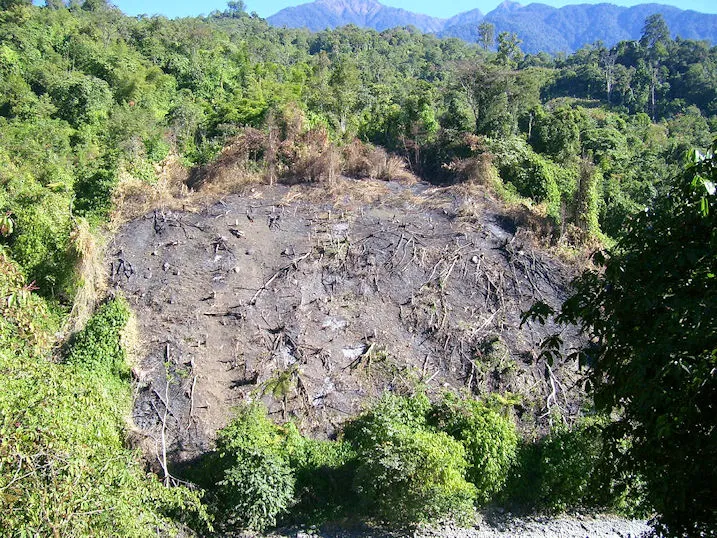
Fig.: भस्मीकृतं वनम्
Shifting cultivation, Arunachal Pradesh = अरुणाचल प्रदेश
(Image source: Details)
52.4.2. Suffix -sāt
To express that a person or thing becomes completely that, or that someone makes something or someone entirely into what is denoted by a noun, the noun can be
the suffix -sāt (which never becomes -ṣāt)
attached and the word thus formed combined with the roots
- कृ 8U "to do"
- अस् 2P "to be"
- भू 1P "to become"
- सम्-पद् 4Ā
into a verbal compound.
Examples:
अग्निसाद्भवति । अग्निसात्संपद्यते "he becomes completely fire"
भस्मसात्करोति "he transforms completely into ash (भस्मन् n. 'ash')"
Manchmal bedeutet das Suffix -sāt, dass eine Person oder Sache
- who becomes dependent on or
- who comes into possession of that
- or that someone makes dependent on that
that which is designated by the noun
Example:
राजसाद्भवति "he becomes dependent on the king, he becomes the property of the king"
According to the formations with -sāt, roots are not treated as after preverbs, i.e., absolutive:
भस्मसात्कृत्वा
52.5. Word repetitions (द्विरुक्तम्)
Word repetition expresses in Sanskrit:
- Repetition of the action
e.g. पुनः पुनः "again and again" - Distribution
Examples:
पृथक्पृथक् "each separately, each individually"
यद्यद् ... तत्तद् "whatever ... all that"
युगे युगे "in each individual world age"
Occasionally, a compound can be formed from such connections
Examples:
एकैक 3 "each individual"
अल्पाल्प 3 "very small"
नवनव 3 "always new"
Regarding the so-called आम्रेडित compounds, in which inflected words are repeated, but the second received an accent in pre-classical times, i.e., a compound is present, see Wackernagel, Altindische Grammatik II,1 p. 142ff.
52.6. The numeral (सम्ख्या f.)
Not treated here, see e.g. at Kielhorn, Grammar §201f.
52.6.1. Cardinal numbers
52.6.1.1. Numeral adjectives (for 1 to 19)
The numerals for 1 to 19 are adjectives.
The numerals for 1 to 4 are different in declension for the three genders.
For the numerals for 5 to 19 (नवदशन्) there is only one single declension for the three genders.
For these numeral adjectives, as for all adjectives: it must stand in the same case, number, and gender as the associated noun and vice versa (i.e., for 1 singular, for 2 dual, for the rest plural).
Numeral adjectives:
1 एक 3 (declension like सर्व, in plural: "some")
2 द्वि 3
3 त्रि 3
4 चतुर् 3
5 पञ्चन् 3
6 षष् 3
7 सप्तन् 3
8 अष्टन् 3
9 नवन् 3
10 दशन् 3
The declension follows at the appropriate place in the word lists.
The further numeral adverbs up to 19 see e.g. at Kielhorn, Grammar §201.
52.6.1.2. Numeral nouns (for 19ff.)
The numerals for 19 (एकोनविंशति "one less than 20") to 99 are feminine nouns and are declined like मति f. or root nouns on -t (e.g. त्रिंशत् f.).
Examples:
20 विंशति f.:br
30 त्रिंशत् f.
The numerals for numbers from 100 are neuter nouns. They are declined like फलम्.
Examples:
100 शत n.:br
1000 सहस्र n.
The individual numeral nouns see e.g. at Kielhorn, Grammar §201.
52.6.1.3. Syntax regarding the cardinal numbers
From the difference between verbal adjectives and verbal nouns for cardinal numbers, the following consequence arises for syntax:
- adjectival cardinal numerals can only be connected to the noun for the counted items like adjectives
e.g. तिसृभिर्नारीभिः "by three women" - substantive cardinal numerals can be connected to the noun for the counted items in three ways
- they govern the genitive (षष्ठी) of the counted items
e.g. विंशत्या नारीणाम् "by 20 women" - they stand as apposition in the same case (but in the singular) as the counted items
e.g. विंशत्या नारीभिः "by 20 women" - they stand as the second member of a तत्पुरुष with the counted items as the first member
e.g. गोविंशत्या "by 20 cows"
- they govern the genitive (षष्ठी) of the counted items
52.6.2. Ordinal numbers
See e.g. in Kielhorn, Grammar §201f.
52.6.3. Numeral adverbs
a) "-times":
once: सकृत्
twice: द्विस्
thrice: त्रिस्
four times: चतुस्
five times etc. is formed with the suffix -कृत्वस्: पञ्चकृत्वस्
b) "-fold": is expressed with the suffix -धा
simple: एकधा
twofold: द्विधा । द्वेधा
etc.
c) "each ...", "to ...": is expressed with the suffix -शस् (see above!)
द्विशस् "to two, each two"
52.6.4. Numeral adjectives
"-fold":
twofold, consisting of two
threefold, consisting of three parts
from 4 onwards "-fold" is expressed by the suffix -तय (f.: -तयी): चतुष्टय m.n. चतुष्टयी f. "fourfold"
Further formations can be found in dictionaries or grammars.
52.6.5. Compounds with cardinal numbers in the first member
बहुव्रीहि are formed quite regularly.
Example:
चतुर्मुख m. "one, who has four faces" = चत्वारि मुखानि यस्य सः (an epithet of Brahmā)
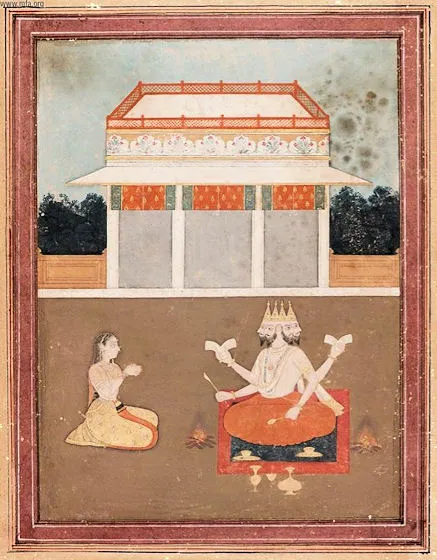
Fig.: चतुर्मुखः
(Image source: Details)
तत्पुरुष with a cardinal number in the first member may not be formed arbitrarily:
Rule 1: Words that designate a direction (such as पूर्व 3 "eastern", उत्तर 3 "northern"), and words for cardinal numbers, may form a कर्मधारय-compound with other words only if the compound is used as a proper name.
Therefore, for example, from उत्तरा वृक्षाः "northern trees" or पञ्च ब्राह्मणः no Tatpuruṣa may be formed. From सप्तन् and ऋषि, however, the Tatpuruṣa सप्तर्षि m. "the seven Ṛṣis" may be formed, if this stands as the name for the constellation of the Great Bear (Ursa maior).
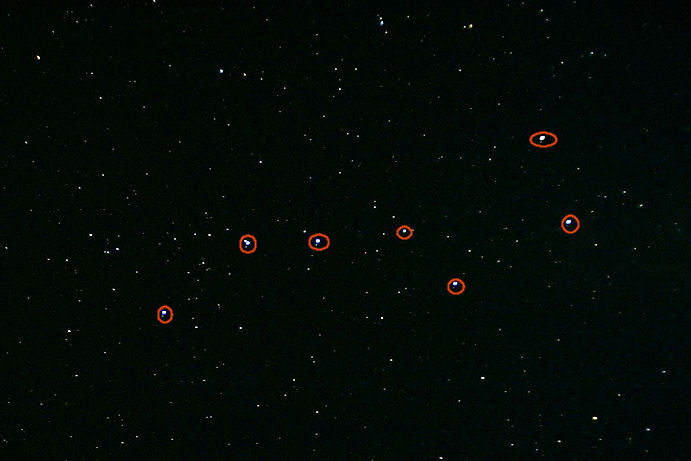
Fig.: सप्तर्षयः
The seven-starred constellation = the seven brightest stars of the Great Bear (Ursa maior)
(Image source: Details)
Rule 2: Deviating from Rule 1, a word that designates a direction or a cardinal number may form a Tatpuruṣa with another noun if
a Taddhita suffix is attached to the compound thus formed
Examples:
pūrva + śālā ("hall) » *pūrvaśālā (must not be used so!) + Taddhita -a » पौर्वशाल 3 "located in the eastern hall"
ṣaṣ + mātṛ » *ṣaṇmātṛ (not permissible!) + Taddhita -a » षण्मातुर m. "the child of six mothers" (= कार्त्तिकेय)the compound thus formed is used in a meaning that is otherwise designated by a Taddhita suffix (in this type the transition to Bahuvrīhi is fluid):
Examples:
dvi + go » द्विगु : not: "two cows", but: "purchased for two cows"
द्विवर्ष not: "two years", but: "two years old"the compound thus formed forms the first member of another compound
Example:
pañca + go » pañcagava (impermissible as a single word!) + dhana » पञ्चगवधन m. "one, whose wealth consists of five cows"
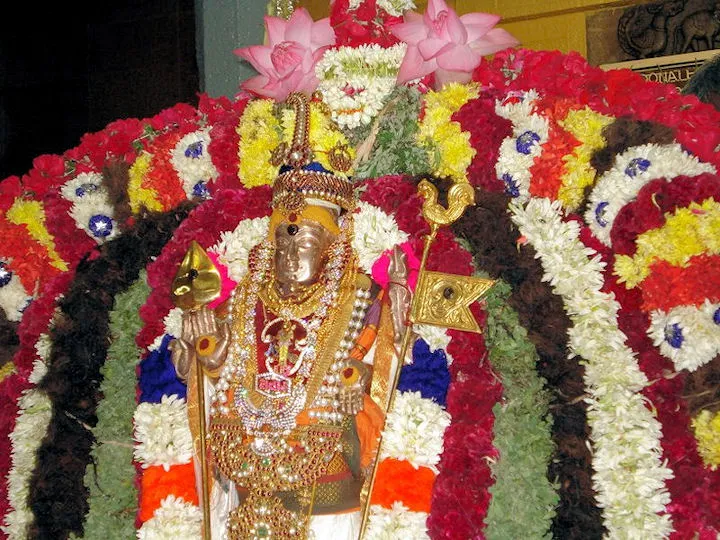
Fig.: षण्मातुरः कार्त्तिकेय:
Jalakandapuram = ஜலகண்டபுரம்
(Image source: Details)
A designation for a cardinal number (but not for a cardinal direction) can form a Tatpuruṣa compound with another noun as the first member even when the resulting compound denotes the aggregate of several things, i.e., combines two or more things into a single unit.
Tatpuruṣa compounds formed according to this rule are called Dvigu (द्विगु).
Dvigu compounds denoting a unit are usually neuter. If the second member ends in -a, the feminine suffix -ī may be added. If the second member ends in fem. -ā, either neuter -a or feminine -ī replaces it. If the second member ends in -an, it is replaced by -a or -ī.
Examples:
त्रि + भुवनव् » त्रिभुवन n. "the aggregate of the three worlds, the three worlds as a unit, the tri-world (heaven-earth-underworld)
त्रिलोक n. । त्रिलोकी n. "tri-world"
Dvigu compounds to which no Taddhita suffix is attached, but which have the meaning designated by a Taddhita suffix, determine their gender according to the noun they qualify (they are in reality probably Bahuvrīhis)
Example:
पञ्चगु 3: "acquired for five cows"
52.7. Word List
अखिल 3: seamless, whole
निखिल 3: complete, whole
from:
खिल m.: fallow field, wasteland
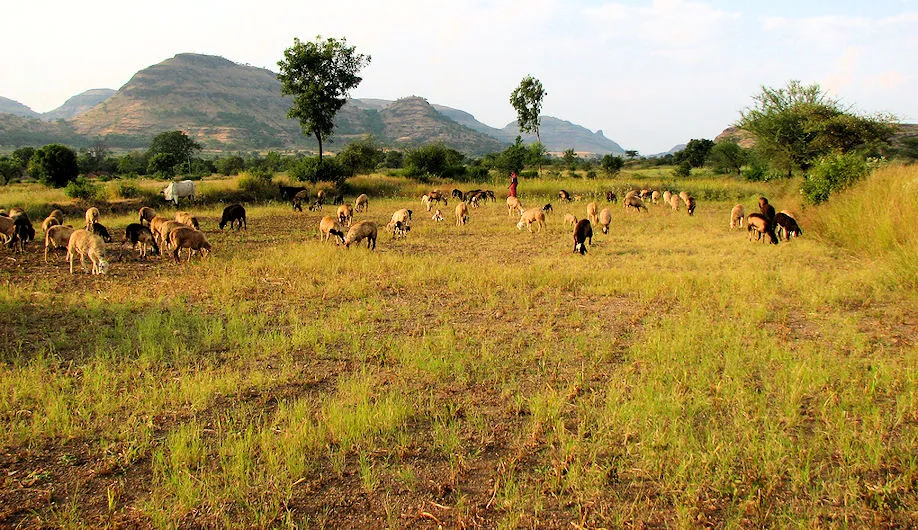
Fig.: खिलः
Tambhol, Akole, Ahmednagar = अहमदनगर
(Image source: Details)
अन्तर् Adv.: inside, within; postposition with Gen. Loc. (षष्टी, सप्तमी): inside, in the middle; postposition with Gen. Abl. (षष्ठी, पञ्चमी): out of ...
अन्योन्य 3: mutually, each other
इ + वि + परि 2P विपर्येति : to fail
PPP विपरीत 3: wrong, incorrect
त्रि 3: three
| Masculine पुंस् | Neuter नपुंसकम् | Feminine स्त्री | |
|---|---|---|---|
| 1. Nominative १. प्रथमा | त्रयस् | त्रीणि | तिस्रस् |
| 2. Accusative २. द्वितीया | त्रीन् | त्रीणि | तिस्रस् |
| 3. Instrumental ३. तृतीया | त्रिभिस् | तिसृभिस् | |
| 4. Dative ४. चतुर्थी | त्रिभ्यस् | तिसृभ्यस् | |
| 5. Ablative ५. पञ्चमी | त्रिभ्यस् | तिसृभ्यस् | |
| 6. Genitive ६. षष्ठी | त्रयाणाम् | तिसृणाम् | |
| 7. Locative ७. सप्तमी | त्रिषु | तिसृषु | |
निस् Postposition and prefix with nouns and verbs: out, away, out, forth, from, away, without - from
पीड् 10P पीडयति : to press, torment; to distress, besiege, plague
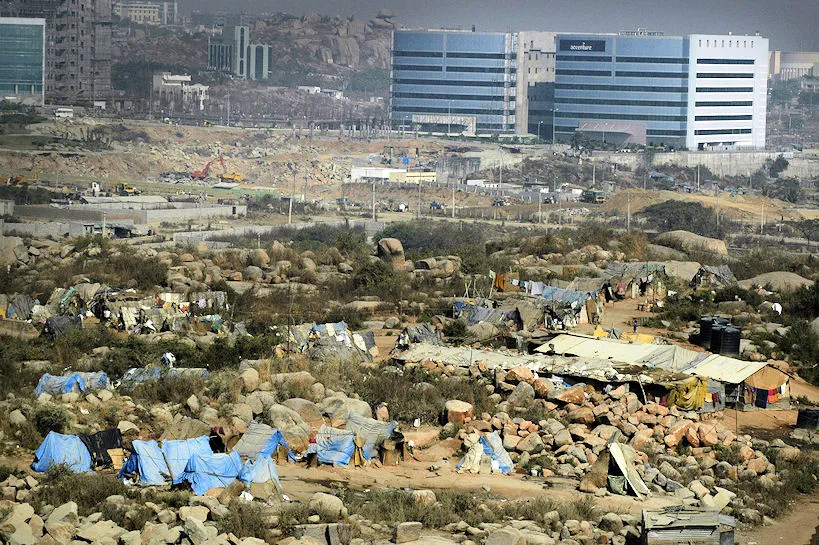
Fig.: पीडिताः
Hyderabad = హైదరాబాద్
(Image source: Details)
पर 3: (declension like सर्व) distant, foreign, higher than (पञ्चम्या), utmost, highest; other, foreign, hostile; m.: foreigner
of which:
परम् Adv.: to a high degree, on that account, later, but, however
प्रति Postposition (द्वितीयया): to - towards, after, with regard to, in relation to
प्रधान 3: principal, best; n.: the most important
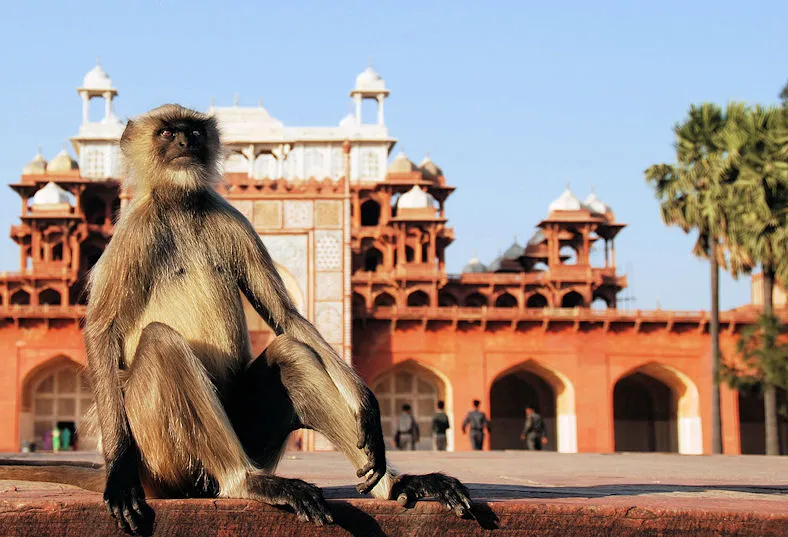
Fig.: प्रधानः
मुंबई
(Image source: Details)
लौल्य n.: greed, lustfulness
वर्ग m.: section, division, group
त्रिवर्ग m.: group of three (e.g. धर्मः, अर्थः, कामः; or: सत्त्वम्, रजस्, तमस्; or: ब्राह्मणाः, क्षत्रियाः, वैश्याः)
वश् 2P वस्टि, उशन्ति, Imperat. 2.sg.: उड्ढि : to want, to command, to desire
Perf Va उवाश, ऊशुर्
Fut. वशिष्यति
Pass. उष्यते
Kaus. वाशयति
PPP उशित
Inf. वशितुम्
Absol. -वश्य
वा 2P वाति : to blow, to breathe
Perf IV ववौ
Fut. वास्यति
Pass. वायते
Kaus. वापयति
PPP वान । वात
Inf. वातुम्
of which:
वात m.: wind
वृज् 7P वृणक्ति 1P वर्जति : to turn, to rotate; to ward off, to exclude
Perf. II ववर्ज, ववृजुर्
Fut. वर्जिष्यति
Pass. वृज्यते
Kaus. वर्जयति : to eliminate
Kaus. PPP वर्जित : deprived of something, free from
PPP वृक्त
Inf. वर्जितुम्
व्यवहार m.: activity, conduct, interaction, commerce, business, trade, (legal) process
शील n.: custom, habit, nature, character, good habit = morality
सूर्य m.: sun
सेव् 1Ā सेवते : to serve someone (द्वितीया), to attend to, to honor, to love
Perf I सिषेवे
Fut. सेविष्यते
Pass. सेव्यते
Kaus. सेवयति
PPP सेवित
Inf. सेवितुम्
Absol. -सेव्य
of which:
सेवा f.: service, attendance
धीर 3: firm, steadfast, continuous, persistent
शम् शाम्यति
शशाम, शेमुर्
शमिष्यति
शम्यते
शमयति
शान्त
शमित्वा । शान्त्वा
कोविद 3: experienced in (षष्ठ्या सप्तम्या वा)
याम m.: night watch (each three hours)
परंपरा f.: uninterrupted series
अमुत्र Adv.: there, thither
च्यु 1Ā च्यवते : to move, to move forward, to fall down
Perf. IIIa चुच्युवे
Fut. च्योष्यते
Pass. च्यूयते
Kaus. च्यावयति
PPP च्युत
भू + अनु 1P अनुभवति : to recognize, to feel, to perceive, to experience
चक्र n.: wheel
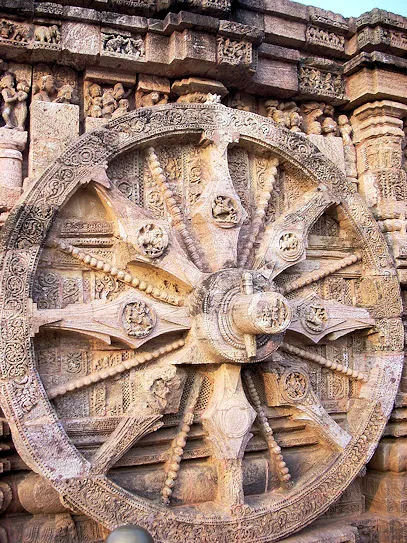
Fig.: चक्रम्
Konark = कोनार्क
(Image source: Details)
कदली f.: banana tree (Musa sp.)
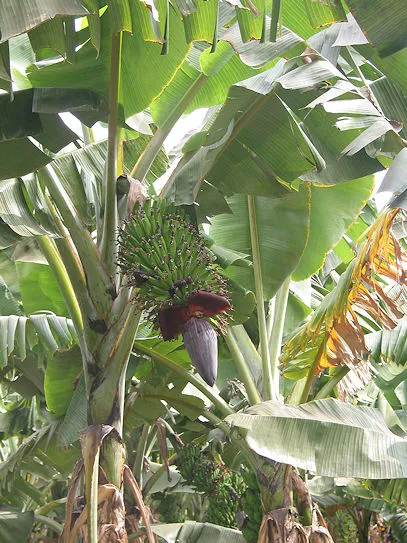
Fig.: कदली
Hampi = ಹಂಪೆ
(Image source: Details)
सार m.n.: core, marrow, essence, substance
दिव्य 3: heavenly, divine
वर 3: best
आदर्श m.: mirror
मल m.n.: dirt, blemish

Fig.: मलम्
मुंबई
(Image source: Details)
त्रिपिष्टप n.: Indra's heaven
मार m.: the personified evil, the personified temptation/manipulation, devil
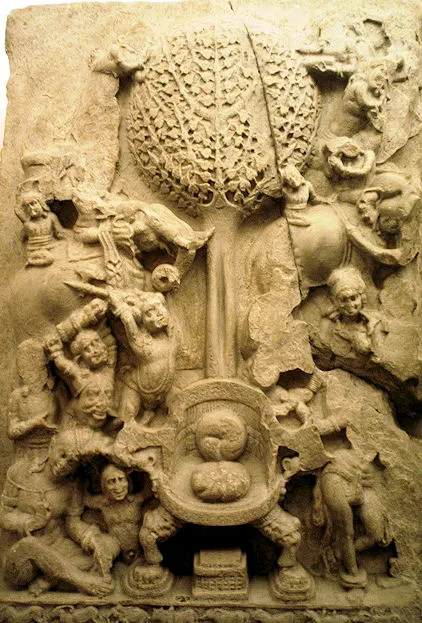
Fig.:
Amaravati = అమరావతి, 2nd cent. CE
(Image source: Details)
विजिज्ञासु 3: one who wishes to know completely
त्रै 1Ā त्रायते : to protect, to save
Perf. IV तत्रे
Fut. त्रास्यते
Pass. त्रायते
Caus. त्रापयति
PPP त्राण । त्रात
Inf. त्रातुम्
52.8. Translation Exercise
१. मनुस्मृति ४, १५९ - १६१
यद्यत्परवशं कर्म
ततद्यत्नेन वर्जयेत् ।
यद्यदात्मवशं तु स्यात्
ततत्सेवेत यत्नतः ॥१५९॥
सर्वं परवशं दुःखं
सर्वमात्मवशं सुखम् ।
एतद्विद्यात्समासेन
लक्षणं सुखदुःखयोः ॥१६०॥
यत्कर्म कुर्वतो ऽस्य स्यात्
परितोषो ऽन्तरात्मनः ।
तत्प्रयत्नेन कुर्वीत
विपरीतं तु वर्जयेत् ॥१६१॥
Explanation: सुखदुःखयोः Gen.Loc.Dual.m.f.n. (Dualdvandva)
२. मनुस्मृति २, ६ On the sources of the धर्म
वेदो ऽखिलो धर्ममूलम्
स्मृतिशीले च तद्विदाम् ।
आचआरश्चैव साधूनाम्
आत्मनस्तुष्टिरेव च ॥६॥
Explanation: स्मृतिशीले Nom.Acc.Dual.n. (Dualdvandva)
३. कौटिलीयार्थशास्त्र १, ७, २ - ७ On अर्थ, काम, धर्म in the life of the prince
एवं वश्येन्द्रियः परस्त्रीद्रव्यहिंसाश्च वर्जयेत्, स्वप्नं लौल्यमनृतम्दुद्धतवेषत्वमनर्थ्यसंयोगमधर्मसंयुक्तमनर्थसंयुक्तं च व्यवहारम् ।२। धर्मार्थाविरोधेन कामं सेवेत, न निःसुखः स्यात् ।३। समं वा त्रिवर्गमन्योन्यानुबद्धम् ।४। एको ह्यत्यासेवितो धर्मार्थकामानामात्मानमितरौ च पीदयति ।५। अर्थ एव प्रधान इति कौटिल्यः ।६। अर्थमूलौ हि धर्मकामाविति ।७।
Explanations:
इतरौ Nom.Acc.Dual.m to इतर 3 "other"
अर्थमूलौ, धर्मकामौ Nom.Acc.Dual.m (धर्मकामौ is Dualdvandva)
४. अश्वघोष (2nd cent. CE): बुद्धचरित ४ Buddha's liberating knowledge
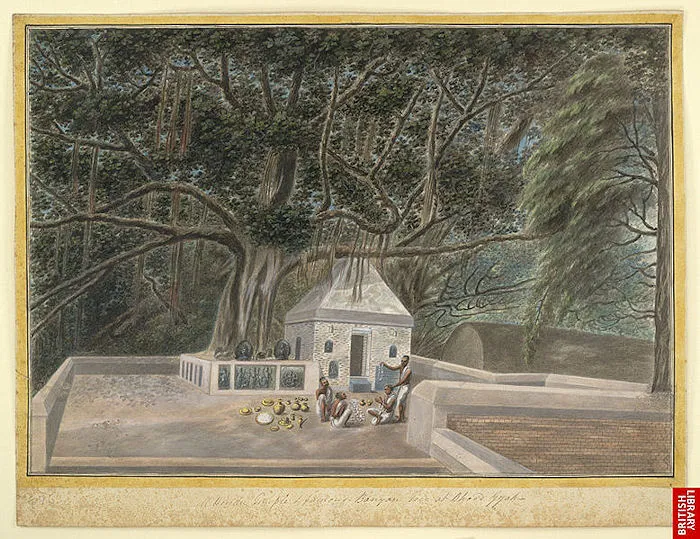
Fig.: अश्वत्थो महाबोधिवृक्षः
Ficus religiosa L. बोधगया, ca. 1810
(Image source: Details)
ततो मारबलं जित्वा
धैर्येण च शमेन च ।
परमार्थं विजिज्ञासुः
स दद्ध्यौ ध्यानकोविदः ॥१॥
सर्वेषु ध्यानविधिषु
प्राप्य चैश्वर्यमुत्तमम् ।
सस्मार प्रथमे याम
पूर्वजन्मपरंपराम् ॥२॥
अमुत्राहमयं नाम
च्युतस्तस्मादिहागतः ।
इति जन्मसहस्राणि
सस्मारानुभवन्निव ॥३॥
स्मृत्वा जन्म च मृत्युं च
तासु तासूपपत्तिषु ।
ततः सत्त्वेषु कारुण्यम्
चकार करुणात्मकः ॥४॥
कृत्वेह स्वजनोत्सर्गम्
पुनरन्यत्र च कृत्वा ।
अत्राणः खलु लोको ऽयम्
परिभ्रमति चक्रवत् ॥५॥
इत्येवं स्मरतस्तस्य
बभूव नियतात्मनः ।
कदलीगर्भनिःसारः
संसार इति निश्चयः ॥६॥
द्वितीये त्वागते यामे
सो ऽद्वितीयपराक्रमः ।
दिव्यं लेभे परं चक्षुः
सर्वचक्षुष्मतां वरः ॥७॥
ततस्तेन स दिव्येन
परिशुद्धेन चक्षुषा ।
ददर्श निखिलं लोकम्
आदर्श इव निर्मले ॥८॥
सत्त्वानां पश्यतस्तस्य
निकृष्टोत्कृष्तकर्मणाम् ।
प्रच्युतिं चोपपत्तिं च
ववृधे करुणात्मता ॥९॥
इमे दुष्कृतकर्माणः
प्राणिनो यान्ति दुर्गतिम् ।
इमे ऽन्ये शुभकर्माणः
प्रतिष्ठन्ते त्रिविष्टपे ॥१०॥
52.9. Tasks during the semester break
With Lesson 52, the first semester (13 weeks × 4 class hours) of the Sanskrit course is concluded.
During the semester break, the following tasks should be completed:
- Review of everything learned so far, especially:
- Memorization of conjugation and declension paradigms
- Vocabulary
- Stem forms
- Memorization of as many verses and prose texts as possible from classical literature
- Working through Lesson 53
- Working through the sheets Bhg 1 - 11 (not yet on the Internet)
- Preparation of भगवद्गीता Ch. 1, learning the associated vocabulary from the word lists (not yet on the Internet)
- Metrical analysis of all verses from भगवद्गीता १
A good impression of the text in recited form is provided by: http://www.vaisnava.cz/gita/mp3/Bhagavad-gita01.mp3. -- Accessed on 2009-01-19 - Reading a महाभारत retelling, e.g.
Mahābhārata : India's great epic / translated and condensed from Sanskrit by Biren Roy. -- 10th ed. -- Munich : Diederichs, 1995. -- 335 p. ; 19 cm. -- (Diederichs yellow series ; 16 : India) - Working through:
Kunnappally, John: Prakriyā bhāshyam : Sanskrit grammar / Originally written in Malayalam. Translated into English by K.V.R. Pai. -- Parathode : Self-published, 1983. -- 818 p. ; 23 cm. -- pp. 208 - 254 (Sytactical government) - Fully working through:
**Basham, A. L. (Arthur Llewellyn) <1914-1986>**The wonder that was IndiaPart: A survey of the culture of the Indian sub-continent before the coming of the Muslims. -- London : Sidgwick & Jackson, 1954. - Beginning with the working through of:
Winternitz, Moriz <1863 - 1937>: History of Indian literature. Stuttgart : Koehler. -- 3 vols. -- 1908 - 1922 (still by far the best history of Sanskrit, Pali, and Prakrit literature)
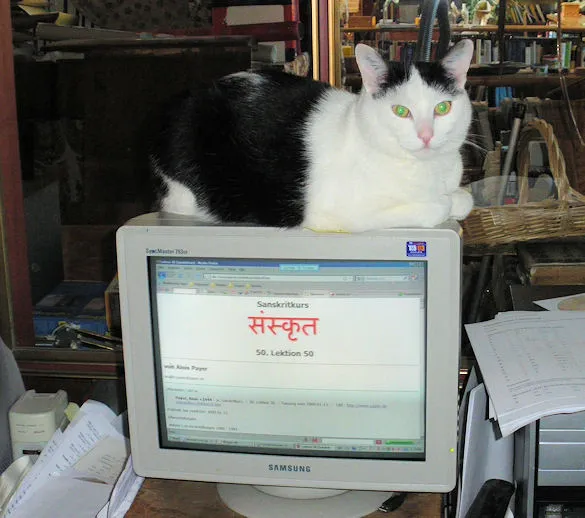
Fig.: श्रीगुम्पिः , मम मन्त्री
(Image: Payer)
(Image source: Details)
lekt5202: विवाहः, Chennai = சென்னை [Image source: swamysk. -- http://www.flickr.com/photos/swamysk/2317923383/. -- Accessed on 2009-01-15. -- Creative Commons License (Attribution, non-commercial use, no derivatives)]
lekt5203: Wayang figure, Java, Indonesia [Image source. Wikipedia. Public domain]
lekt5204: Queue before temple, Trivandrum = Thiruvananthapuram = തിരുവനന്തപുരം [Image source: gray_area. -- http://www.flickr.com/photos/83831933@N00/3107232046/. -- Accessed on 2009-01-15. -- Creative Commons License (Attribution, non-commercial use, share alike)]
lekt5209: Slash-and-burn agriculture, Arunachal Pradesh = अरुणाचल प्रदेश [Image source: parrothanging. -- http://www.flickr.com/photos/biligiri/1857091269/. -- Accessed on 2009-01-15. -- Creative Commons License (Attribution, non-commercial use, no derivatives)]
lekt5205: [Image source: Wikipedia. Public domain]
lekt5206: The Big Dipper = the seven brightest stars of the Big Bear (Ursa maior) [Image source: Wikipedia, GNU FDLicense]
lekt5207: Jalakandapuram = ஜலகண்டபுரம் [Image source: Wikipedia. Public domain]
lekt5210: Tambhol, Akole, Ahmednagar = अहमदनगर [Image source: Dan Tunstall / World Resources Institute Staff. -- http://www.flickr.com/photos/wricontest/291696431/. -- Accessed on 2009-01-16. -- Creative Commons License (Attribution)]
lekt5212: Hyderabad = హైదరాబాద్ [Image source: David A G Wilson. -- http://www.flickr.com/photos/dawilson/2912554387/. -- Accessed on 2009-01-16. -- Creative Commons License (Attribution, non-commercial use, no derivatives)]
lekt5213: मुंबई [Image source: saibotregeel. -- http://www.flickr.com/photos/saibotregeel/330885607/. -- Accessed on 2009-01-16. -- Creative Commons License (Attribution, no derivatives)]
lekt5214: Konark = कोनार्क [Image source: Gaurab Arka. -- http://www.flickr.com/photos/gaurabarka/2758427709/. -- Accessed on 2009-01-16. -- Creative Commons License (Attribution, non-commercial use, no derivatives)]
lekt5208: Hampi = ಹಂಪೆ [Image source: oliver hiltbrunner. -- http://www.flickr.com/photos/oliverhiltbrunner/757794766/. -- Accessed on 2009-01-15. -- Creative Commons License (Attribution, non-commercial use, share alike)]
lekt5215: मुंबई [Image source: James Cridland. -- http://www.flickr.com/photos/jamescridland/187997905/. -- Accessed on 2009-01-16. -- Creative Commons License (Attribution)]
lekt5217: Amaravati = అమరావతి, 2nd century CE [Image source. Wikipedia. GNU FDLicense]
lekt5216: Ficus religiosa L. बोधगया, ca. 1810 [Image source: Wikipedia. Public domain]
lekt5201: (Image: Payer)