
Lesson 26
26.1. Law of cerebralization for -s- within the word
-s- is replaced by -ṣ- if k, r, l or a vowel — except a, ā — precedes immediately or only separated by अनुस्वार or विसर्ग and another sound than ṛ, r follows.
This sandhi also applies to दुस्- before voiceless gutturals and labials in compounds.
Examples:
तेषाम् (from: te-sām)
but: तासाम् (tā-sām)
26.2. Law of cerebralization for dentals within the word
Dental stops are replaced by the corresponding retroflexes after retroflexes (including -ṣ-):
- iṣ + -ta = iṣṭa (इष्ट)
- ti + sth + a + ti = tiṣṭhati (तिष्ठति)
(ṣ due to the preceding i, ṭh due to the subsequently preceding ṣ)
26.3. Word sandhi for Palatal, Guttural, ṣ, h + -s
-k, -kh, -g, -gh; -c, -j; -ś, -ṣ; -h + s- » -kṣ
Examples see below
26.4. Grassmann's Law of aspiration dissimilation
An immediate sequence of two aspirates (aspirate - vowel - aspirate) results in the loss of aspiration of the first sound:
Example:
*dhu(gh) » du(g)h
If, as a result of sound laws, the second sound loses its aspiration, then the aspiration reappears on the first sound.
Examples: see below future tense of दुह् and बुध्
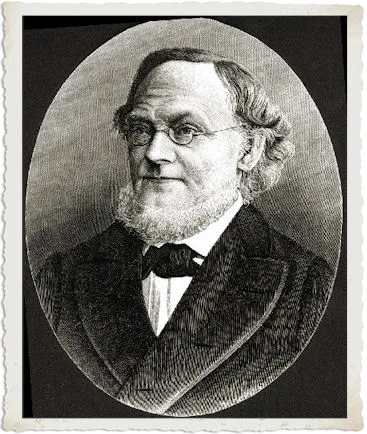
Fig.: Hermann Grassmann
(Image source: Details)
26.5. Word sandhi for -m, -n before sibilants
Before sibilants, -n and -m are replaced by -ṃ-:
Example: s. below future tense of मन्
26.6. Usage of the simple future (ऌत्, भविष्यन्ती f.)
The Simple Future (ऌत्, भविष्यन्ती f.) expresses:
- hope
- an intended or desired action ("I will go", "I want to go")
- an expectation ("it will happen so")
- fear
- hope
- probability
- the speaker’s opinion
- command
The future stands in partial competition with the optative (see later).
e.g. व्रतं करिष्यन्देवगृहं गच्छति = "Someone who wishes to make a vow goes to the temple."
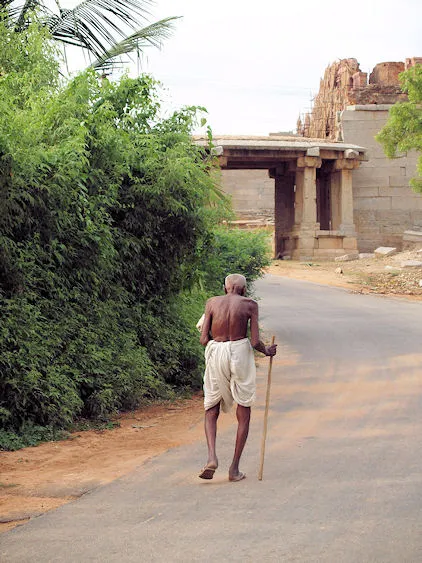
Fig.: व्रतं करिष्यन्देवगृहं गच्छति
(Image source: Details)
26.7. Formation of the simple future (ऌत्, भविष्यन्ती f.)
Simple future:
Future stem + primary endings
Future stem:
(mostly) strong-grade root + -sya
or
(mostly) strong-grade root + -i- + -sya (= - iṣya)
Which root has which formation of the future stem must be learned with the stem forms!
In general, the root form and the connecting vowel of the future correspond to the infinitive.
Some roots can optionally form the future with and without the connecting vowel -i-.
The Parasmaipada participle of the future is formed by adding the suffix -nt- to the future stem, feminine optionally on -ntī or -tī:
कृ : करिष्यन्त्, करिष्यन्ती / करिष्यती
Examples:
| Root | Future 3. sg. P (Ā) |
|---|---|
| नी | नेष्यति |
| भू | भविष्यति (भो + इ + स्य + ति) |
| दिश् | देक्ष्यति (देश् + स्य + ति) |
| दृश् | द्रक्ष्यति |
| पच् | पक्ष्यति |
| प्रच्छ् | प्रक्ष्यति |
| यज् | यक्ष्यति |
| सृज् | स्रक्ष्यति |
| पद् | पत्स्यति |
| अद् | अत्स्यति |
| दुह् | धोक्ष्यति (दोग् + स्य + ति) |
| बुध् | भोत्स्यते (बोध् before voiceless = भोत्) |
| मन् | मंस्यते (मन् + स्य + ते) |
26.8. Exercise
Form the corresponding future forms in number, person, and gender (Parasmaipada, Ātmanepada):
A) without connecting vowel -i-:
- अत्ति
- प्राप्नुवन्ति
- सम्यन्ति
- विजयन्ते
- दहन्
- आदिशन्ति
- दोग्धि
- पश्यति (form future of दृश्)
- उपानयन्ति
- पचति
- उपपद्यन्ते
- पिबति
- पृच्छति
- बुध्यन्ते
- मन्यते
- मुञ्चति
- यजते
- युध्यन्ते
- भजति
- कृषति
- क्रुध्यन्ति
- दुष्यति
- द्वेष्टि
- पान्ति
- सीदति
- लभते
- वक्ति
- प्रविशन्ति
- शक्नोति
- शृणोति
- सिञ्चति
- सुन्वन्ति
- सृजति
- स्तौति
- तिष्ठति
B) With connecting vowel -i-:
- अस्यति
- आसते
- इच्छति
- संस्करोति
- खादति
- लुभ्यति
- तनुते
- उपागच्छन्ति
- चरति
- जायन्ते
- नृत्यति
- सहते
- पतन्ति
- रोदिति
- प्रभवति
- म्रियन्ते (in future Parasmaipada)
- जीवन्ति
- रक्षति
- वदति
- स्मरति
- घ्नन्ति
- अर्हन्ति
- कुप्यन्ति
C) Future optionally with and without -i-:
- मुह्यन्ति
- वर्तते
- अश्नुवते (in future Parasmaipada)