
Lesson 17
17.1. Second Present Class (अदादि = अद् etc.)
The verbal endings attach directly to the root. In doing so, the sound changes resulting from word sandhi must be observed.
The following forms of formation exist in the second present class:
- Roots with stem gradation
- mostly: strong grade - weak grade
- some roots: guṇa grade - weak grade
- Roots without stem gradation
- two-syllable roots ending in -i/-ī with stem gradation
17.2. Roots of the second present class with stem gradation strong grade - weak grade
Examples:
द्विष् 2 U "to hate"
- strong present stem: dveṣ-
- weak present stem: dviṣ-
| 3. sg. Pres. P | द्वेष्टि (« dveṣ + -ti) |
| 3. pl. Pres. P | द्विषन्ति (dviṣ-anti) |
| 3. sg. Pres. Ā | द्विष्टे (« dviṣ + -te) |
| 3. pl. Pres. Ā | द्विषते (dviṣ-ate) |
The following word sandhi rule applies here:
Word sandhi of -ṣ + t(h)-
-ṣ + t(h)- » -ṣṭ(h)-
Further examples:
इ 2 P "to go" (Ā after certain prefixes)
- strong present stem: e-
- weak present stem:
- before consonant: i-
- before vowel: y-/iy-
| 3. sg. Pres. P | एति (e-ti) |
| 3. pl. Pres. P | यन्ति (y-anti) |
| 3. sg. Pres. Ā | इते (i-te) |
| 3. pl. Pres. Ā | इयते (iy-ate) |
दुह् 2 U "to milk"
- strong present stem: doh-
- weak present stem: duh-
| 3. sg. Pres. P | दोग्धि (« doh- + -ti) |
| 3. pl. Pres. P | दुहन्ति (duh-anti) |
| 3. sg. Pres. Ā | दुग्धे (« duh- + -te) |
| 3. pl. Pres. Ā | दुहते (duh-ate) |
हन् 2 P "to strike, to slay, to kill"
- strong present stem: han-
- weak present stem:
- before consonant: ha- (« *hn-)
- before vowel: ghn-/han-
| 3. sg. Pres. P | हन्ति (han-ti) |
| 3. pl. Pres. P | घ्नन्ति (ghn-anti) |
| 3. sg. Pres. Ā | हते (ha-te) |
| 3. pl. Pres. Ā | घ्नते (ghn-ate) |
अस् 2 P "to be"
- strong present stem: as-
- weak present stem: s-
| 3. sg. Pres. P | अस्ति (as-ti) |
| 3. pl. Pres. P | सन्ति (s-anti) |
17.3. Roots of the second present class with stem gradation guṇa grade - weak grade
Example:
स्तु 2 U "to praise"
- strong present stem: stau-
- weak present stem:
- before consonant: stu-
- before vowel: stuv-
| 3. sg. Pres. P | स्तौति (stau-ti) oder: स्तवीति |
| 3. pl. Pres. P | स्तुवन्ति (stuv-anti) |
| 3. sg. Pres. Ā | स्तुते (stu-te) |
| 3. pl. Pres. Ā | स्तुवते (stuv-ate) |
17.4. Roots of the second present class without stem gradation
Without stem gradation are roots of the second present class ending in -ā
Example:
पा 2 P "to protect, to guard, to watch over"
| 3. sg. Pres. P | पाति (pā-ti) |
| 3. pl. Pres. P | पान्ति (« pā- + -anti) |
Also, some other roots of the second class have no stem gradation:
Examples:
अद् 2 P "to eat"
| 3. sg. Pres. P | अत्ति (« ad- + -ti) |
| 3. pl. Pres. P | अदन्ति (ad-anti) |
आस् 2 Ā "to sit"
| 3. sg. Pres. Ā | आस्ते (ās-te) |
| 3. pl. Pres. Ā | आसते (ās-ate) |
वच् 2 P "to say"
| 3. sg. Pres. P | वक्ति (« vac- + -ti) |
| 3. pl. Pres. P | does not occur |
17.5. Disyllabic roots ending in -i/-ī with stem gradation
Several roots are disyllabic in a series of forms, i.e., they have an -i (or before some endings -ī) before a consonantal ending. Nevertheless, these roots are posited by native grammarians and in dictionaries, etc., as monosyllabic.
Examples:
रुद् 2 P "to weep, to howl"
- strong present stem: rodi-
- weak present stem:
- before consonant: rudi-
- before vowel: rud-
| 3. sg. Pres. P | रोदिति (rodi-ti) |
| 3. pl. Pres. P | रुदन्ति (rud-anti) |
ब्रू 2 U "to speak"
- strong present stem: bravī- (« bro- + -ī)
- weak present stem:
- vor Konsonant: brū-
- before vowel: bruv-
| 3. sg. Pres. P | ब्रवीति (bravī-ti) |
| 3. pl. Pres. P | ब्रुवन्ति (bruv-anti) |
| 3. sg. Pres. Ā | ब्रूते (brū-te) |
| 3. pl. Pres. Ā | ब्रुवते (bruv-ate) |
Also स्तु 2 U "to praise" has, in addition to the forms specified under 3., forms according to this pattern:
| 3. sg. Pres. P | स्तवीति (« sto + ī + ti) oder: स्तौति |
17.6. Word list
हन् 2 P हन्ति, घ्नन्ति Pass. हन्यते PPP हत : to strike, to kill, to slay
thereof:
घात m.: killing
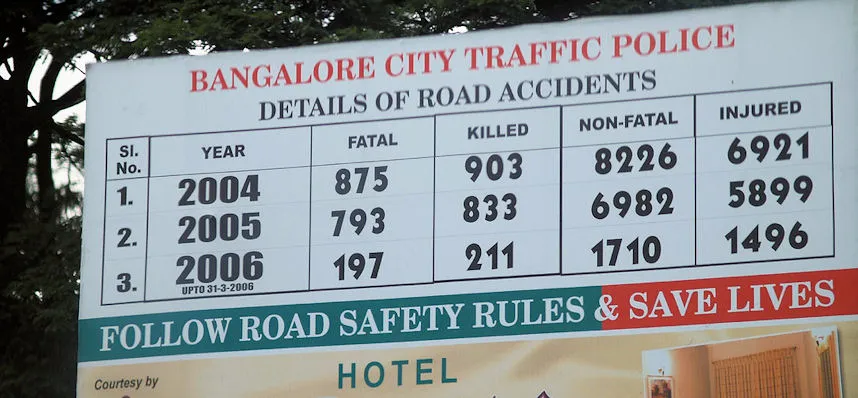
Fig.: घाताः
Bangalore = ಬೆಂಗಳೂರು
(Image source: Details)
आस् 2Ā आस्ते Pass. आस्यते PPP आसित : to sit
thereof:
आसन n.: the sitting, seat; also: yogic sitting postures
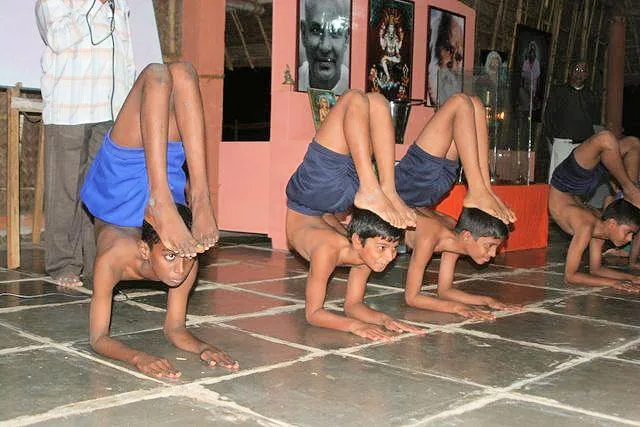
Fig.: योगासनम्
(Image source: Details)
रुद् 2 P रोदिति Pass. रुद्यते PPP रुदित : to weep, to howl
thereof:
रुद्र m.: (the howler =) the storm god Rudra
ब्रू 2 U ब्रवीति Ā ब्रूते no passive and PPP: to speak, to say (something to someone: double accusative)
दुह् 2 U दोग्धि Pass. दुह्यते PPP दुग्ध : to milk
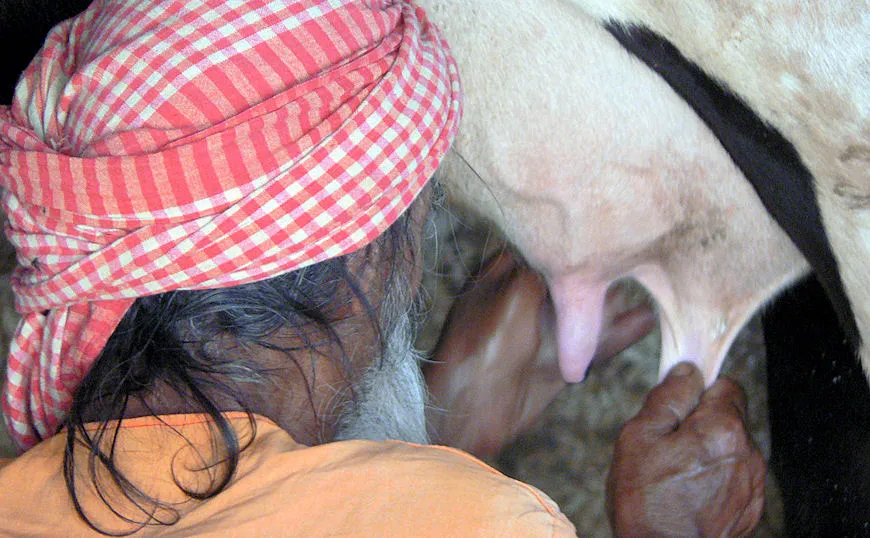
Fig.: दोग्धि
(Image source: Details)
दिश् 6 U दिशति Pass. दिश्यते PPP दिष्ट : to show, to instruct, to command
thereof:
दिष्टि f.: instruction, happy coincidence
दिष्ट्या Instr.: (lit.: by a happy coincidence) O happy coincidence (exclamation of joy and bliss)
17.7. Exercise 1
A) Insert the verb in the following sentences and translate:
१. ब्राह्मणो ऽनृतं न ... (ब्रू । वच् । वद्)
२. क्षत्रियो जनान् ... (पा । रक्ष्)
३. बलवद्योधो द्विजारीन् ... (जि । हन् । युध्)
४. ब्राह्मणकविर्लोकेश्वरम् ... (स्तु । यज्)
५. अग्निर्यज्ञान्नम् ... (अद् । दह्)
६. बालवैश्यो धेनुम् ... (दुह् । रक्ष् । पा)
७. द्विजदासो मृगमार्गेण ब्राह्मणग्रामम् ... (गम् । इ । पद्)
८. द्विजदासः शूद्रस् ... (अस् २ । भू)
९. बालब्राह्मणी ... (रुद् । आस् । मृ)
१०. साधुजनो ऽधर्मम् ... (द्विष् । न कृ)
B) Insert the agent and verb in the plural in the sentences formed in A)
17.8. Exercise 2
Translate the following verb forms and provide the corresponding root:
१. अदन्ति
२. सन्ति
३. आसते
४. यन्ति
५. इच्छति
६. कुर्वते
७. गच्छन्ति
८. जायते
९. जयति
१०. तनोति
११. दहति
१२. दोग्धि
१३. पश्यति
१४. द्विष्टे
१५. नयन्ति
१६. नृत्यति
१७. पद्यन्ते
१८. पिबति
१९. पान्ति
२०. पृच्छति
२१. बुध्यन्ते
२२. ब्रवीति
२३. भवन्ति
२४. मन्यते
२५. मुञ्चन्ति
२६. म्रियन्ते
२७. यजते
२८. युध्यन्ते
२९. रक्षति
३०. रोदिति
३१. लभते
३२. वक्ति
३३. वदति
३४. शृणोति
३५. स्तौति
३६. स्मरति
३७. हन्ति
३८. अश्नुवते
३९. कुप्यते
४० कर्षन्ति
४१. उद्यते
४२. सहन्ते
४३. सिच्यन्ते
४४. आप्नोति
४५. जीव्यते
४६. दिश्यन्ते
lekt1701: [Image source: by tlongacre. -- http://www.flickr.com/photos/tlongacre/2177187487/. -- Accessed on 2008-12-07. -- Creative Commons License (Attribution, no derivatives)]
lekt1702: [Image source: Roshnii. -- http://www.flickr.com/photos/roshnii/110086482/. -- Accessed on 2008-12-07. -- Creative Commons License (Attribution, non-commercial use, share alike)]
lekt1703: Bangalore = ಬೆಂಗಳೂರು [Image source: mattlogelin. -- http://www.flickr.com/photos/mattlogelin/143399263/. -- Accessed on 2008-12-07. -- Creative Commons License (Attribution, non-commercial use)]