
Lesson 30
30.1. The 9th Present Class (क्र्यादि = "क्री etc.")
Formation:
strong stem: low-grade root + -nā-
weak stem:
before consonant: low-grade root + -nī-
before vowel: low-grade root + -n-
Example:
क्री 9U "to buy"
| Singular एकवचन | Plural बहुवचन | |
|---|---|---|
| 3rd Person Parasmaipada | क्रीणाति (krī + nā + ti) | क्रीणन्ति (krī + n + anti) |
| 3rd Person Ātmanepada | क्रीणीते (krī + nī + te) | क्रीणते (krī + n + ate) |
With this present class, special attention must be paid to the formation of the present stem for the root ज्ञा 9U "to recognize, to know":
| Singular एकवचन | Plural बहुवचन | |
|---|---|---|
| 3rd Person Parasmaipada | जानाति (jā-nā-ti) | जानन्ति (jā-n-anti) |
| 3rd Person Ātmanepada | जानीते (jā-nī-te) | जानते (jā-n-ate) |
The form जा, which underlies the present stem of ज्ञा, is either to be explained by an ablaut series -ā (low grade) -nā (high grade), or by dissimilation from *jñā-nā-ti.
Some roots with long vowels shorten this vowel before the present stem suffix of the 9th class:
Example:
पू 9U "to purify"
| Singular एकवचन | Plural बहुवचन | |
|---|---|---|
| 3rd Person Parasmaipada | पुनाति (pu-nā-ti) | पुनन्ति (pu-n-anti) |
| 3rd Person Ātmanepada | पुनीते (pu-nī-te) | पुनते (pu-n-ate) |
Formation of the Present Participle Parasmaipada:
Example:
क्रीणन्त् (krī + n + ant) ; fem.: क्रीणती (krī + n + at + ī)
30.2. Usage of the Optative (लिङ्)
The optative is used:
1. to express
- a wish
- a request
- a softened command
(here the optative - लिङ् - overlaps with the imperative - लोट्)
Example:
दासो ग्राममागच्छेत् = "Let the serf come to the village"
2. When something is presented as
- presumably
- probably
- presumably
to be the case.
Example:
ग्रामाच्चेद्गच्छेद्गुरुं न शृणुयात् = "If he were to go out of the village, he would not hear the master"
3. Relative clauses with the optative sometimes have the meaning: "If someone ..."
Example:
यो नृतं वदेत्स नरकं पतेत् = "If someone were to speak untruth, he would fall into hell = If someone speaks untruth, he falls into hell"
30.3. तृतीयपुरुषैकवचनबहुवचनयोर्लङ्लकारप्रत्ययाः
The optative (लिङ्), the imperfect (लङ्), the aorist (लुङ्), the precative (आशिर्लिङ्), and the conditional have the so-called secondary endings:
| 3. Person Singular | 3. Person Plural | |
|---|---|---|
| Parasmaipada | -t | athematische Klassen: -an oder -ur Optative: -ur |
| Ātmanepada | -ta | athematische Klassen: -ata (aus *nta) Optative: -ran |
30.4. Formation of the Optative Present (लिङ्)
30.4.1. Thematic Present Classes
before endings beginning with a consonant:
Present stem + -i- (which merges with the -a- to become -e-) + secondary endings
before endings beginning with a vowel:
Present stem + -i- (» -e-) + -y- + secondary ending
Examples:
1. Present class:
भू
| Singular एकवचन | Plural बहुवचन | |
|---|---|---|
| 3rd Person Parasmaipada | भवेत् (bhava + i + t) | भवेयुर् (bhava + i + y + ur) |
| 3rd Person Ātmanepada | भवेत (bhava + i + ta) | भवेरन् (bhava + i + ran) |
4. Present class:
नृत्
| Singular एकवचन | Plural बहुवचन | |
|---|---|---|
| 3rd Person Parasmaipada | नृत्येत् (nṛtya + i + t) | नृत्येयुर् (nṛtya + i + y + ur) |
| 3rd Person Ātmanepada | नृत्येत (nṛtya + i + ta) | नृत्येरन् (nṛtya + i + ran) |
6. Present class
विश्
| Singular एकवचन | Plural बहुवचन | |
|---|---|---|
| 3rd Person Parasmaipada | विशेत् (viśa + i + t) | विशेयुर् (viśa + i + y + ur) |
| 3rd Person Ātmanepada | विशेत (viśa + i + ta) | विशेरन् (viśa + i + ran) |
10. Present Class and Causatives
चुर्
| Singular एकवचन | Plural बहुवचन | |
|---|---|---|
| 3rd Person Parasmaipada | चोरयेत् (coraya + i + t) | चोरयेयुर् (coraya + i + y + ur) |
| 3rd Person Ātmanepada | चोरयेत (coraya + i + ta) | चोरयेरन् (coraya + i + ran) |
30.4.2. Athetic Present Classes
Parasmaipada:
weak present stem + -yā- (before -ur: -y-) + secondary ending
Ātmanepada:
weak present stem + -ī- + secondary ending
Examples:
2. Present class:
द्विष्
| Singular एकवचन | Plural बहुवचन | |
|---|---|---|
| 3rd Person Parasmaipada | द्विष्यात् (dviṣ-yā-t) | द्विष्युर् (dviṣ-y-ur) |
| 3rd Person Ātmanepada | द्विषीत (dviṣ-ī-ta) | द्विषीरन् (dviṣ-ī-ran) |
5. Present class
सु
| Singular एकवचन | Plural बहुवचन | |
|---|---|---|
| 3rd Person Parasmaipada | सुनुयात् (sunu-yā-t) | सुनुयुर् (sunu-y-ur) |
| 3rd Person Ātmanepada | सुन्वीत (sunu + ī + ta) | सुन्वीरन् (sunu + ī + ran) |
8. Present class
तन्
| Singular एकवचन | Plural बहुवचन | |
|---|---|---|
| 3rd Person Parasmaipada | तनुयात् (tanu-yā-t) | तनुयुर् (tanu-y-ur) |
| 3rd Person Ātmanepada | तन्वीत (tanu + ī + ta) | तन्वीरन् (tanu + ī + ran) |
kṛ :br(कृ)
| Singular एकवचन | Plural बहुवचन | |
|---|---|---|
| 3rd Person Parasmaipada | कुर्यात् | कुर्युर् |
| 3. Person ātmanepada | कुर्वीत | कुर्वीरन् |
| Singular एकवचन | Plural बहुवचन | |
|---|---|---|
| 3. Person Parasmaipada | क्रीणीयात् (krīṇī-yā-t) | क्रीणीयुर् (krīṇī-y-ur) |
| 3. Person Ātmanepada | क्रीणीत (krīṇ-ī-ta) | क्रीणीरन् (krīṇ-ī-ran) |
30.5. Sandhi of final -r
Except for -ar, the same Sandhi rules apply to final -r as to final -s.
-ar before voiced sounds remains -ar, but before r- the -r is dropped and the -a- is replaced by -ā-.
Examples:
भवेयुर् + च » भवेयुश्च
पुनर् + अग्निः » पुनरग्निः
पुनर् + रोदिति » पुना रोदिति
30.6. Vocabulary List
क्री 9U क्रीणाति : to buy
Fut. क्रेष्यति
Pass. क्रीयते
PPP क्रीत
Inf. क्रेतुम्
क्री + वि 9Ā विक्रीणीते : to sell
Absol. विक्रीय
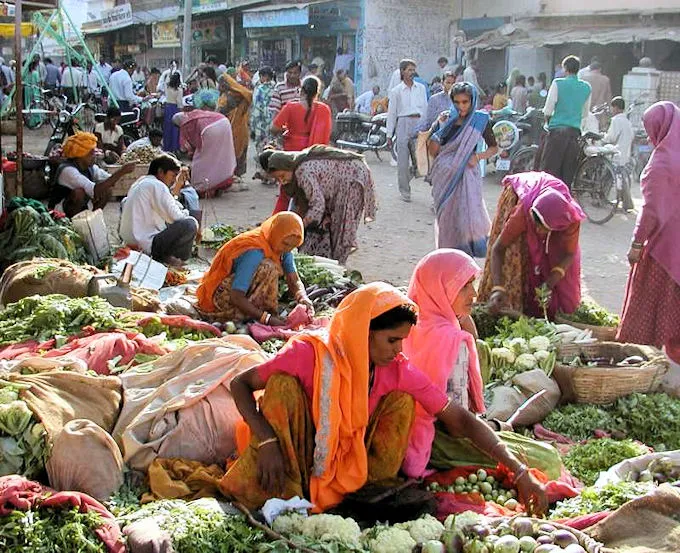
Fig.: क्रीणन्ति विक्रीणते च
Bundi = बुन्दी, Rajasthan = राजस्थान
(Image source: Details)
ज्ञा 9U जानाति : to know, to recognize, to know, to understand
Fut. ज्ञास्यति
Pass. ज्ञायते
Kaus. ज्ञापयति
Kaus. PPP ज्ञप्त / ज्ञापित
PPP ज्ञात
Inf. ज्ञातुम्
therefrom:
ज्ञाति m.: (blood-)relative (relatives are those whom one knows!)
ज्ञान n.: knowledge, wisdom, understanding (esp. of the "higher" truths in religion and philosophy)
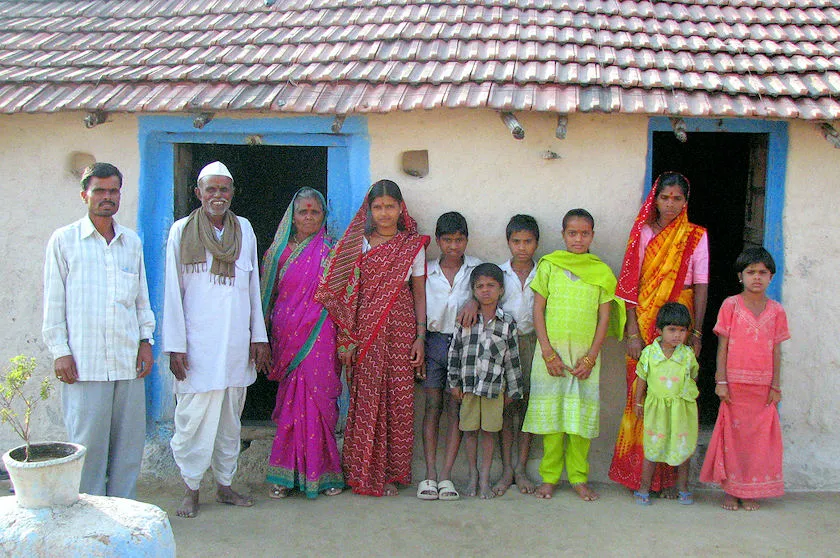
Fig.: ज्ञातयः
Darewadi, Ahmed Nagar District = अहमदनगर, Maharashtra = महाराष्ट्र
(Image source: Details)
पू 9U पुनाति : to purify
Fut. पविष्यति
Pass. पूयते
Caus. पावयति
PPP पूत
Inf. पवितुम्
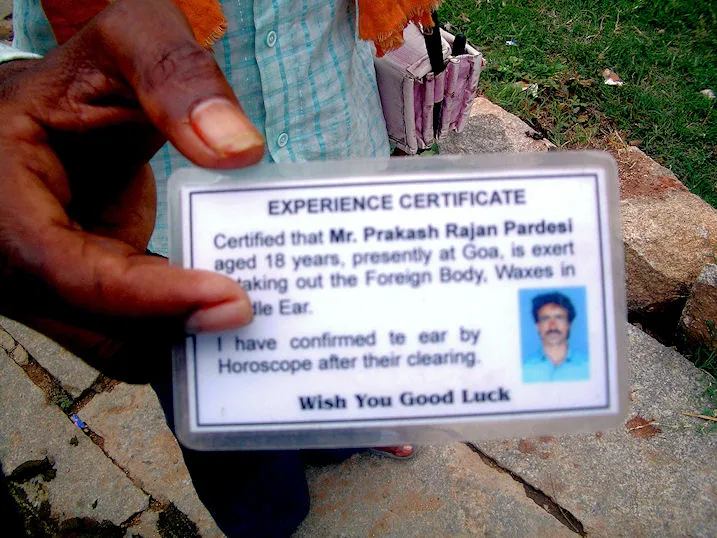
Fig.: श्रोत्राणि पुनाति
(Image source: Details)
अश् 9P अश्नाति : to eat, to consume
Fut. अशिष्यति
Pass. अश्यते
Kaus. आशयति
PPP अशित
Inf. अशितुम्
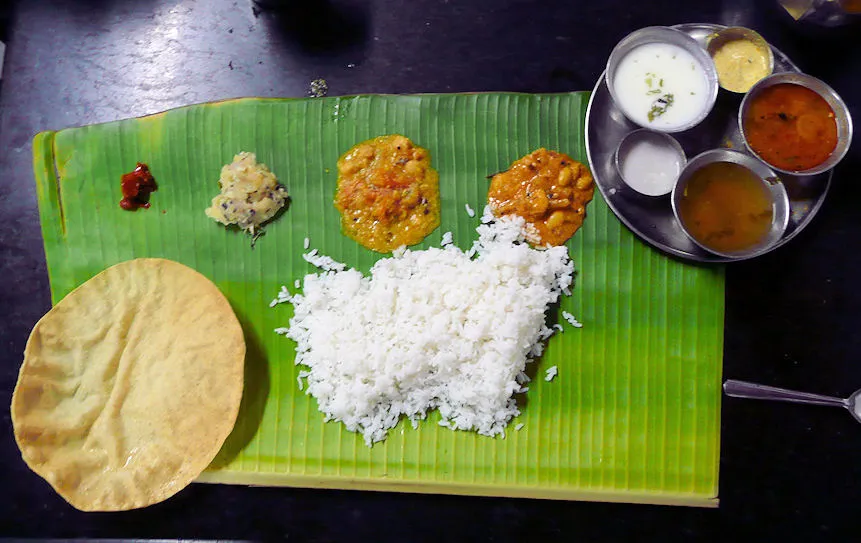
Fig.: अश्नीयात्
थाली, South India
(Image source: Details)
प्रिय ३: dear, loving, friendly

Fig.: प्रिया
(Image source: Details)
चेत् Conjunction: if; provided that (never stands at the beginning of a sentence)
न चेत् : if not
यदि Conjunction: if
यद्यपि : even if, although
यद्येवम् : if it is so, under these circumstances
पुनर् : again, repeatedly, back, once more, on the contrary, but
पुनः पुनर् : repeatedly
therefrom:
पुनर्भव m.: rebirth
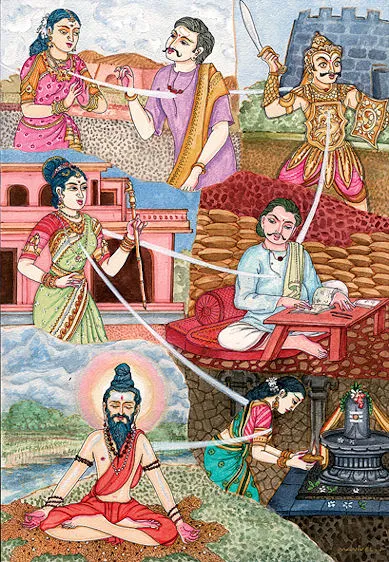
Fig.: पुनर्भवः
(Image source: Details)
जीव् 1P जीवति : to live
Fut. जीविष्यति
Pass. जीव्यते
Kaus. जीवयति
PPP जीवित : living
Inf. जीवितुम्
therefrom:
जीव m./n.: life, individual soul
सनातन ३ fem.: सनातनी : eternal, imperishable, constant
30.7. Exercise
A) Convert the following verbal forms into the corresponding optative forms in person, number, and genus verbi:
- ह्रियते
- ध्नन्ति
- स्मरति
- स्थापयन्ति
- स्तौति
- सर्ज्यते
- सुन्वन्ति
- सिञ्चति
- शृणोति
- शक्नुवन्ति
- वर्तन्ते
- वेशयन्ति
- वस्ते
- उष्यते
- वाद्यते
- उच्यते
- लम्भ्यते
- रक्षयन्ति
- युध्यते
- इज्यते
- म्रियते
- मुञ्चन्ति
- मन्यन्ते
- भवति
- भजन्ति
- ब्रवीति
- बुध्यते
- पृच्छन्ति
- पुनाति
- पाति
- पीयते
- पद्यते
- पतति
- पाचयन्ति
- नृत्यन्ति
- नीयते
- द्विषते
- पश्यन्ति
- दोग्धि
- दुष्यति
- देशयन्ति
- दहति
- तनुते
- जानाति
- जानते
- जयन्ति
- जायन्ते
- चोर्यते
- चारयति
- गच्छन्ति
- खाद्यते
- क्रीणीते
- क्रियते
- कोपयति
- कामयते
- इच्छति
- आययन्ति
- आस्यते
- आप्नुवते
- अस्यते
- सन्ति
- अश्नुते
- अर्हति
- अदन्ति
- अध्यापयन्ति
B) Translate the following sentences and resolve the compounds in Sanskrit:
जना आर्यसत्यानि जानीयुरिति सुगतेनार्याणां सुखाय जना धर्मं ज्ञाप्यन्ते ॥१॥
ये नरा देवान्न यजेरन्व्रतानि च न चरेयुरनृतं च वदेयुरधर्मं च कुर्युस्ते सुखं नाप्नुयुर्मृत्वा च नरकं पतेयुः ॥२॥
ज्ञातिरागच्छेतितीष्ट्वार्यपुत्रो ज्ञातिं दासमाययति ॥३॥
अन्नलोभाद्दुःखं जायेतेति प्राप्तज्ञानः सुफलानि नाश्नाति ॥४॥
क्रयेण च विक्रयेण च वैश्या जीवेयुरिति वैश्यधर्मः । एवं सति वैश्यपुत्राः क्रीणन्ति विक्रीणते च ॥५॥
कृतपापो नरश्चेन्नरके पापात्पूतः स्यात्पुनर्भवं गच्छेत् ॥६॥
ब्राह्मणपुत्रा वेदाध्यायांश्च स्मृत्यध्यायांश्च पुनः पुनरधीयीरन्नित्यार्यधर्मः ॥७॥
यो ब्राह्मणः शूद्रां कामयेत स सद्ब्राह्मणो न स्यात् । सद्ब्राह्मणो हि ब्राह्मणीं कामयेत ॥८॥
सत्यं ब्रूयात्प्रियं ब्रूयान्न ब्रूयात्सत्यमप्रियम् ।
प्रियं च नानृतं ब्रूयादेष धर्मः सनातनः ॥९॥ ॥मनुस्मृति ४.१३८॥
30.8. Review Exercise on Morphology
Determine and translate the following word forms:
- भारे
- अध्ययनम्
- वस्तुतस्
- वस्त्राणि
- प्रतिमया
- आचाराय
- आचार्यैः
- अश्वेषु
- ताम्
- वृत्त्यै
- चरितस्य
- अर्हता
- शक्तीः
- कामम्
- भिक्षवे
- भगवद्गीतायाम्
- भगवति
- भक्त्याः
- स्थानात्
- स्थित्या
- मात्रायै
- प्रभृतौ
- हस्तेन
- आदेः
- दिष्टिम्
- रुद्रः
- मृत्यौ
- मृतिः
- द्विजातये
- जातिभिः
- व्याघ्रान्
- पूजाः
- शत्रोः
- उक्तिभ्यः
- महान्ति
- महति
- सा
- तस्यै
- तस्मिन्
- सते
lekt3001: Bundi = बुन्दी, Rajasthan = राजस्थान [Image source: earth2marsh. -- http://www.flickr.com/photos/earth2marsh/56270619/. -- Accessed on 2008-12-21. -- Creative Commons License (Attribution, Non-commercial, No derivatives)]
lekt3002: Darewadi, Ahmed Nagar District = अहमदनगर, Maharashtra = महाराष्ट्र [Image source: Robin Murphy / World Resources Institute. -- http://www.flickr.com/photos/worldresourcesinstitute/2555776315/. -- Accessed on 2008-12-21. -- Creative Commons License (Attribution, Non-commercial, ShareAlike)]
lekt3003: [Image source: Karmalize. -- http://www.flickr.com/photos/agaylon/1799930862/. -- Accessed on 2008-12-21. -- Creative Commons License (Attribution, ShareAlike)]
lekt3005: थाली, South India [Image source: Matthew Winterburn. -- http://www.flickr.com/photos/bezoire/2330831734/. -- Accessed on 2008-12-21. -- Creative Commons License (Attribution, Non-commercial, ShareAlike)]
lekt3004: [Image source: Mary Wollstonecraft Shelley. -- http://www.flickr.com/photos/awflicks/3032833609/. -- Accessed on 2008-12-21. -- Creative Commons License (Attribution, ShareAlike)]
lekt2904: [Image source: Wikipedia / Copyrighted to Himalayan Academy Publications, Kapaa, Kauai, Hawaii. -- Creative Commons Attribution ShareAlike 2.5]