
Lesson 45
45.1. Formation of the 2nd person verbal forms (मध्यमः) of athematic stems without vocally ending suffix (continuation)
45.1.1. Third present class (जुहोत्यादि)
हु 3P
| परस्मैपदम् | आत्मनेपदम् | |||
|---|---|---|---|---|
| एकवचनम् | बहुवचनम् | एकवचनम् | बहुवचनम् | |
| Indikativ Present लट् | जुहोषि | जुहुथ | <जुहुषे> | <जुहुध्वे> |
| Imperfect लङ् | अजुहोस् | अजुहुत | <अजुहुथास्> | <अजुहुध्वम्> |
| Optative विधिलिङ् | जुहुयास् | जुहुयात | <जुह्वीथास्> | <जुह्वीध्वम्> |
धा 2U
| परस्मैपदम् | आत्मनेपदम् | |||
|---|---|---|---|---|
| एकवचनम् | बहुवचनम् | एकवचनम् | बहुवचनम् | |
| Indikativ Present लट् | दधासि | धत्थ aus: dadh + tha | धत्से | धद्ध्वे |
| Imperfect लङ् | अदधास् | अधत्त | अधत्थास् | अधद्ध्वम् |
| Optative विधिलिङ् | दध्यास् | दध्यात | दधीथास् | दधीध्वम् |
45.1.2. Seventh present class (रुधादि)
If a final k/g of the root comes to stand between the nasal ṅ and a dental of the ending, then the k/g may optionally drop
e.g. युज् 3.sg.Ind.Pres.Ā युङ्क्ते or युङ्ते
युज् 7U
| परस्मैपदम् | आत्मनेपदम् | |||
|---|---|---|---|---|
| एकवचनम् | बहुवचनम् | एकवचनम् | बहुवचनम् | |
| Indikativ Present लट् | युनक्षि yu-na-j + si | युङ्क्थ युङ्थ | युङ्क्षे | युङ्ग्ध्वे युङ्ध्वे |
| Imperfect लङ् | अयुनक् aus: a-yu-na-j + s | युङ्क्त अयुङ्त | अयुङ्क्थास् अयुङ्थास् | अयुङ्ग्ध्वम् अयुङ्ध्वम् |
| Optative विधिलिङ् | युञ्ज्यास् | युञ्ज्यात | युञ्जीथास् | युञ्जीध्वम् |
रुध् 7U
| परस्मैपदम् | आत्मनेपदम् | |||
|---|---|---|---|---|
| एकवचनम् | बहुवचनम् | एकवचनम् | बहुवचनम् | |
| Indikativ Present लट् | रुणत्सि ru + na + dh + si | रुन्द्ध ru-n-dh + tha | रुन्त्से | रुन्द्ध्वे |
| Imperfect लङ् | अरुणत् aus a-ru-ṇa-dh + s sig[अरुण्स्] (unregelm.!) | अरुन्द्ध a-ru-n-dh + ta | अरुन्द्धास् | अरुन्द्ध्वम् |
| Optative विधिलिङ् | रुन्ध्यास् | रुन्ध्यात | रुन्धीथास् | रुन्धीध्वम् |
45.2. The vocative singular (आमन्त्रितमेकवचने)
Most vocatives of the singular are the stem with a strong ending.
e.g. देव, कवे, शत्रो, राजन्, पितर् etc.
Exceptions are the feminine nouns ending in -ā and -ī as well as the stems ending in -in, whose vocative sg. is particularly noteworthy.
| Vocative Singular | |
|---|---|
| Maskulina auf -a | देव |
| Neutra auf -a | फल |
| Feminina auf -ā | देवते |
| Maskulina auf -i | कवे |
| Feminina auf -i | मते |
| Maskulina auf -u | शत्रो |
| Feminina auf -u | धेनो |
| Feminina auf -ī | देवि |
| Maskulina auf -ṛ | पितर् |
| Feminina auf -ṛ | मातर् |
| Maskulina auf -an | राजन् |
| Neutra auf -an | नामन् नाम |
| Maskulina auf -man/-van | आत्मन् |
| Maskulina auf -in | बलिन् |
| Maskulina auf -ant | बलिन् बलि |
| mahānt m. | महन् |
| mahānt n. | महत् = Nominative |
| Maskulina auf -mant/-vant | गुणवन् |
| Neutra auf -mant/-vant | गुणवत् = Nominative |
| Pronouns | ein Vocative wird nicht gebildet |
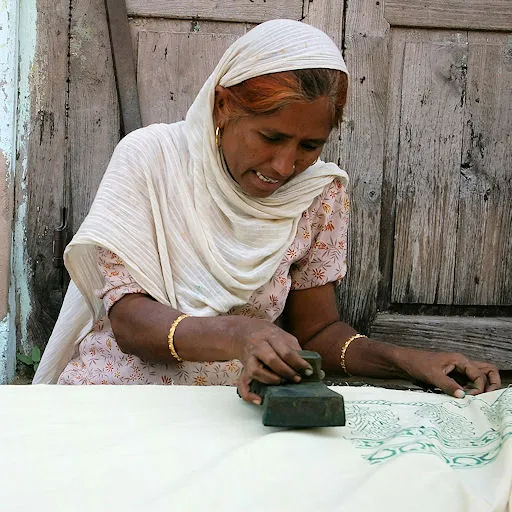
Fig.: भवति किं करोषि
(Image source: Details)
45.3. Word List
वा ... वा : either ... or
45.4. Exercise
A) Translate into Sanskrit (for past tense forms, please use the Imperfect <लङ्>):
1. You split the (Buddhist) community.
regarding community schism (सङ्घभेद) see:
Payer, Alois <1944 - >: Vinayamukha : Basic Concepts of the Monastic Rules and Monastic Law of the Theravāda. -- Part I. -- (Materials on the Basic Concepts of Buddhism). -- URL: http://www.payer.de/buddhgrund/vinaya01.htm
2. Have you enjoyed the earth?
3. Have you received a gift from the king?
4. Holy man, why do you not fear dangers?
5. Father, where are you leaving the family?
6. Śūdra woman, have you carried the load into the house of the rich Brāhmaṇa?
7. Goddess, you should fulfill the wish for happiness of the Vaiśya, who has done meritorious deeds.
8. Elephants, you should not break the bonds.
9. You lion-like man, why do you not direct your entire attention to the Absolute (Brahman)?
10. Have you, poet, measured the worlds?
B) Translate:
अर्जुन हतो वा प्राप्स्यसि स्वर्गं जित्वा वा भोक्ष्यसे महीं । तस्माद्भवता योध्यम् ॥१॥
भवति कथमनन्तदुःखमरुणत् ॥२॥
ब्राह्मण किमग्नौ घृतमजुहोः ॥३॥
शत्रो शस्तेण जीवं न छिनत्सि ॥४॥
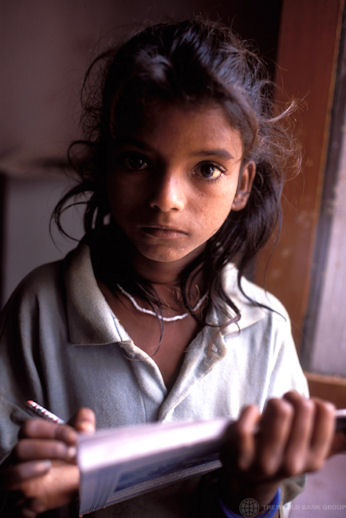
Fig.: कन्ये किं लिखसि
(Image source: Details)
lekt4501.jpg: Textile block print, Ahmedabad. -- Image source: Daveybot. -- http://www.flickr.com/photos/davemorris/316429534/. -- Accessed on 2009-01-08. -- Creative Commons License (Attribution, non-commercial use, share alike)
lekt4502.jpg: Image source: John Isaac / World Bank. -- http://www.flickr.com/photos/worldbank/2348425672/. -- Accessed on 2009-01-08. -- Creative Commons License (Attribution, non-commercial use, no derivatives)