
Lesson 56
56.1. The Reduplicated Aorist
Formation:
Augment + reduplicated root + a + thematic secondary endings
The root syllable can be low- or high-pitched. For roots ending in -i or -u, low pitch is the rule.
Final -i, -u is replaced by -iy respectively -uv.
Final -ā (for -e) drops.
Paradigm:
श्रि 1U "to go to, to lean on"
| परस्मैपदम् | आत्मनेपदम् | |||
|---|---|---|---|---|
| एकवचनम् | बहुवचनम् | एकवचनम् | बहुवचनम् | |
| 1. तृतीयः | अशिश्रियम् (अ-शि-श्रिय्-अम्) | अशिश्रियाम | अशिश्रिये | अशिश्रियामहि |
| 2. द्वितीयः | अशिश्रियस् | अशिश्रियत | अशिश्रियथास् | अशिश्रियध्वम् |
| 3. प्रथमः | अशिश्रियत् | अशिश्रियन् | अशिश्रियत | अशिश्रियन्त |
This form of the Aorist is formed by, among others:
- श्रि 1U "to go to"
- द्रु 1P "to run"
- कम् 1Ā "to love": अचकमत / अचीकमत (see below!)
- पत् 1P "to fall": अपप्तत् (a-pa-pt-a-t; pt = low pitch form of pat)
- वच् 2P "to say": अवोचत् (a-va + uc-a-t)
All roots of the 10th present class as well as all causatives always form the reduplicated aorist.
56.1.1. णिजन्तधातूनां दशमगणधातूनां च लुङ्लकारस्य रचना
Stem syllable:
The starting point is the form of the present stem or the causative stem, which it has after the removal of the formation element -aya- (i.e., stem ending in -p for causatives ending in -paya-).
The vowel of this so-called stem syllable is determined in the aorist according to the following rules:
-ā- before a simple consonant is replaced by -a-:
पॄ 3P: Caus. sig[पार]यति, Aor. अपिsig[पर]त्
द्रु 1P: Caus. sig[द्राव]यति, Aor. अदुsig[द्रव]त् / अदिsig[द्रव]त्
नी 1U: Caus. sig[नाय]यति, Aor. अनीsig[नय]त्
ज्ञा 9U: Caus. sig[ज्ञाप]यति, Aor. अजिsig[ज्ञप]त्-ī-, -e-, -ai- before a simple consonant is replaced by -i-:
चित् 1P: Caus. sig[चेत]यति, Aor. (Ā) अचीsig[चित]त-u-, -o-, -au- before a simple consonant is replaced by -u-:
चुर् 10U: sig[चोर]यति, Aor. अचूsig[चुर]त्
For some roots, the changes mentioned so far are optional or must be omitted:
- ar, ār, īr, al, which precede the final consonant of the stem syllable immediately and substitute for ṛ, ṝ, ḷ, remains optionally unchanged or is replaced by ṛ or ḷ:
कॢप् 1Ā: Caus. sig[कल्प]यति, Aor. अचsig[कल्प]त् / अचीsig[कॢ]पत्
कृष् 1P/6U: Caus. sig[कर्ष]यति, Aor. अचsig[कर्ष]त् / अचीsig[कृ]षत्
Vowel of the reduplication syllable:
After the aforementioned rules have been applied to the stem syllable, the following rules for the vowel of the reduplication syllable must be followed:
The starting point is the regular reduplicating vowel, i.e.
- a for a, ā, ṛ, ṝ, ḷ
- i for i, ī, e, ai
- u for u, ū, o, au
This reduplicating vowel is subject to the following changes:
i, u is replaced by ī, ū when the stem syllable begins with only one consonant and is metrically short:
भिद् 7U: Caus. भेदयति, Aor. अsig[बी]भिदत्
तुद् 6U: Caus. तोदयति, Aor. अsig[तू]तुदत्a is replaced by ī when the stem syllable is metrically short and begins with only one consonant. If the stem syllable is metrically short and begins with more than one consonant, the a of the reduplicating syllable is replaced by i. If the stem syllable is metrically long, the a is retained:
नी 1U: Caus. नाययति, stem syllable of the Aor. नय्, Aor. अsig[नी]नयत्
कृ 8U: Caus. कारयति, stem syllable of the Aor. कर्, Aor. अsig[ची]करत्
त्यज् 1P: Caus. त्याजयति, stem syllable of the Aor. त्यज्, Aor. अsig[ति]त्यजत्
भू 1P: Caus. भावयति, stem syllable of the Aor. भव्, Aor. अsig[बी]भवत्
Particularities of certain roots in Kielhorn, Grammar § 435c ff.
Vowel-initial stem syllables are reduplicated according to the following rules:
- If the initial vowel is followed by only a single consonant or a consonant cluster whose first member is neither a nasal nor d or r, then the reduplicated syllable is:
Vowel - first following consonant (or its representative required in a reduplicating syllable) - i - all consonants
अश् 9P: Caus. आशयति, reduplicated syllable आशिश्, Aor. आशिशत्
इष् 6P: Caus. एषयति, reduplicated syllable एषिष्, Aor. ऐषिषत्
ईक्ष् 1Ā: Caus. ईक्षयति, reduplicated syllable ईचिक्ष्, Aor. ऐचिक्षत्
- If the initial vowel is followed by a consonant cluster beginning with a nasal or d or r, then the second consonant of the cluster (or its representative) is inserted with i according to the following schema:
Vowel - first consonant - second consonant (representative) - i - second consonant
अञ्ज् 7P: Caus. अञ्जयति, reduplicated syllable अञ्जिज्, Aor. आञ्जिजत्
ऋ 1P: Caus. अर्पयति, reduplicated syllable अर्पिप्, Aor. आर्पिपत्
अर्ह् 1P: Caus. अर्हयति, reduplicated syllable अर्जिह्, Aor. आर्जिहत्
This form of reduplication of vowel-initial derived stems (causatives) is called "Attic reduplication".
56.2. The Injunctive
The Injunctive is the augmentless form corresponding to augmented forms, i.e. its forms are identical to the augmentless forms of the Indicative Imperfect or Aorist. Indigenous Indian grammar did not recognize the Injunctive as a special grammatical category.
According to the fundamental work:

Fig.:
Professor of Comparative Linguistics, University of Erlangen-Nuremberg (1955 - 1983)
(Image source: Details)
Hoffmann, Karl <1915 - 1996>: The Injunctive in the Veda : a synchronic functional study / by Karl Hoffmann. -- Heidelberg : Winter, 1967. -- 298 p. -- (Indogermanische Bibliothek : 3. series, Investigations)
the injunctive in the Veda has the following properties:
- it is not narrative, but mentionative
- it is tenseless
- the injunctive present (= augmentless imperfect) denotes the imperfective aspect
- the injunctive aorist denotes the perfective aspect.
In post-Vedic Sanskrit, the injunctive occurs only in connection with the prohibitive particle मा (+ injunctive aorist) or मा स्म (+ injunctive present or aorist); the different aspect usually no longer comes into play.
(with aspect
- मा + injunctive aorist would denote a prohibitive sentence: "Do not begin to ...!", "Do not ...!"
- मा स्म + injunctive present would denote an inhibitive sentence, i.e., an action already in progress or an already existing state is prohibited: "Stop ...!", "Desist from ...!"
However, this distinction is usually not made in Classical Sanskrit.)
56.3. The Prohibitive Sentence
Main form:
मा + injunctive aorist
मा स्म + injunctive aorist or injunctive present
Examples:
मा कर्महेतुर्भूः "Do not become one who is motivated by the fruit of an action!" (injunctive aorist) (भगवद्गीता 2,47c)
क्लैब्यं मा स्म गमः "Do not become effeminate!" (injunctive aorist) (भगवद्गीता 2,3a)
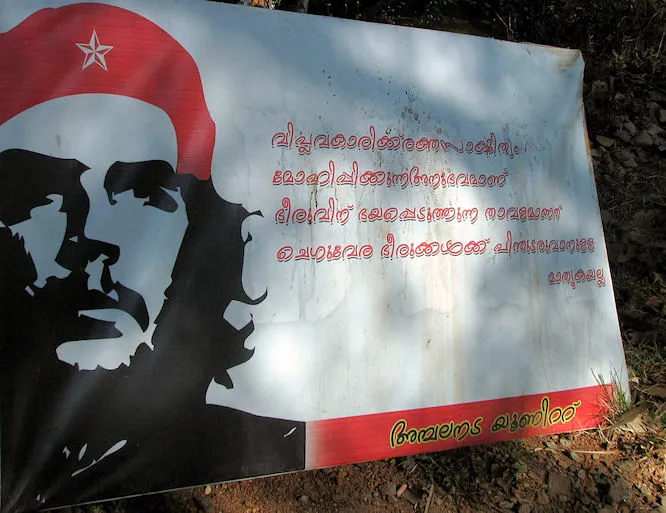
Fig.: क्लैब्यं मा स्म गमः
Poster (Ernesto Che Guevara) of a political party in Vallachira (വാല്ലചിര), Thrissur (തൃശ്ശൂര്). "Rough translation of what is written on it would be: Martyrdom is a fascinating experience for a revolutionary. And a daunting resort to a dastard. Che is not a role model for cowards."
(Image source: Details)
Both examples have a prohibitive sense. The injunctive aorist is thus used here in its original meaning. (The predominance of the injunctive aorist in such sentences may be explained by the predominance of prohibitive sentences over inhibitive sentences, but this question would still need to be investigated for Classical Sanskrit.)
Other forms of prohibitive sentences:
**मा + (स्म) + imperative (rare) **
e.g. मा ते सङ्गो ऽस्त्वकर्मणिअलम् or कृतम् = instrumental in the inhibitive sentence
e.g. अलं विषादेन "Enough with despairing! = Stop despairing! = Keep your head up!"न + gerundive (participle of necessity)
In addition, there are other, rarer forms of prohibitive sentences, see e.g.
Speyer, Jacob S. (Jacob Samuel) <1849-1913>: Sanskrit syntax. -- Leyden : Brill, 1886. -- § 353.
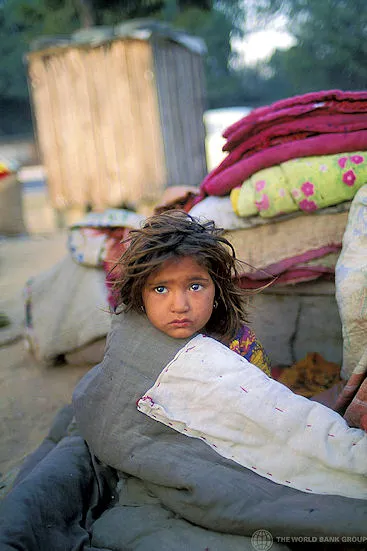
Fig.: अलं विषादेन
(Image source: Details)
56.4. स्म
स्म highlights: "truly, indeed, certainly, precisely"
Furthermore, the following construction is very important:
स्म + indicative present serves for narrating in the past, especially to denote a duration in the past:
e.g. वसति स्म "there lived once" (स्म may sometimes be missing).
56.5. Exercise
A) Determine and translate the following forms without aids (!):
- अस्मत्
- अस्मात्
- दध्यौ
- लिल्यिरे
- अगामि
- आगामी
- अक्लिद्यत्
- अक्लिदत्
- अचिक्लिदत्
- स्त्रीघ्नाय
- नेद
- प्लवमान
- अकारि
- अद्य
- अतन्द्रिते
- अन्तरे
- महीक्षितम्
- आर्दिधाम
- आसम्
- आसाम्
- आसि
- अनूनुदत्
- जिघ्रति
- जाग्रति
- आस्थत्
- आस्थात्
- अबीभषम्
- अशुषः
- कपी
- आततायी
- महती
- इतरेतरेषाम्
- धेक्षि
- अश्यन्
- कन्ये
- सौमि
- आर्पिपन्
- परिव्राट्
- जेरिम
- अततर्पत
- तत्रिरे
- मात्रीकुरु
- आनीः
- मानुषाभ्याम्
- अजिघ्रपम्
- रते
- जातु
- जाती
- जाता
- अपरस्मै
- अदीपि
- अजूजुषाम
- नवानाम्
- अश्रुणोः
- पृथक्पृथक्
- असिष्णिहम्
- मन्मय्यः
- औजिहः
- अशिनट्
- पाप्यभूवन्
- शोत्स्यामः
- अदीर्यथाः
- भस्मसात्संपेदे
- नवधा
- अविनक्
- आन
- शान्तयोः
- वारीणि
- वारिणी
- वारिणि
- अद्भिः
- अदिध्मपन्
- अववर्जन्
- शितवत्यौ
- अहो
- एकशः
- अपप्तः
- अकस्मात्
- मित्रध्रुक्
- अवोचन्
lekt5601: Professor of Comparative Linguistics, University of Erlangen-Nuremberg (1955 - 1983) [Image source: http://titus.uni-frankfurt.de/personal/galeria/hoffma-k.htm. -- Accessed on 2009-02-27]
lekt5602: Poster (Ernesto Che Guevara) of a political party in Vallachira (വാല്ലചിര), Thrissur (തൃശ്ശൂര്). "Rough translation of what is written on it would be: Martyrdom is a fascinating experience for a revolutionary. And a daunting resort to a dastard. Che is not a role model for cowards." [Image source: Hari_Menon. -- http://www.flickr.com/photos/me_haridas/2282563515/. -- Accessed on 2009-02-27. -- Creative Commons License (Attribution, non-commercial use, share alike)]
lekt5603: [Image source: World Bank / Curt Carnemark. -- http://www.flickr.com/photos/worldbank/2244549274/. -- Accessed on 2009-02-27. -- Creative Commons License (Attribution, non-commercial use, no derivatives)]