
Lesson 38
38.1. Weekly Verse
मनुस्मृति ४.३२ on proper urination:
प्रत्यग्नि प्रतिसूर्यं च
प्रतिसोमोदकद्विजम् ।
प्रतिगु प्रतिवातं च
प्रज्ञा नश्यति मेहतः ॥
Explanations:
-अग्नि Neuter Nom./Akk.sg. to अग्नि m.
-गु Neuter Nom./Akk.sg. to गो m.f. "bull, cow"
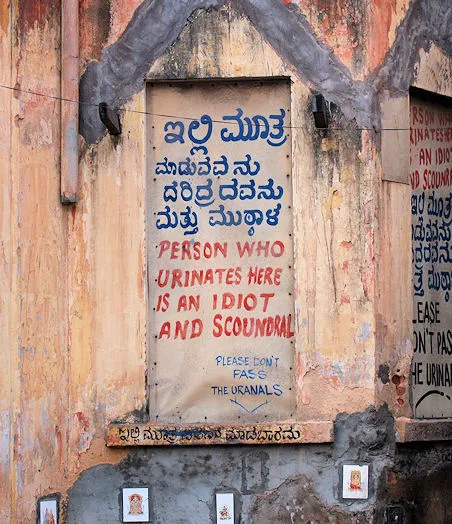
Fig.: प्रज्ञा नश्यति मेहतः
(Image source: Details)
38.2. Sound change of nasals in words
Nasals in words are assimilated to following consonants, i.e., they are replaced by the nasal corresponding to that consonant.
After c- and j-, -n- is replaced by -ñ-.
38.3. Declension of stems ending in -n
38.3.1. Nouns ending in -an as well as nouns ending in -man or -van after a vowel
Nouns ending in -an as well as nouns ending in -man or -van after a vowel have three stems:
| Stem | -an | -man | -van | Usage |
|---|---|---|---|---|
| Starker Stem | -ān | -mān | -vān | Nom., Acc., Voc. sg. m. f. Nom., Acc., Voc. dual m. f. Nom., Voc. pl. m. f. Nom., Acc. pl. n. |
| Mittlerer Schwacher Stem | -a (from -*n) | -ma (from -*mn) | -va (from -*vn) | Übrige Kasus vor konsonantisch anlautender Ending Wahlweise auch Lok. sg. m. n. f. |
| Schwächster Stem | -n | -mn | -vn | Übrige Kasus vor vokalisch anlautender Ending |
The endings are regular. The nominative singular m. f. is formed without final -n.
Examples:
राजन् m. "king"
- strong stem: राजान्
- middle stem: राज
- weakest stem: राज्ञ्
सीमन् f. "boundary"
- strong stem: सीमान्
- middle stem: सीम
- weakest stem: सीम्न्
नामन् n. "name"
- strong stem: नामान्
- middle stem: नाम
- weakest stem: नाम्न्
| राजन् | सीमन् | नामन् | |
|---|---|---|---|
| एकवचनम् | |||
| प्रथमा | राजा | सीमा | नाम |
| द्वितीया | राजानम् | सीमानम् | नाम |
| तृतीया | राज्ञा | सीम्ना | नाम्ना |
| चतुर्थी | राज्ञे | सीम्ने | नाम्ने |
| पञ्चमी | राज्ञस् | सीम्नस् | नाम्नस् |
| षष्ठी | राज्ञस् | सीम्नस् | नाम्नस् |
| सप्तमी | राज्ञि / राजानि | सीम्नि / सीमनि | नाम्नि / नामनि |
| बहुवचनम् | |||
| प्रथमा | राजानस् | सीमानस् | नामानि |
| द्वितीया | राज्ञस् | सीम्नस् | नामानि |
| तृतीया | राजभिस् | सीम्नभिस् | नामभिस् |
| चतुर्थी | राजभ्यस् | सीम्नभ्यस् | नामभ्यस् |
| पञ्चमी | राजभ्यस् | सीम्नभ्यस् | नामभ्यस् |
| षष्ठी | राज्ञाम् | सीम्नाम् | नाम्नाम् |
| सप्तमी | राजसु | सीमसु | नामसु |
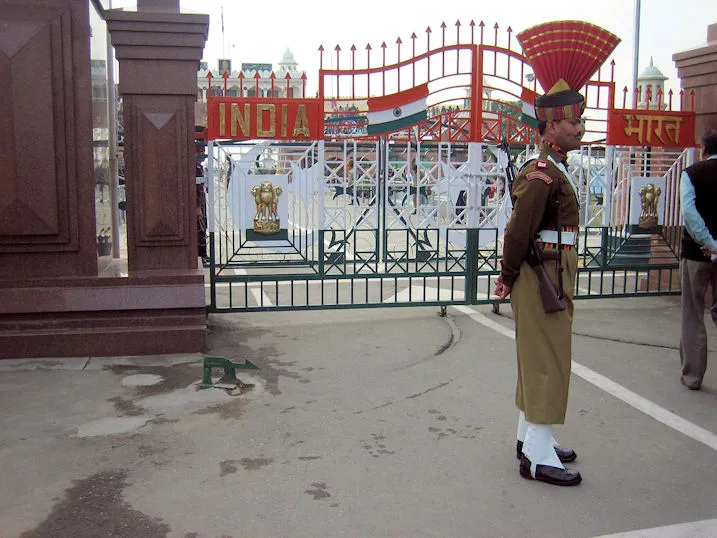
Fig.: सीमा
(Image source: Details)
38.3.2. Nouns in -man or -van after a consonant
- Starker Stamm: -mān, -vān
- Weak stem:
- before endings beginning with a consonant: -ma, -va (from -*mn, -*vn)
- before endings beginning with a vowel: -man, -van
Otherwise, formation as under 3.1.
Examples:
आत्मन् n. "soul"
- strong stem: आत्मान्
- weak stem:
- before consonant: आत्म
- before vowel: आत्मन्
ब्रह्मन् n.: Absolute, Veda, Brahman
- strong stem: ब्रह्मान्
- weak stem:
- before consonant: ब्रह्म
- before vowel: ब्रह्मन्
| आत्मन् | ब्रह्मन् | |
|---|---|---|
| एकवचनम् | ||
| प्रथमा | आत्मा | ब्रह्म |
| द्वितीया | आत्मानम् | ब्रह्म |
| तृतीया | आत्मना | ब्रह्मणा |
| चतुर्थी | आत्मने | ब्रह्मणे |
| पञ्चमी | आत्मनस् | ब्रह्मणस् |
| षष्ठी | आत्मनस् | ब्रह्मणस् |
| सप्तमी | आत्मनि | ब्रह्मणि |
| बहुवचनम् | ||
| प्रथमा | आत्मानस् | ब्रह्माणि |
| द्वितीया | आत्मनस् | ब्रह्माणि |
| तृतीया | आत्मभिस् | ब्रह्मभिस् |
| चतुर्थी | आत्मभ्यस् | ब्रह्मभ्यस् |
| पञ्चमी | आत्मभ्यस् | ब्रह्मभ्यस् |
| षष्ठी | आत्मनाम् | ब्रह्मणाम् |
| सप्तमी | आत्मसु | ब्रह्मसु |
38.3.3. Masculines and Neuters in -in, -min, -vin
These nouns have no stem gradation.
Nom.sg.m. and Nom.Akk.pl.n. are formed by analogy to the -an stems (lengthening of the -i-), as is the stem in -i- before a consonantal ending.
The feminine is formed with the suffix -ī: e.g. बलिनी
Example:
बलिन् m.n. "strong, powerful (characterized by a special बल, possessing बल)"
| पुंस् | नपुंसकम् | |
|---|---|---|
| एकवचनम् | ||
| प्रथमा | बली | बलि |
| द्वितीया | बलिनम् | बलि |
| तृतीया | बलिना | |
| चतुर्थी | बलिने | |
| पञ्चमी | बलिनस् | |
| षष्ठी | बलिनस् | |
| सप्तमी | बलिनि | |
| बहुवचनम् | ||
| प्रथमा | बलिनस् | बलीनि |
| द्वितीया | बलिनस् | बलीनि |
| तृतीया | बलिभिस् | |
| चतुर्थी | बलिभ्यस् | |
| पञ्चमी | बलिभ्यस् | |
| षष्ठी | बलिनाम् | |
| सप्तमी | बलिषु | |
38.4. On nominal formation: तद्धित-suffix -in
With the (very important!) तद्धित-suffix -in, adjectives are formed from nouns with the meaning:
characterized by, possessing
Originally, the formation with the suffix -इन् differed from that with -मन्त्/-वन्त् in that -इन् denoted characterization by something special, whereas -मन्त्/-वन्त् expressed possession of, or characterization by, something ordinary or general.
Example:
हस्तिन् m.: the one characterized by a special hand = the elephant (its hand is not an ordinary hand, but a trunk)
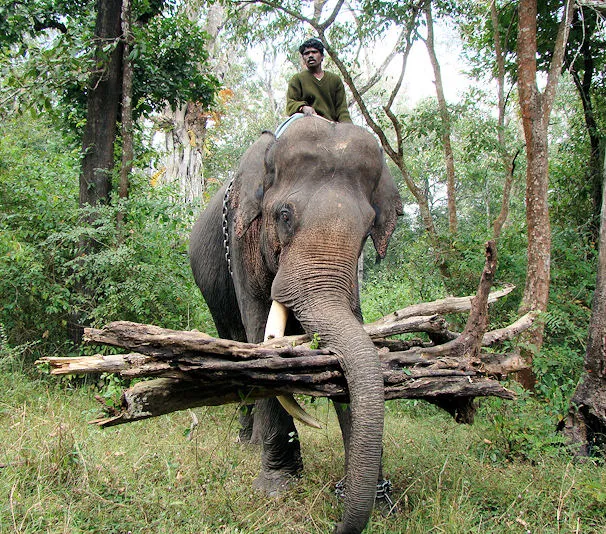
Fig.: हस्ती
(Image source: Details)
हस्तवन्त् : one who has (human) hands
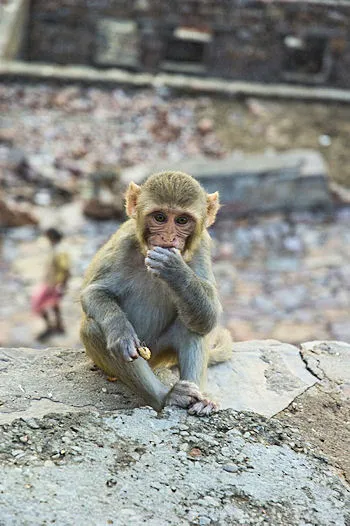
Fig.: हस्तवान्
(Image source: Details)
Adjectives ending in -इन् are frequently used to form compounds.
Example:
सत्यवादिन् from सत्यवाद m. "speaking the truth": "one characterized by speaking the truth = one who always speaks the truth"
38.5. Syntax regarding नामन्
To express "someone named N. N.", one constructs:
N.N. (in the nominative) नाम
Literally: "the name is/was N.N." Thus, it is an inserted nominal sentence.
Example:
आसीद्राजा नलो नाम वीरसेनसुतो बली । "Once upon a time there was a king named Nala, the strong son of Vīrasena."
Naturally, the same can be expressed with a बहुव्रीहि:
देवदत्तनामा पुरुषः "a man whose name is Devadatta"
मदयन्तिकानाम्नी बाला "a girl whose name is Madayantika"
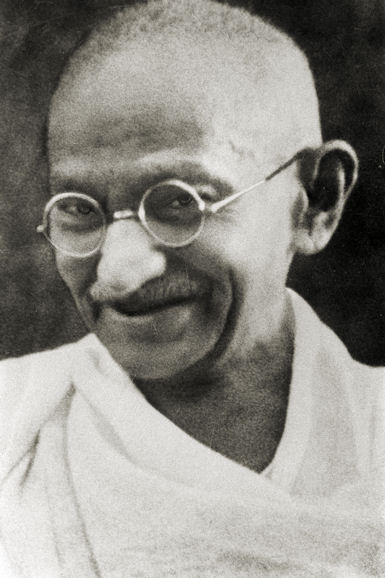
Fig.: आसीन्महात्मा गन्धी नाम
(Image source: Details)
38.6. Syntax regarding आत्मन्
आत्मन् masculine can be used in the singular as a reflexive pronoun for all three genders, numbers (including dual and plural), and persons.
Examples:
आत्मन्येषा दोषं न पश्यति । "She sees no fault in herself"
आत्मानं स्तुवन्ति । "They praise themselves"
The genitive (षष्ठी) आत्मनस् can therefore stand for "my/your/his/... own"
Example:
आत्मनो गृहं प्रविशति । "He enters his own house."
38.7. Consonant-ending stems as the first member of compounds
Stems ending in a consonant appear as the first member of a compound in the (weak) stem they take before the ending -su of the locative (सप्तमी) plural.
Example:
राजपुत्र "son of a king"
38.8. Stems ending in -an as the second member of a बहुव्रीहि
As the second member of a बहुव्रीहि, a stem ending in -an can be used for all three genders. However, the feminine is usually formed with the suffix -ī from the weakest masculine stem.
Example:
दुर्णाम्नी "one whose name is evil ; female demon of disease"
38.9. Vocabulary list
सूर्य m.: sun, sun god Sūrya
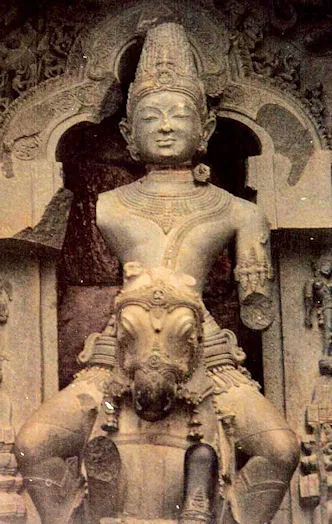
Fig.: सूर्यः
(Image source: Details)
उदक n.: water
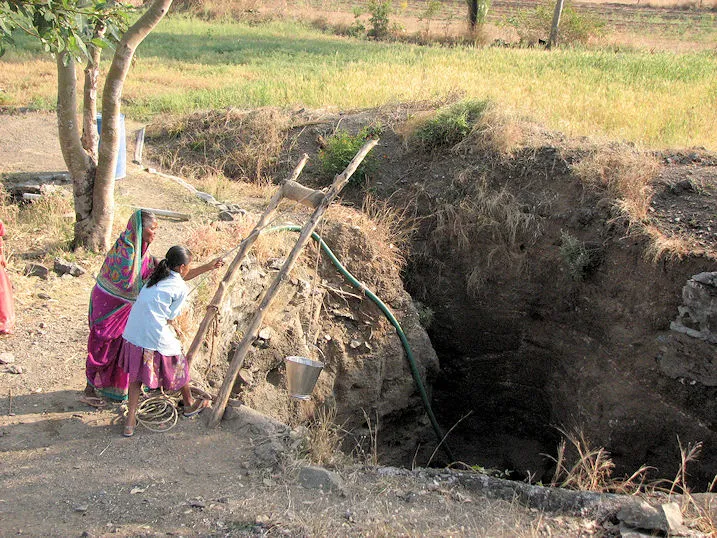
Fig.: उदकम्
(Image source: Details)
वा 2P वाति : to blow, to breathe
Fut. वास्यति
Perf. IV ववौ
Pass. वायते
Kaus. वापयति
PPP वान । वात
Inf. वातुम्
thereof:
वात m.: wind
वा + निस् 2P निर्वाति : blow, blow away, extinguish
thereof:
निर्वाण n.: extinguishing, nirvāṇa
परिनिर्वाण n.: perfect extinguishing, perfect liberation (at the death of a Buddha or Arhat)
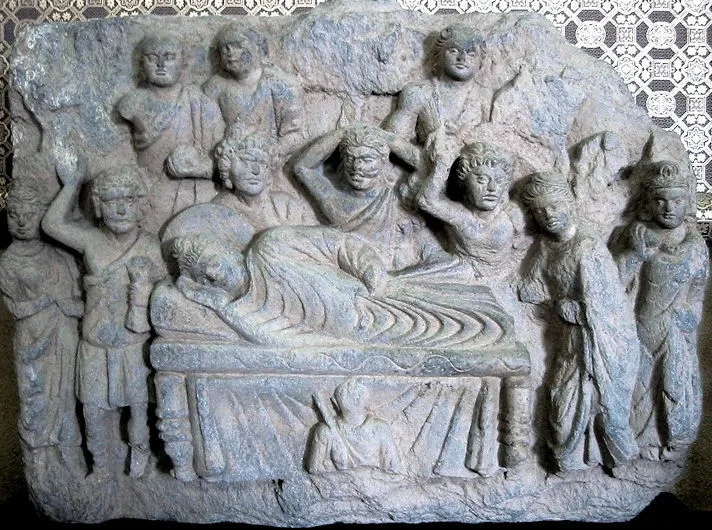
Fig.: गौतमबुद्धस्य महापरिनिर्वाणम्
(Image source: Details)
मिह् 1P मेहति : urinate, piss, ejaculate
Fut. मेक्ष्यति
Perf. II मिमेह, मिमिहुर्
Pass. मिह्यते
Kaus. मेहयति
PPP मीढ
thereof:
मेघ m.: cloud ("seicher")
सुत m.: son
राजन् m.: king (on kingship in India see Basham, Wonder pp. 82–94). As the final member of a compound (esp. तत्पुरुष) usually: -राज m. (like देव)
Feminine:
राज्ञी f.: queen, wife of a king
from राज :
राज्य 3: royal; n. kingdom, kingship, rule
नामन् n.: name
सीमन् f.: boundary
आत्मन् m.: self, own person, innermost essence. Philosophical and in liberation doctrines: the absolute in the individual, of which, however, the individual is not necessarily conscious (v. Stietencron)
ब्रह्मन् n.: the absolute, the Veda (according to Thieme originally: the formulated truth, from which ब्राह्मण "formulator of truth")
ब्रह्मन् m.: the personally conceived creator god Brahmā
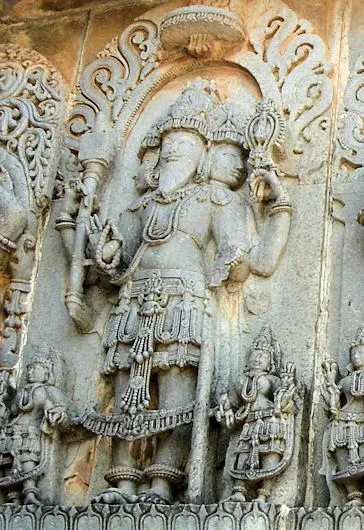
Fig.: ब्रह्मा
(Image source: Details)
कर्मन् n.: to कृ 8U: action, deed, work; sacred work, sacrificial act; karma: past action, which later brings its fruits (e.g., in rebirth)
कर्मविपाक m.: ripening of deeds = the good and bad consequences of deeds in previous existences (to वि–पच्)
हस्तिन् m.: elephant (Elephas maximus)
मनु m.: human being, man; name of the father of the human race (to मन् 4Ā)
thereof:
मनुष्य m.: human being
शुच् 1P शोचति : (flame, shine); mourn, bewail
Perf II शुशोच, शुशुचुर्
Fut. शोचिष्यति
Pass. शुच्यते
Kaus. शोचयति
Inf. शुचितुम्
Absol. शोचित्वा । शुचित्वा
thereof:
शुचि 3: radiant, pure, clear
शोक m.: grief, sorrow
अशोक 3: free from grief; aśoka tree = Saraca asoca (Roxb.) Wilde; name of the emperor Aśoka (देवानांप्रिय प्रियदर्शी) (ca. 304 – 232 BCE)
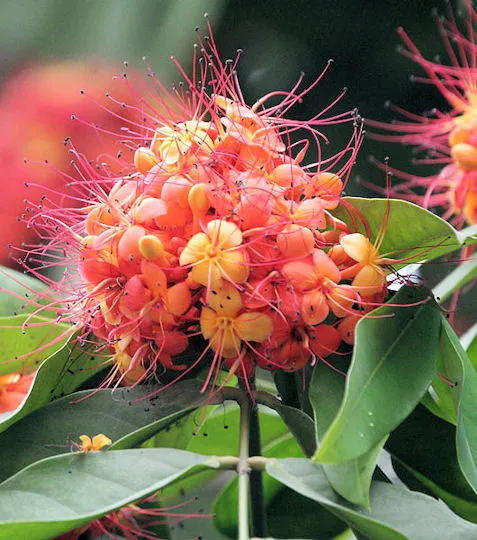
Fig.: अशोकवृक्षः
(Image source: Details)
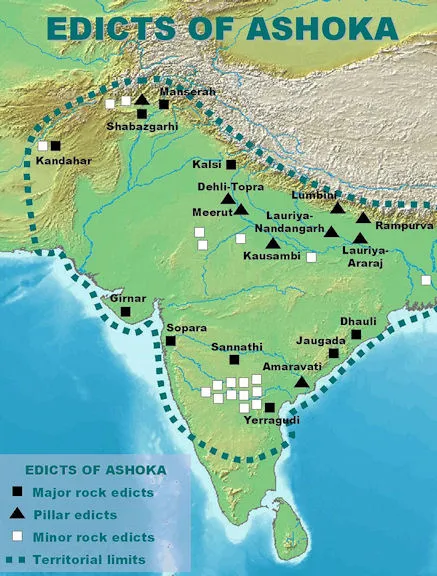
Fig.: अशोकसाम्राज्यम्
(Image source: Details)
38.10. Exercise
A) Insert the corresponding form of the words in parentheses in the following sentences and translate them:
... (सप्तमी विभक्तिः) ... धर्मं रक्षत्यभया जनाः ॥१॥ (राजन्)
आसीद्राजपुत्रो गौतमस् ... सुकृतकर्मोपपन्नो बुद्ध्या रूपामितबलः ॥२॥ (नामन्)
राज्यस्य ... (सप्तमी बहुवचने) ... अरयो राजानं योद्धुं तिष्ठन्ति ॥३॥ (सीमन्)
वैश्यानां कानि ... ॥४॥ (नामन्)
वैश्यास् ... ॥५॥ (किंनामन्)
... (सप्तम्येकवचने) ... अकर्म यः पश्येदकर्मणि च कर्म यः स बुद्धिमान्मनुष्येषु स युक्त इति भगवद्गीतायाम् ॥६॥ (कर्मन्)
किम् ... किमकर्मेति कवयो ऽप्यत्र मोहिताः ॥७॥ (कर्मन्)
ब्रह्मभूतस् ... (प्रथमैकवचने) ... न शोचति न लुभ्यति ॥८॥ (प्रसन्नात्मन्)
... (षष्ठ्येकवचने) ... सुकृतस्य सुफलमाहुः ॥९॥ (कर्मन्)
महीभोगस् ... (शष्ठी बहुवचने) ... धर्मः ॥१०॥ (राजन्)
राज्ञे ... दीयेरन् ॥११॥ (बलिन् हस्तिन्)
... (तृतीया विभक्तिः) ... लोका असृज्यन्त ॥१२॥ (ब्रह्मन् m.)
... (तृतीया विभक्तिः) ... कृतं पापं... (तृतीया विभक्तिः) ... अकृतं पापम् ॥१३॥ (आत्मन्)
सद्भिस् ... जनेभ्यो ऽभयं दीयते ॥१४॥ (राजन्)
... धर्मं न रक्षत्सु सभया जनाः ॥१५॥ (राजन्)
38.11. Word List for Translation Exercise
प्राय m.: main matter, Instr. प्रायेण : mostly, usually (to प्र-इ)
विनोद m.: pastime, entertainment, pleasure
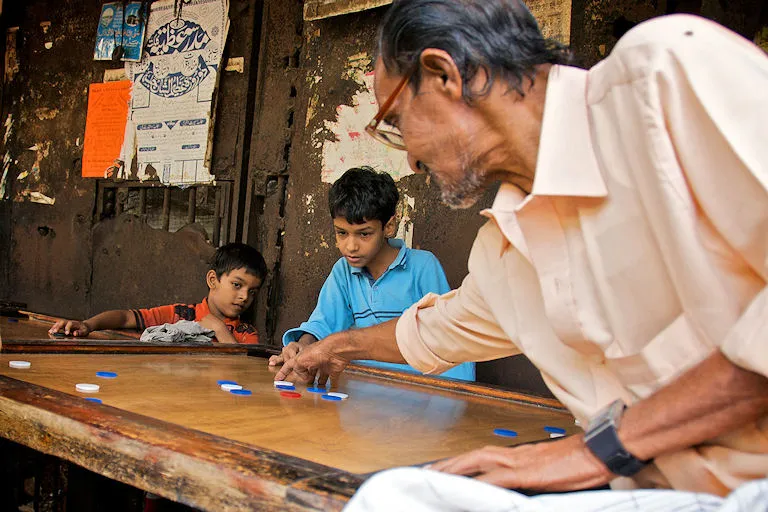
Fig.: विनोदः
(Image source: Details)
अट् 1P अटति : to wander around
Perf. I आट, आटुः
Fut. अटिष्यति
Caus. आटयति
गाध 3: shallow
तॄ 1P तरति : to cross, to save oneself from (Acc.)
Perf. IIIb ततार, तेरुः
Fut. तरिष्यति । तरीष्यति
Pass. तीर्यते
Caus. टारयति
PPP तीर्ण
Inf. तरितुम् । तरीतुम्
पार n.(m.): the far shore, boundary, goal
तीर n.: shore
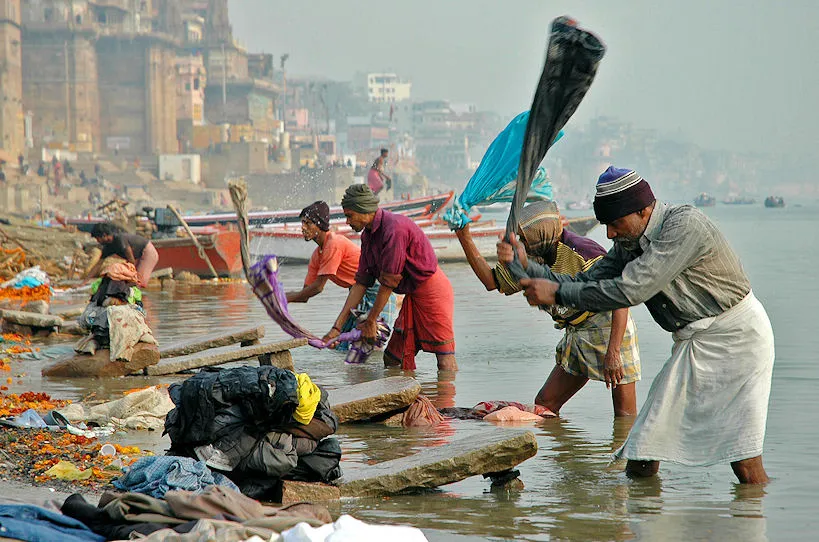
Fig.: वाराणस्यां गङ्गातीरे
(Image source: Details)
एकैकशस् Adv.: each individually
गण् 10P गणयति : to count
Perf. गणयां चकार
Fut. गणयिष्यति
Pass. गण्यते
PPP गणित
Absol. -गणय्य
Inf. गणयितुम्
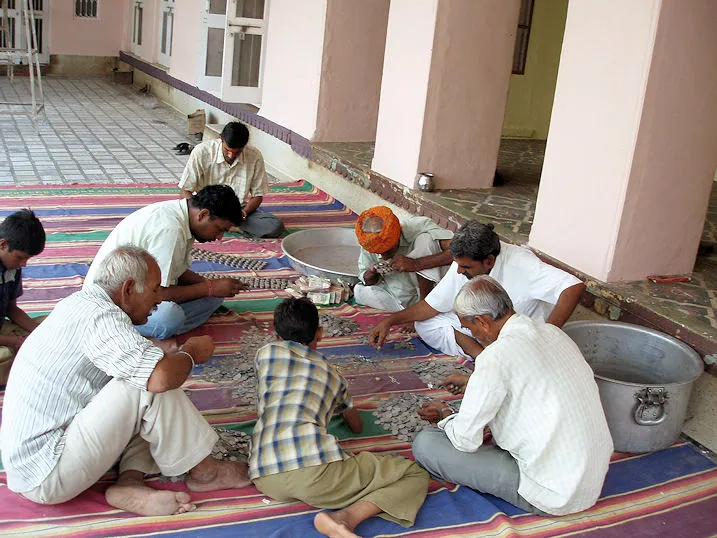
Fig.: गणयां चक्रुः
(Image source: Details)
क्रुश् 1P क्रोशति : to cry out, to lament
Perf. II चुक्रोश
Fut. क्रोक्ष्यति
Pass. क्रुश्यते
Caus. क्रोशयति
PPP क्रुष्ट
इदानीम् Adv.: now
नूनम् Adv.: now; thus, therefore; certainly, surely
मज्ज् 6P मज्जति : to sink, to dive
PPP ममज्ज
Fut. मङ्क्ष्यति
Caus. मज्जयति
PPP मग्न
Absol. मङ्क्त्वा । मक्त्वा
गवेषयति Denominative: to seek
व्याकुल 3: distressed, agitated, confused
कोलाहल m.n.: shouting, noise
विवेष्टित n.: the round-about seeking
हस् 1P हसति : to laugh
Perf. Vc जहास, जहसुर्
Fut. हसिष्यति
Pass. हस्यते
Caus. हासयति
PPP हसित
सृ 1P सरति : to run
Perf. ससार, सस्रुर्
Fut. सरिष्यति
Pass. स्रियते
Caus. सारयति
PPP सृत
Inf. सर्तुम्
कर्णयति Denominative: to hear (to कर्ण m. "ear")
लज्जा f.: shame
अधस् Adv.: downwards
38.12. Translation Exercise
दश मूढाः
मूढानां चेष्टितानि प्रायेण विनोदावहानि । यथा हि -- एकदा दश मूढा देशाटनाय प्रस्थिताः । किञ्चिद्दूरं गतानां तेषामुपस्थिता काचिदगाधा नदी । बाहुभ्यां तरन्तस्ते कथमपि नदीं तीर्त्वा पारं गताः ॥
आसीत्तेषां मध्ये कश्चन वृद्धः । स किं सर्वे तीरमनुप्राप्ता ईति जिज्ञासमानस्तानेकैकशो गणयामास । परं नवैव परिगणितास्तेन । ततः स आक्रोशत् । अहो वयम् दश प्रस्थिताः । इदानीं नवैव स्मः । नूनमस्माकमेको नद्यां निमग्नः । गवेषयत तमिति । ततस्तेषामेकैको ऽपि गणनां चकार । परं नवैव दृश्यन्ते । ततस्तेषां व्याकुलीभूतानां महान्कोलाहलः समजनि । तत्रैव नातिदूरे कस्यचिदृषेराश्रमो ऽवर्तत । तत्र वसन्नृषिस्तेषां विवेष्टितमवलोक्योच्चैर्जहास । तस्य हासशब्दं श्रुत्वा मूढास्तरसा समुपसृत्य हासकारणमपृच्छन् । ऋषिराह । अहो । अनात्मज्ञा यूयम् । युष्माकमेकैको ऽपि नात्मानमगणयत् । तेनायं व्यामोहः संजात इति । तदाकर्ण्य ते मूढाः सलज्जमधोमुखाः प्रययुः ॥ (संस्कृतप्रथमादर्शः)
Explanations:
दश Nom.Akk.pl.m.f.n. corresponding to दशन् "ten"
बाहुभ्याम् Instr.Dat.Abl. Dual corresponding to बाहु m. "arm"
सर्वे Nom.pl.m. corresponding to सर्व 3 "each, all"
जिज्ञासमान Part.Pres.Ā.Desiderative corresponding to ज्ञा 9U जिज्ञासते "to wish to know, to want to know"
नव Nom.Akk.pl.m.f.n. corresponding to नवन् "nine"
वयम् Nom.pl. "we"
स्मस् 1.pl.Ind.Pres.P corresponding to अस् 2P
गवेषयत 2.pl.Imperative P
एकैक "each individually"
समजनि 3.sg.Passive Aorist corresponding to जन्
तरसा Instr. sg. corresponding to तरस् n. "energy", used adverbially: "quickly, with force"
यूयम् Nom.pl. "they"
युष्माकम् Gen.pl. corresponding to यूयम्
- lekt3801.jpg: Fig.: ... प्रज्ञा नश्यति मेहतः Bangalore = ಬೆಂಗಳೂರು [Image source: mattlogelin. -- http://www.flickr.com/photos/mattlogelin/105785814/. -- Accessed on 2008-12-31. -- Creative Commons License (Attribution, non-commercial use)]
- lekt3802.jpg: Fig.: सूर्यः सूर्य मंदिर, Konark = कोनार्क [Image source: PriyadarshiC. -- http://www.flickr.com/photos/2kool/421985480/. -- Accessed on 2008-12-31. -- Creative Commons License (Attribution, non-commercial use)]
- lekt3803.jpg: Fig.: सीमा Border crossing between India and Pakistan at Wagah (वाघा / واہگہ / ਵਾਘਾ) [Image source: Vandelizer. -- http://www.flickr.com/photos/jeremy_vandel/99163975/. -- Accessed on 2008-12-31. -- Creative Commons License (Attribution, non-commercial use, share alike)]
- lekt3804.jpg: Fig.: गौतमबुद्धस्य महापरिनिर्वाणम् Gandhara, 2nd/3rd century CE [Image source: Wikipedia. Public domain]
- lekt3805.jpg: Fig.: उदकम् Darewadi village, Ahmed Nagar District = अहमदनगर, महाराष्ट्र [Image source: Robin Murphy, World Resources Institute. -- http://www.flickr.com/photos/worldresourcesinstitute/2555779241/. -- Accessed on 2009-01-01. -- Creative Commons License (Attribution, non-commercial use, share alike)]
- lekt3806.jpg: Fig.: हस्ती Nagarhole National Park = ನಾಗರಹೊಳೆ ರಾಷ್ಟ್ರೀಯ ಉದ್ಯಾನವನ [Image source: gopalarathnam_v. -- http://www.flickr.com/photos/gopalarathnam_v/3040514203/. -- Accessed on 2009-01-01. -- Creative Commons License (Attribution, non-commercial use, share alike)]
- lekt3807.jpg: Fig.: हस्तवान् जयपुर [Image source: brewingluminous. -- http://www.flickr.com/photos/brewingluminous/958598614/. -- Accessed on 2009-01-01. -- Creative Commons License (Attribution, non-commercial use, no derivatives)]
- lekt3808.jpg: Fig.: आसीन्महात्मा गन्धी नाम 1930s [Image source: Wikipedia. Public domain]
- lekt3809.jpg: Fig.: ब्रह्मा Halebidu = ಹಳೆಬೀಡು [Image source: Wikipedia. GNU FDLicense]
- lekt3810.jpg: Fig.: Ashoka tree = Saraca asoca (Roxb.) Wilde Kolkata = কলকাতা [Image source: J.M.Garg / Wikipedia. GNU FDLicense]
- lekt3811.jpg: Fig.: Greatest extent of the empire of Aśoka as well as locations of his rock and pillar edicts [Image source: Wikipedia.GNU FDLicense]
- lekt3812.jpg: Fig.: विनोदः Carrom game [Image source: nicolas - نِيقُولاَوُسَ . -- http://www.flickr.com/photos/keep-on-moving/3007779918/. -- Accessed on 2009-01-01. -- Creative Commons License (Attribution, non-commercial use, share alike)]
- lekt3813.jpg: Fig.: वाराणस्यां गङ्गातीरे [Image source: nassio. -- http://www.flickr.com/photos/26116629@N04/2450959377/. -- Accessed on 2009-01-01. -- Creative Commons License (Attribution, non-commercial use)]
- lekt3814.jpg: Fig.: गणयां चक्रुः करणी माता मंदिर, देशनोके [Image source: neilhinchley. -- http://www.flickr.com/photos/neilhinchley/50518886/. -- Accessed on 2009-01-01. -- Creative Commons License (Attribution, non-commercial use, no derivatives)]