
Lesson 58
58.1. द्विवचनस्य सार्वधातुकप्रत्ययाः
| परस्मैपदम् | आत्मनेपदम् | ||
|---|---|---|---|
| thematic | athematic | ||
| 1. तृतीयः | -vas | -vahe | |
| 2. मध्यमः | -thas | -īthe | -āthe |
| 3. प्रथमः | -tas | -īte | -āte |
58.2. दशगणानां द्विवचनम्: लट्
Before -vas and -vahe, the thematic vowel -a- is replaced by -ā-.
58.2.1. First Present Class (भ्वादिगणः)
भू 1P "to become, to be"
| परस्मैपदम् | आत्मनेपदम् | |
|---|---|---|
| 1. तृतीयः | भवावस् "wir beide werden" | <भवावहे> |
| 2. मध्यमः | भवथस् "ihr beide werdet" | <भवेथे> bhav-a + īthe |
| 3. प्रथमः | भवतस् "sie beide werden" | <भवेते> |
58.2.2. Fourth Present Class (दिवादिगणः)
नृत् 4P "to dance"
| परस्मैपदम् | आत्मनेपदम् | |
|---|---|---|
| 1. तृतीयः | नृत्यावस् | नृत्यावहे |
| 2. मध्यमः | नृत्यथस् | नृत्येथे |
| 3. प्रथमः | नृत्यतस् | नृत्येते् |
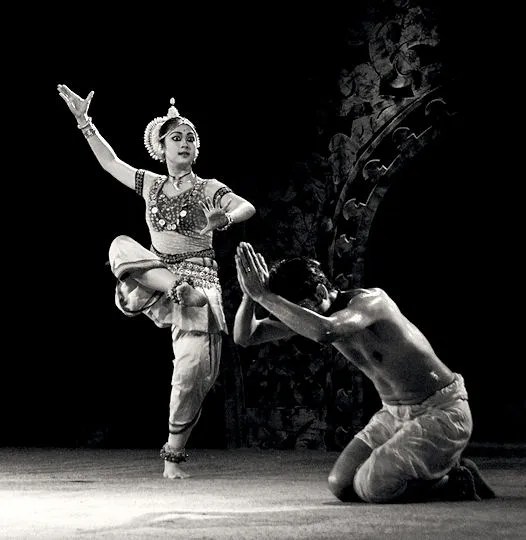
Fig.: नृत्यतः
ओडिसी
(Image source: Details)
58.2.3. Sixth Present Class (तुदादिगणः)
तुद् 6U "to push, to strike"
| परस्मैपदम् | आत्मनेपदम् | |
|---|---|---|
| 1. तृतीयः | तुदावस् | तुदावहे |
| 2. मध्यमः | तुदथस् | तुदेथे |
| 3. प्रथमः | तुदतस् | तुदेते |
58.2.4. Tenth Present Class (चुरादिगणः) and Causatives (णिजन्त)
चुर् 10U "to steal"
| परस्मैपदम् | आत्मनेपदम् | |
|---|---|---|
| 1. तृतीयः | चोरयावस् | चोरयावहे |
| 2. मध्यमः | चोरयथस् | चोरयेथे |
| 3. प्रथमः | चोरयतस् | चोरयेते |
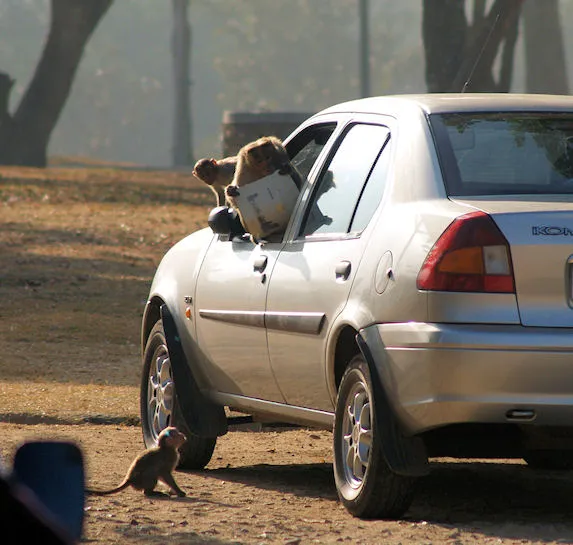
Fig.: वानरौ रथाद्भाण्डानि चोरयतः
Bandipur National Park -- ಬಂಡಿಪುರ ಅಭಯಾರಣ್ಯ
(Image source: Details)
58.3. लृट्लकारस्य द्विवचनम्
58.3.1. अनिट्
दा 3U "to give"
| परस्मैपदम् | आत्मनेपदम् | |
|---|---|---|
| 1. तृतीयः | दास्यावस् | दास्यावहे |
| 2. मध्यमः | दास्यथस् | दास्येथे |
| 3. प्रथमः | दास्यतस् | दास्येते |
58.3.2. सेट्
भू 1P "to become, to be"
| परस्मैपदम् | आत्मनेपदम् | |
|---|---|---|
| 1. तृतीयः | भविष्यावस् | भविष्यावहे |
| 2. मध्यमः | भविष्यथस् | भविष्येथे |
| 3. प्रथमः | भविष्यतस् | भविष्येते |
58.4. कर्मणि द्विवचनम् (यक् प्रत्ययः)
तुद् 6U "to push, to strike"
| 1. तृतीयः | तुद्यवाहे |
|---|---|
| 2. मध्यमः | तुद्येथे |
| 3. प्रथमः | तुद्येते |
58.5. अदन्तप्रथमादिगणानां द्विवचनम्: लट्
58.5.1. Second Present Class (अदादिगणः)
द्विष् 2U "to hate"
| परस्मैपदम् | आत्मनेपदम् | |
|---|---|---|
| 1. तृतीयः | द्विष्वस् | द्विष्वहे |
| 2. मध्यमः | द्विष्ठस् | द्विषाथे |
| 3. प्रथमः | द्विष्टस् | द्विषाते |
दुह् 2U "to milk"
| परस्मैपदम् | आत्मनेपदम् | |
|---|---|---|
| 1. तृतीयः | दुह्वस् | दुह्वहे |
| 2. मध्यमः | दुग्धस् | दुहाथे |
| 3. प्रथमः | दुग्धस् | दुहाते |
इ 2P "to go"
| परस्मैपदम् | |
|---|---|
| 1. तृतीयः | इवस् |
| 2. मध्यमः | इथस् |
| 3. प्रथमः | इतस् |
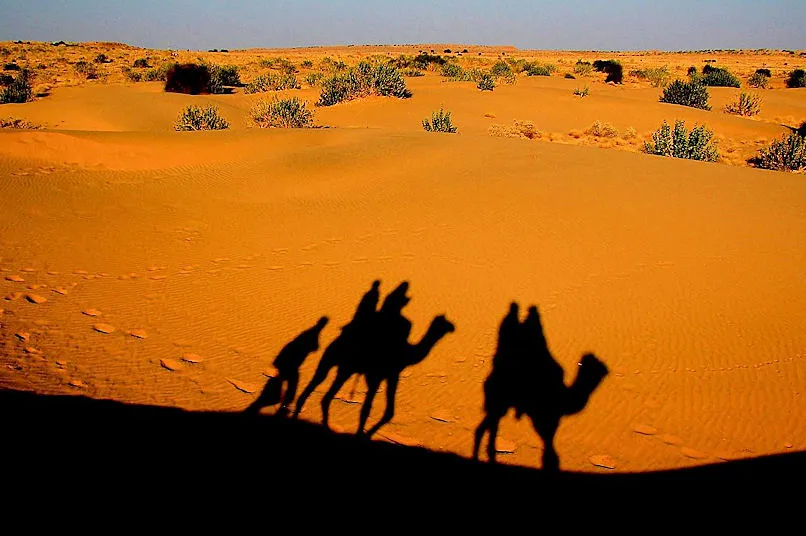
Fig.: उष्ट्रौ मरावितः
(Image source: Details)
इ + अधि 2Ā "to study"
| आत्मनेपदम् | |
|---|---|
| 1. तृतीयः | अधीवहे |
| 2. मध्यमः | अधीयाथे |
| 3. प्रथमः | अधीयते |
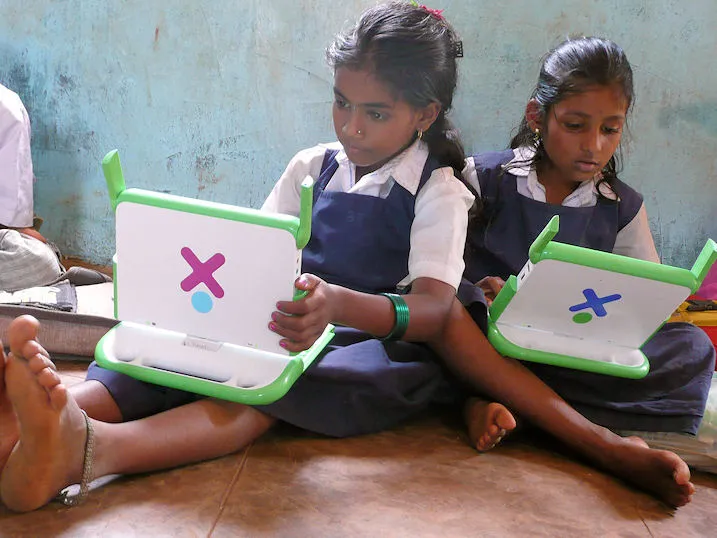
Fig.: कन्ये अधीयते
(Image source: Details)
हन् 2P "to strike, to kill"
| परस्मैपदम् | |
|---|---|
| 1. तृतीयः | हन्वस् |
| 2. मध्यमः | sig[हथस्] *hn-thas |
| 3. प्रथमः | हतस् |
अस् 2P "to be"
| परस्मैपदम् | |
|---|---|
| 1. तृतीयः | sig[स्वस्] s-vas |
| 2. मध्यमः | स्थस् |
| 3. प्रथमः | स्तस् |
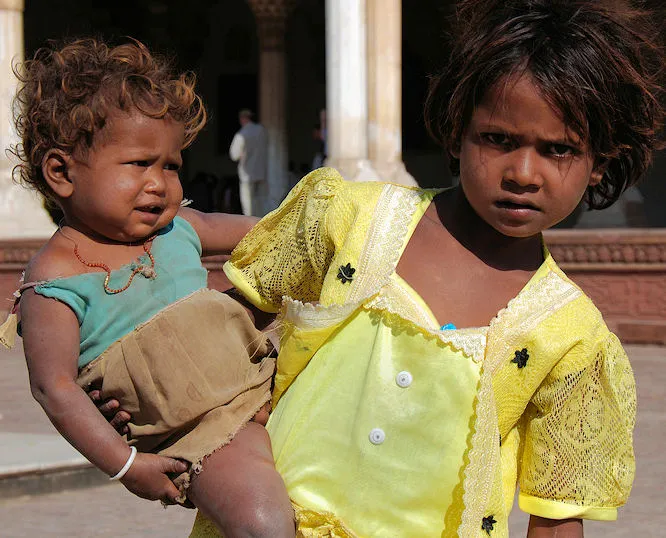
Fig.: भगिन्यौ स्वः
(Image source: Details)
58.5.2. Third Present Class (जुहोत्यादिगणः)
हु 3P "to pour into the sacrificial fire"
| परस्मैपदम् | आत्मनेपदम् | |
|---|---|---|
| 1. तृतीयः | जुहुवस् | <जुहुवहे> |
| 2. मध्यमः | जुहुथस् | <जुह्वाथे> |
| 3. प्रथमः | जुहुतस् | <जुह्वाते> |
धा 3U "to place, to lay, to set"
| परस्मैपदम् | आत्मनेपदम् | |
|---|---|---|
| 1. तृतीयः | दध्वस् | दध्वहे |
| 2. मध्यमः | धत्थस् | दधाथे |
| 3. प्रथमः | धत्तस् | दधाते |
58.5.3. Fifth Present Class (स्वादिगणः)
सु 5U "to press out"
| परस्मैपदम् | आत्मनेपदम् | |
|---|---|---|
| 1. तृतीयः | सुनुवस् / सुन्वस् | सुनुवहे / सुन्वहे |
| 2. मध्यमः | सुनुथस् | सुन्वाथे |
| 3. प्रथमः | सुनुतस् | सुन्वाते |
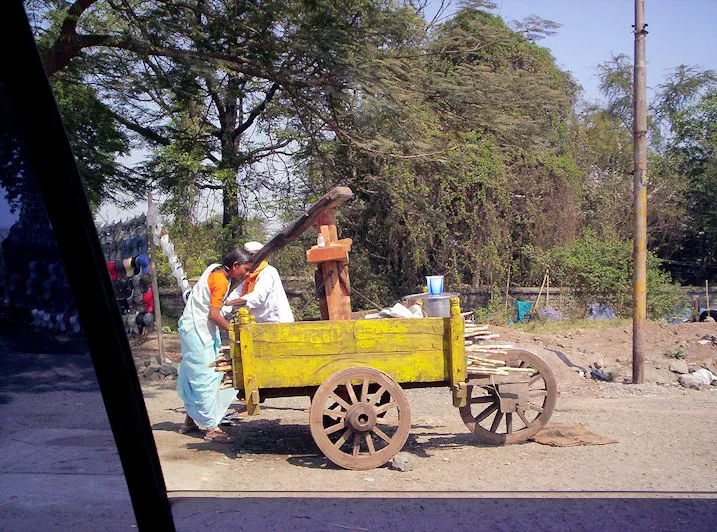
Fig.: शर्कराम्बु सुनुतः
पुणेनगरे
(Image source: Details)
58.5.4. Eighth Present Class (तनादिगणः)
तन् 8U "to stretch, to spread"
| परस्मैपदम् | आत्मनेपदम् | |
|---|---|---|
| 1. तृतीयः | तनुवस् / तन्वस् | तनुवहे / तन्वहे |
| 2. मध्यमः | तनुथस् | तन्वाथे |
| 3. प्रथमः | तनुतस् | तन्वाते |
कृ 8U "to do, to make"
| परस्मैपदम् | आत्मनेपदम् | |
|---|---|---|
| 1. तृतीयः | कुर्वस् | कुर्वहे |
| 2. मध्यमः | कुरुथस् | कुर्वाथे |
| 3. प्रथमः | कुरुतस् | कुर्वाते |
58.5.5. Seventh Present Class (रुधादिगणः)
रुध् 7U "to stop"
| परस्मैपदम् | आत्मनेपदम् | |
|---|---|---|
| 1. तृतीयः | रुन्ध्वस् | रुन्ध्वहे |
| 2. मध्यमः | रुन्द्धस् | रुन्धाथे |
| 3. प्रथमः | रुन्द्धस् | रुन्धाते |
युज् 7U "to hitch"
| परस्मैपदम् | आत्मनेपदम् | |
|---|---|---|
| 1. तृतीयः | युञ्ज्वस् | युञ्ज्वहे |
| 2. मध्यमः | युङ्क्थस् | युञ्जाथे |
| 3. प्रथमः | युङ्क्तस् | युञ्जाते |
58.5.6. Ninth Present Class (क्र्यादिगणः)
क्री 9U "to buy"
| परस्मैपदम् | आत्मनेपदम् | |
|---|---|---|
| 1. तृतीयः | क्रीणीवस् | क्रीणीवहे |
| 2. मध्यमः | क्रीणीथस् | क्रीणाथे krī-ṇ-āthe |
| 3. प्रथमः | क्रीणीतस् | क्रीणाते |
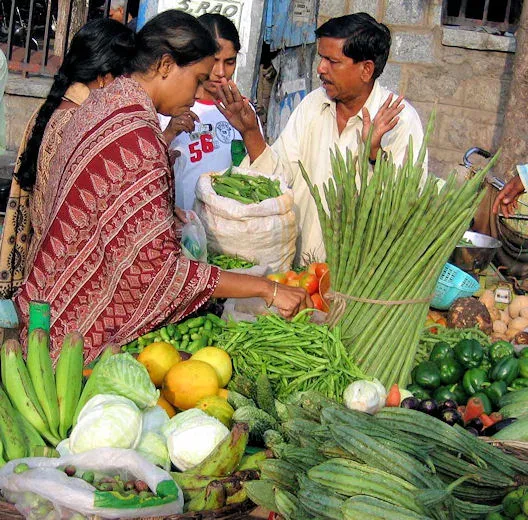
Fig.: स्त्रियौ शाकं क्रीणाते
(Image source: Details)
58.6. Aorist 5: इष्-लुङ्
The iṣ-Aorist is formed from all seṭ roots for which no other form of the Aorist is explicitly taught exclusively.
Formation:
Augment + Root + i + s + athematic secondary endings
!!! The 2.sg.P and 3.sg.P derive from **-**īs and -īt respectively !!! (This arose from the transfer of the Imperfect from roots of the type अब्रवीत्; thus, they are actually root-aorist forms).
The stem-forming suffix + endings of the iṣ-Aorist are therefore:
| परस्मैपदम् | आत्मनेपदम् | |||
|---|---|---|---|---|
| एकवचनम् | बहुवचनम् | एकवचनम् | बहुवचनम् | |
| 1. तृतीयः | -iṣam | -iṣma | -iṣi | -iṣmahi |
| 2. द्वितीयः | -īs | -iṣṭa | -iṣṭhās | **-**idhvam / -iḍhvam (wahlweise nach -h oder Halbvokal) |
| 3. प्रथमः | -īt | -iṣur | -iṣṭa | -iṣata |
Form of the root:
Roots with short vowel before a single consonant: Strong grade in P and Ā
Examples:
बुध् 1U: 1.sg.P अबोधिषम्
कॢप् 1Ā: 1.sg.Ā अकल्पिषिRoots with final vowel:
- P: Guṇa grade
- Ā: Strong grade
Examples:
पू 9U: 1.sg.P अपाविषम् ; 1. sg.Ā अपविषिRoots ending in -ar., -al, and also वद् 1P "to say", व्रज् 1P "to go away": P: Guṇa grade
Examples:
चर् 1P: 1.sg.P अचारिषम्
वद् 1P: 1.sg.P अवादिषम्Other roots of the form (Cons.-)Cons.-a-Cons.: in P optionally Guṇa grade (does not apply to roots ending in -h, -m, -y, and some other roots)
Example:
तन् 8U: 1.sg.P अतनिषम् / अतानिषम्
but:
क्रम् 1U: 1.sg.P अक्रमिषम्
Paradigms:
पू 9U "to purify"
| परस्मैपदम् | आत्मनेपदम् | |||
|---|---|---|---|---|
| एकवचनम् | बहुवचनम् | एकवचनम् | बहुवचनम् | |
| 1. तृतीयः | अपाविषम् | पाविष्म | अपविषि | अपविष्महि |
| 2. द्वितीयः | अपावीस् | अपाविष्ट | अपविष्ठास् | अपविध्वम् / अपविढ्वम् |
| 3. प्रथमः | अपावीत् | अपाविषुर् | अपविष्ट | पविषत |
बुध् 1U "to awaken, to recognize"
| परस्मैपदम् | ||
|---|---|---|
| एकवचनम् | बहुवचनम् | |
| 1. तृतीयः | अबोधिषम् | अबोधिष्म |
| 2. द्वितीयः | अबोधीस् | अबोधिष्ट |
| 3. प्रथमः | अबोधीत् | अबोधिषुर् |
कॢप् 1Ā "to be suitable"
| आत्मनेपदम् | ||
|---|---|---|
| एकवचनम् | बहुवचनम् | |
| 1. तृतीयः | अकल्पिषि | अकल्पिष्महि |
| 2. द्वितीयः | अकल्पिष्ठास् | अकल्पिध्वम् |
| 3. प्रथमः | अकल्पिष्ट | अकल्पिषत |
Particularities:
With some roots, the connecting vowel -i- in the आत्मनेपद can be replaced by -ī-. After ग्रह् 9U "to seize", this replacement must occur in the P and Ā:
अग्रहीषम् , अग्रहीषिRoots of the 8th present class ending in -n (or -ṇ) can be grade-reduced in the 2.3.sg.Ā:
तन् 8U: 2.sg.Ā अतनिष्ठास् / अतथस् (root-aorist) ; 3. sg. Ā अतनिष्ट / अततदीप् 4Ā, जन् 4Ā, etc. can, instead of the 3.sg. Ā, also take the form of the passive aorist:
अदीपिष्ट / अदीपि ; अजनिष्ट / अजनिविज् 7P has no ablaut:
अविजीत्
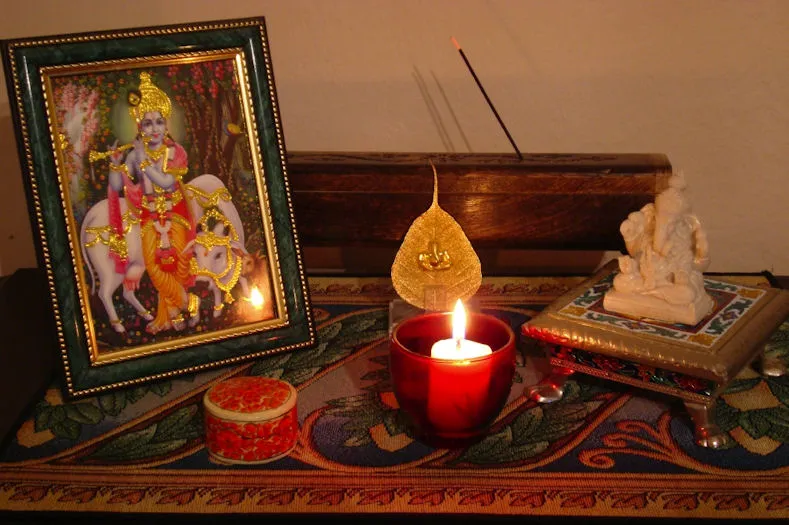
Fig.: दीपः श्रीकृष्णाय श्रीगनेशाय चादीपिष्ट चादीपि ॥
(Image source: Details)
58.7. Exercise
A) Determine and translate the following forms without aids, and form the corresponding forms of the i-aorist:
- औहे
- जाग्रति
- जीर्यन्ति
- आनर्च
- खादामः
- नेद
- आश्नीत
- पुनते
- अशेरत
- इयेषिथ
- आर्च्छत्
- अर्हन्ति
- ऊदुः
- इन्त्से
- आध्वे
- कल्पे
- आनीत्
- ऐक्षध्वम्
- अचेतः
B) Translate and determine the following forms:
- अनेढ्वम्
- एनयोः
- अष्टौ
- चक्रम
- ना
- अत्तः
- अधृत
- ईहेरन्
- अधिजगे
- जग्म
- अघ्रात्
- अद्राक्ष्म
- अस्थाः
- अधमः
- आनर्ध
- पथोः
- जेता
- श्वा
- स्वः
- यदृच्छया
- अकार्षम्
- क्रीणीथः
- क्रीणीथ
- जानानि
- भोः
- अजैष्त
- पुरा
- देवा
- गन्धी
- ईय
- नाना
- देह
- अतत
- आप्स्यावः
- अतौत्त
- इमे
- इतः
- दद
- अञ्ज्वः
lekt5802: ओडिसी [Image source: Iqbal Saggu. -- http://www.flickr.com/photos/iqbalsaggu/964447408/. -- Accessed on 2009-03-02. -- Creative Commons License (Attribution)]
lekt5803: Bandipur National Park -- ಬಂಡಿಪುರ ಅಭಯಾರಣ್ಯ
lekt5806: [Image source: stewils. -- http://www.flickr.com/photos/stewils/2231579675/. -- Accessed on 2009-03-02. -- Creative Commons License (Attribution, Non-Commercial, No Derivative Works)]
lekt5807: पुणेनगरे
lekt5801: [Image source: Prato9x. -- http://www.flickr.com/photos/55163494@N00/262793331/. -- Accessed on 2009-03-02. -- Creative Commons License (Attribution, non-commercial use, no derivatives)]