
Exercise 34
A) Form the corresponding perfect tense forms in person, number, and genus verbi for the following verb forms:
- रक्षिष्यन्ति । ररक्षुर्
- स्रक्ष्यति । ससर्ज
- सिञ्चते । सिषिचे
- वर्तते । ववृते
- प्रवेक्ष्यति । प्रविविशुर्
- भनक्ति । बभञ्ज
- लुभ्यन्ति । लुलुभुर्
- रुन्धते । रुरुधिरे
- रोदिति । रुरोद
- बध्नाति । बबन्ध
- युध्यन्ते । युयुधिरे
- युङ्क्ते । युयुजे
- मुह्यन्ति । मुमुहुर्
- मुञ्चते । मुमुचे
- जीवन्ति । जिजीवुर्
- भोक्ष्यते । बुभुजे
- आप्नुवन्ति । आपुर्
- भिन्त्ते । बिभिदे
- भोत्स्यन्ते । बुबुधिरे
- नर्तिष्यति । ननर्त
- अश्नाति । आश
- द्वेष्टि । दिवेष
- पश्यन्ति । ददृशुर्
- दुग्धे । दुदुहे
- सन्ति । आसुर्
- आदेक्ष्यन्ति । आदिदिशुर्
- छिनत्ति । चिछेद
- क्रुध्यति । चुक्रोध
- अस्यति । आस
- कुप्यन्ति । चुकुपुर्
- इच्छन्ति । ईषुर्
Translate the following text from the पद्मपुराण regarding gifts to Brahmins:
क्षितिं सशस्यां यो दद्याद्ब्राह्मणाय द्विजोत्तम ।
विष्णुलोके सुखं भुङ्क्ते यावदिन्द्राश्चतुर्दश ॥१॥
सप्तद्वीपां महीं दत्त्वा यत्पुण्यं प्राप्यते द्विज ।
तत्पुण्यं प्राप्नुयान्मर्त्यो धेनुं यच्छन्द्विजातये ॥२॥
तिलप्रमाणं स्वर्णं यो ब्राह्मणाय प्रयच्छति ।
हरिनिकेतनं याति युक्तं कोटिकुलैरपि ॥३॥
सालङ्कारां द्विजश्रेष्ठ कन्यां यच्छति यो नरः ।
स गच्छेद्ब्रह्मसदनं पुनर्जन्म न विद्यते ॥४॥
अन्नं वारि द्विजश्रेष्ठ येन दत्तम् महीतले ।
तेन दत्तानि दानानि सर्वाणि च द्विजर्षभ ॥५॥
Best of the Twice-Born! He who gives the earth along with its crops to a Brahmin enjoys the world of Viṣṇu as long as fourteen Indras. Twice-Born! The merit that one who gives away the entire world with its seven continents acquires, that does a mortal who gives a cow to a Brahmin. He who gives gold to a Brahmin as small as a sesame seed comes to the city of residence of Haris (Viṣṇu) together with 10 million families. Best of the Twice-Born! A man who gives a girl along with jewelry (to a Brahmin) comes to the seat of Brahmā and has no more rebirth. Best of the Twice-Born! He who has given food and water on the surface of the earth has given all gifts, Bull among the Twice-Born!
Explanations:
Vocative singular of masculines/neuters ending in -a ends in -a: e.g. देव "God!"
चतुर्दश fourteen
सप्त seven
जन्म Nom./Akk. sg. of जन्मन् n. birth
सर्व 3 "all, whole" (declined according to pronominal declension)
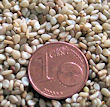
Fig.: तिलप्रमाणम्
(Image source: Details)