
Exercise 23
A) The following roots form the infinitive without the connecting vowel -i-. Form the infinitive, taking into account the sound changes:
- आप् — आप्तुम्
- इ — एतुम्
- गम् — गन्तुम्
- कृ — कर्तुम्
- क्रुध् — क्रोद्धुम्
- जि — जेतुम्
- दुह् — दोग्धुम्
- दिश् — देष्टुम्
- दह् — दग्धुम्
- सृज् — स्रष्टुम्
- द्विष् — द्वेष्टुम्
- नी — नेतुम्
- पद् — पत्तुम्
- पा १ — पातुम्
- पा २ — पातुम्
- भज् — भक्तुम्
- कृष् — कर्ष्टुम् / क्रष्टुम्
- सु — सोतुम्
- मन् — मन्तुम्
- मुच् — मोक्तुम्
- मृ — मर्तुम्
- यज् — यष्टुम्
- युध् — योद्धुम्
- वच् — वक्तुम्
- विश् — वेष्टुम्
- श्रु — श्रोतुम्
- प्रच्छ् — प्रष्टुम्
- सिच् — सेक्तुम्
- स्तु — स्तोतुम्
- स्था — स्थातुम्
- स्मृ — स्मर्तुम्
- हन् — हन्तुम्
- लभ् — लब्धुम्
- अद् — अत्तुम्
- दृश् — द्रष्टुम्
- पच् — पक्तुम्
- सद् — सत्तुम्
B) The following roots form the infinitive with the connecting vowel -i-. Form the infinitive for:
- आस् — आसितुम्
- नृत् — नर्तितुम्
- रक्ष् — रक्षितुम्
- रुद् — रोदितुम्
- वद् — वदितुम्
- वृत् — वर्तितुम्
- कुप् — कोपितुम्
C) The following roots optionally with or without the connecting vowel:
- अश् — अशितुम् / अष्टुम्
- इष् — एष्टुम् / एषितुम्
- बुध् — बोधितुम् / बोद्धुम्
- मुह् — मोहितुम् / मग्धुम् / मोढुम्
- सह् — सहितुम् / सोढुम्
D) Translate and resolve the compounds:
१. नराः स्वर्गं लब्धुं देवान्यज्ञ्नैर्यष्टुमिच्छन्ति ॥१॥
To gain a heaven, people wish to worship gods with offerings.
२. महापुण्यं कृत्वा गतपापजनेन नरकं गन्तुं न शक्यते ॥२॥
(महत्पुण्यम् । गतं पापं यस्य तेन जनेन)
If someone has done much meritorious work, a person free from evil cannot come to a hell.
३. फलवन्ति पुण्यानीति सज्जनो ऽधर्मं कर्तुं नेच्छति ॥३॥
(सञ्जनः । न धर्मम्)
Since meritorious deeds are fruitful, a good person does not wish to do wrong.
४. सुगतो लोकान्मोक्तुमार्यसत्यान्युपदिशति ॥४॥
To liberate the worlds, the Buddha teaches the noble truths.
५. शूद्रजनो ब्राह्मणेन सहात्tuं नार्हति ॥५॥
(शूद्राणां जनः)
Śūdras must not eat together with a Brāhmaṇa.
६. लोभसम्पन्ननरा नृत्यन्तीं सम्पन्नरूपदासीं द्रष्टुं गताः ॥६॥
(लोभेन सम्पन्ना नराः । सम्पन्नं रूपं यस्यास्ताम्)
Full of greed, the men went to see the beautiful servant girl dance.
७. शूद्रया संगत्य ब्राह्मणो यष्टुं नार्हति ॥७॥
Wenn ein Brahmane mit einer Śūdra Geschlechtsverkehr hatte, darf er nicht opfert.
८. धर्मं श्रोतुकामा ब्राह्मणी सपुत्रा गुरुं द्रष्टुं महानगरं गता ॥८॥
(श्रोतुं कामो यस्याः सा । पुत्रेण सह । महन्नगरम्)
Because she wished to hear about the Dharma, the Brahmin woman went to the big city with her son to meet the master.
Scholarly Fragment
आहारनिद्राभयमैथुनं च
सामान्यमेतत्पशुभिर्नराणाम् ।
धर्मे हि तेषा्मधिको विशेषो
धर्मेण हीनाः पशुभिः समानाः ॥
Eating, sleeping, fear, and sex are shared by humans and cattle. The distinguishing difference of humans lies in the Dharma. Without the Dharma, they are equal to cattle.
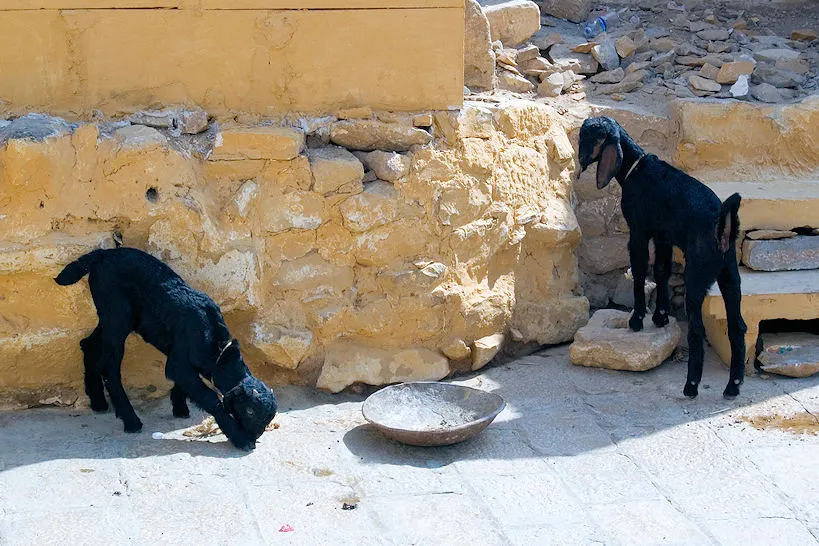
Fig.: आहारनिद्राभयमैथुनं च
(Image source: Details)
Additional Exercises
A) Translate into Sanskrit:
1. The five (पञ्च) "torments" are: ignorance, the false belief in the self, affection, aversion, and attachment to the body.
अविद्यास्मितारागद्वेषाभिनिवेशाः पञ्च क्लेशाः ।
2. Knowledge is acquired through obedience to a teacher, or for much money, or in exchange for knowledge. A fourth type of knowledge acquisition does not exist.
गुरुशुश्रूषया विद्या पुष्कलेन धनेन वा । अथवा विद्यया विद्या चतुर्थी नैव विद्यते ॥
3. A low person speaks but does not act; a good person does not speak, but acts only.
निचो वदति न कुरुते वदति न साधुः करोत्येव ॥
4. The auxiliary sciences of the Veda are: phonetics, ritualistics, grammar, semantics, metrics (छन्दस्), and calendar science.
शिक्षा कल्पो व्याकरणं निरुक्तं छन्दो ज्योतिषमङ्गानि ।
5. Yoga is the stopping of the activities of the thinking organ.
योगश्चित्तवृत्तिनिरोधः ॥
6. Right prevails, not wrong; truth prevails, not falsehood; patience prevails, not anger; God prevails, not a counter-god. (Passive)
धर्मो जयति नाधर्मः सत्यं जयति नानृतम् । क्षमा जयति न क्रोधो देवो जयति नासुरः ॥
7. The "staff" causes the acquisition and secure possession of philosophy, Veda, and economics. The guidance of this staff is politics.
आन्वीक्षिकीत्रयीवार्त्तानां योगक्षेमसाधनो दण्डः, तस्य नीतिर्दण्डनीतिः ॥
8. Wife, son, and slave, these three (त्रयस्) are, according to tradition, without property. Whatever these acquire, that belongs to the one to whom these (three) belong.
भार्या पुत्रश्च दासश्च त्रय एवाधनाः स्मृताः । यत्ते समधिगच्छन्ति यस्य ते तस्य तद्धनम् ॥
9. Mosquitoes desire a wound, rulers desire property, low persons desire conflict, good persons desire peace.
मक्षिका व्रणमिच्छन्ति धनमिच्छन्ति पार्थिवाः । नीचाः कलहमिच्छन्ति शान्तिमिच्छन्ति साधवः ॥
10. The specific duty of a Brahmin is: study, teaching, sacrificing as the sacrificer, sacrificing on behalf of others, giving, and receiving; that of a Kṣatriya is: study, sacrificing as the sacrificer, giving, earning a livelihood through weapons, protecting beings; that of a Vaiśya: study, sacrificing as the sacrificer, giving, farming, animal husbandry, and trade; that of a Śūdra: obedience to the twice-born, economic activity, activity (कर्म) of artisans and performers.
स्वधर्मो ब्राह्मणस्याध्ययनमध्यापनं यजनं याजनं दानं प्रतिग्रहश्च । क्षत्रियस्याध्ययनं यजनं दानं शस्त्राजीवो भूतरक्षणं च । वैश्यस्याध्ययनं यजनं दानं कृषिपाशुपाल्ये वणिज्या च । शूद्रस्य द्विजातिशुश्रूषा वार्त्ता कारुकुशीलवकर्म च ॥
Clarification of consciousness occurs due to the meditative development of loving-kindness, compassion, sympathetic joy, and equanimity, which have happiness and suffering, good and evil as their object.
मैत्रीकरुणामुदितोपेक्षाणां सुखदुःखपुण्यापुण्यविषयाणां भावनतश्चित्तप्रसादनम् ॥The poor have many sons, although they do not desire them. The rich have no son. Strange is the stirring of fate.
सन्ति पुत्राः सुबहवो दरिद्राणामनिच्छताम् । नास्ति पुत्रः समृद्धानां विचित्रं विधिचेष्टितम् ॥Who does not strike down a female body (वपुस् n.) with a slender waist, broad hips, red lips, black eyes, a curved navel, and upright breasts?
तनुमध्यं पृथुश्रोणि रक्तौष्ठमसितेक्षणम् । नतनाभि वपुः स्त्रीणां कं न हन्त्युन्नतस्तनम् ॥
B) Decline in all cases known to you क्षत्रिया (f.):
| Case | Singular | Plural |
|---|---|---|
| 1. Nom. | क्षत्रिया | क्षत्रियास् (क्षत्रियाः) |
| 2. Acc. | क्षत्रियाम् | क्षत्रियास् (क्षत्रियाः) |
| 3. Instr. | क्षत्रियया | क्षत्रियाभिस् (क्षत्रियाभिः) |
| 6. Gen. | क्षत्रियायास् (क्षत्रियायाः) | क्षत्रियाणाम् |
C) Provide the stem forms (meaning, present class, mood, 3rd sg. present indicative, 3rd sg. passive, PPP, absolutes, infinitive) for the following verbs:
१. सह् (1Ā, to endure)
| Form | Value |
|---|---|
| Pres. Ind. | सहते |
| Passive | सह्यते |
| PPP | सोढ |
| Absolute 1 | सोढ्वा / सहित्वा |
| Absolute 2 | -सह्य |
| Infinitive | सोढुम् / सहितुम् |
२. पा (to drink / to guard)
| Form | to drink (1P) | to guard (2P) |
|---|---|---|
| Pres. Ind. | पिबति | पाति |
| Passive | पीयते | पायते |
| PPP | पीत | पात |
| Absolute 1 | पीत्वा | पात्वा |
| Absolute 2 | -पाय | -पाय |
| Infinitive | पातुम् | पातुम् |
३. वच् (2P, to speak)
| Form | Value |
|---|---|
| Pres. Ind. | वक्ति |
| Passive | उच्यते |
| PPP | उक्त |
| Absolute 1 | उक्त्वा |
| Absolute 2 | -उच्य |
| Infinitive | वक्तुम् |
४. हन् (2P, to strike down)
| Form | Value |
|---|---|
| Pres. Ind. | हन्ति / घन्ति |
| Passive | हन्यते |
| PPP | हत |
| Absolute 1 | हत्वा |
| Absolute 2 | -हत्य |
| Infinitive | हन्तुम् |
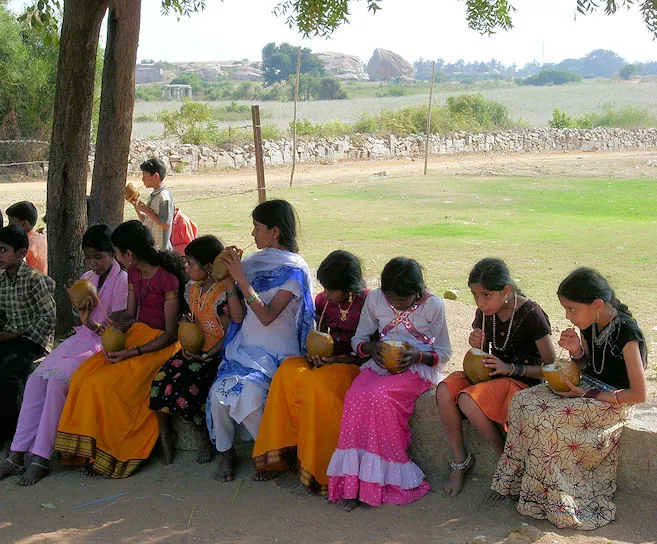
Fig.: बालाः पिबन्ति
(Image source: Details)