
Lesson 41
41.1. सुभाषिते (two proverbs)
पुस्तकस्था च या विद्या
परहस्ते च यद्धनम् ।
कार्यकाले समुत्पन्ने
न सा विद्या न तद्धनम् ॥१॥
Explanation: पर "other"
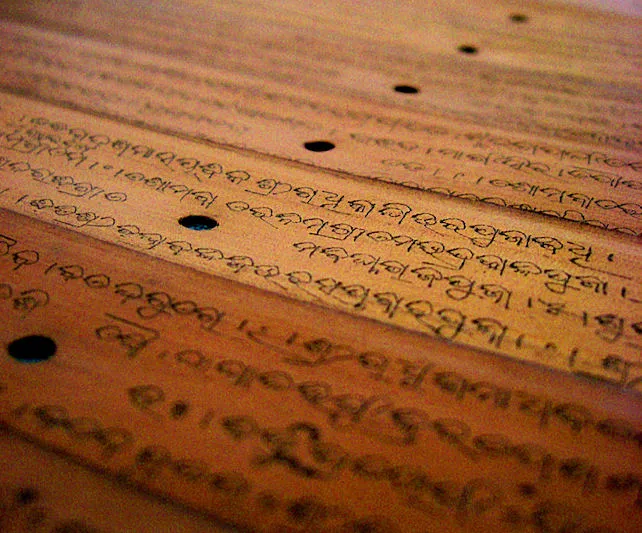
Fig.: पुस्तकस्था च या विद्या ...
(Image source: Details)
उपदेशो हि मूर्खाणां
प्रकोपाय न शान्तये ।
पयःपानं भुजङ्गानां
केवलं विषवर्धनम् ॥२॥
Explanation: पयस् n. = दुग्धम्
41.2. Further कृत् formations on -a
41.2.1. लट्-शत्रुप्रत्ययः आत्मनेपदम्, लट्-कर्मणि शत्रुप्रत्ययः, लृट्-शत्रुप्रत्ययः आत्मनेपदम्
41.2.1.1. Thematic present stems, passive and future
Formation:
Present stem / passive stem / future stem + -māna (fem. mānā)
Examples:
यज् 1U, Pres.Part.Ā यजमान 3 "one who is honored with a sacrifice for one's own benefit = sacrificer"
मन् 4Ā, Pres.Part.Ā मन्यमान 3 "a thinker"
कृ 8U, Pres.Part.Passive क्रियमाण 3 "something that is done"
दा 3U, Fut.Part.Ā दास्यमान 3 "one who will give for one's own benefit"
41.2.1.2. A-thematic present classes
Formation:
Weak present stem (in the form it has before the ending -ate of the 3.pl.Ā) + -āna (fem. -ānā)
Examples:
| Root / Klasse | Partizip Present Ā |
|---|---|
| द्विष् 2U | द्विषाण |
| हु 3P | <जुह्वान> ju-hu + āna |
| सु 5U | सुन्वान su-nu + āna |
| रुध् 7U | रुन्धान ru-n-dh-āna |
| तन् 8U | तन्वान tan-u + āna |
| क्री 9U | क्रीणान krī + n-āna |
41.2.2. "Participle" of passive necessity (Gerundive) (कृत्य)
To express passive necessity ("what must/should be done"), adjectives derived from roots and derived verbal stems can optionally be formed with the following suffixes:
- -तव्य (fem. -तव्या)
- -अनीय (fem. -अनीया)
- -य (fem. -या)
- -त्य (fem. -त्या) (instead of -य/-या)
41.2.2.1. The suffix -तव्य / -तव्या
The suffix -तव्य / -तव्या is attached to roots and derived verbal stems (e.g. causative) in the same way as the infinitive suffix -तुम् (see Lesson 23), i.e.
- guṇa-grade root + तव्य
or
- guṇa-grade root + -i- + तव्य
In the causative:
- causative stem on -ay + -i- + तव्य
Examples:
| जि 1P | जेतव्य 3 | "one who must be conquered; one to be conquered" |
| वृत् 1Ā | वर्तितव्य 3 | "that where one should be located" |
| बुध् Caus. | बोधयितव्य | "one who should be awakened; one to be awakened" |
41.2.2.2. The suffix -अनीय / -अनीया
Formation:
High-grade root + -अनीय / -अनीया
Causative and 10th Present Class:
Root, as it appears in the causative stem, without -aya- + -अनीय / -अनीया
Examples:
| दा 3U | दानीय 3 | "to be given; what must be given" |
| जि 1P | जयनीय 3 | "to be conquered" |
| कृ 8U | करणीय 3 | "to be done" |
| दृश् | दर्शनीय 3 | "what must be seen; worth seeing" |
| बुध् Caus. | बोधनीय 3 bodh-aya - aya + -anīya | "one to be awakened" |
| दा Caus. | दापनीय 3 dā-paya - aya + -anīya | "what must be caused to be given" |
41.2.2.3. The Suffix -य / -या
Formation:
Root (in low, high, or guṇa grade) + -य
For the exact rules, see Kielhorn, Grammar of the Sanskrit Language, pp. 195 - 197!
Treatment of final vowels:
1. Roots ending in -ā form this gerundive in -eya
Examples:
| ज्ञा 9U | ज्ञेय 3 | "to be known; what must be recognized" |
| दा 3U | देय 3 | "what must be given" |
2. Roots ending in -i /-ī / -u / -ū /-ṛ generally have high or guṇa grade, unless they belong to those roots ending in -i / -u /-ṛ that form a gerundive with the suffix -त्य (fem. -त्या) (list of these roots in Kielhorn, Grammar §537).
Example:
| स्मृ 1P | स्मर्य 3 | "that which must be remembered" |
2a. Roots ending in -i/-ī have high grade
Examples:
| विक्री 9Ā | विक्रेय 3 | "to be sold; saleable" |
| नी 1U | नेय 3 | "to be led" |
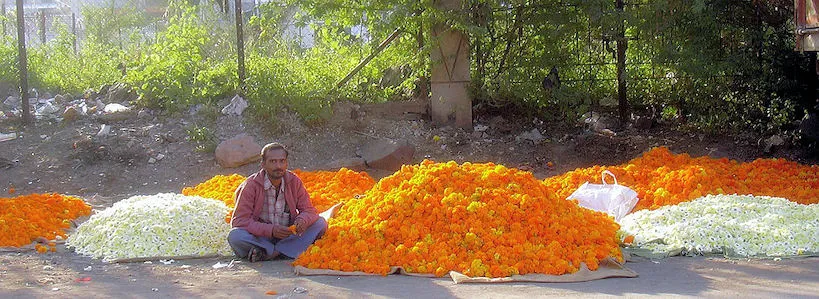
Fig.: विक्रेयाणि पुष्पानि
(Image source: Details)
2b. Roots ending in -u /-ū replace the high-grade -o before -ya with -av, and the guṇa-grade -au with -āv. Guṇa-grade formation in this case denotes necessity.
Example:
| स्तु 2U | स्तव्य 3 | "that which should be praised" |
| स्ताव्य 3 | "that which must necessarily be praised" |
Examples for consonant-ending roots (rules see Kielhorn, Grammar § 533ff.):
Low-grade formation:
Examples:
| दृश् | दृश्य 3 | "worth seeing" |
| शास् 2P | शिष्य 3 | "one to be instructed = student" |
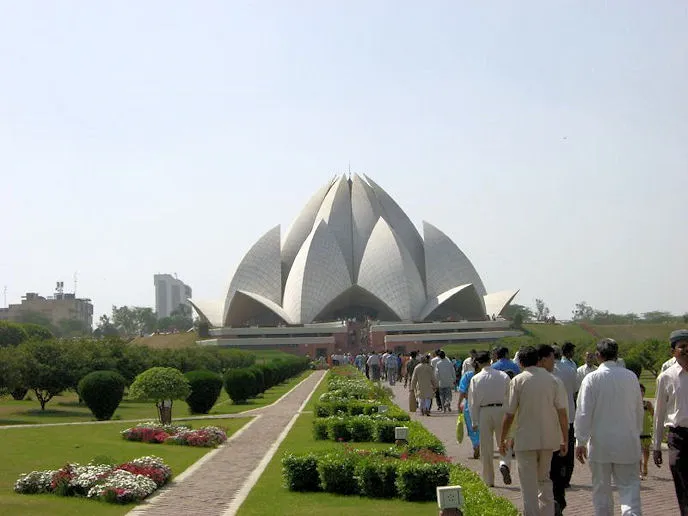
Fig.: दृश्यो मन्दिरः
(Image source: Details)
High-grade formation:
Examples:
| द्विष् 2U | द्वेष्य 3 | "to be hated = enemy" |
| भिद् 7U | भेद्य 3 | "to be split" |
Causatives and Verbs of the 10th Present Class (चुरादि)
Formation:
Causative/Present stem without -aya- + -य
Example:
| मन् Causative¹ | मान्य 3 mān-aya - aya + ya | "to honor, highly revered" |
¹ actually a denominative to मान
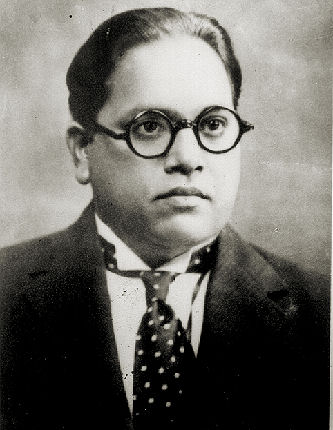
Fig.: मान्यः
(Image source: Details)
41.2.2.4. The suffix -त्य / त्या (instead of -य / -या)
List of roots ending in -i / -u /-ṛ, which form a gerundive not with -य / -या but with the suffix -त्य (fem. -त्या), in Kielhorn, Grammar §537.
Formation:
weak-grade root + -त्य / -त्या
Examples:
| इ 2P | इत्य 3 | "to be gone to" |
| श्रु 5P | श्रुत्य 3 | "to be heard" |
| कृ 8U | कृत्य 3 | "to be done" |
41.2.3. Syntactic usage of the "participle" of passive necessity (Gerundivum) (कृत्य)
The gerundive can be used attributively:
दर्शनीयं नगरम् = "a city that must be seen; a city worth seeing"
The gerundive can also be used as a predicative noun in sentences with a passive construction expressing an obligation or command (with न a prohibition, an impossibility):
काशी द्विजैर्द्रष्टव्या = "Twice-born must see Benares"
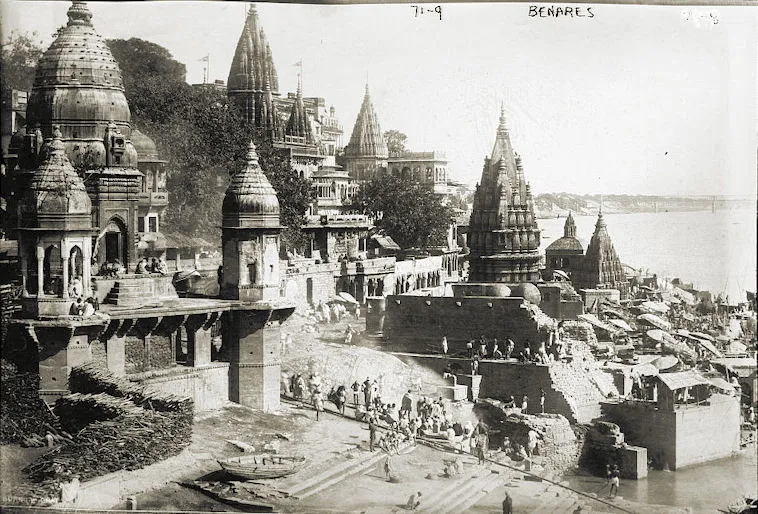
Fig.: दर्शनीयं नगरं काशी
(Image source: Details)
41.2.4. Differences in the usage of the gerundive suffixes
The usage of these suffixes largely overlaps
- -तव्य (fem. -तव्या): always expresses necessity and is preferably used predicatively (less frequently attributively). Formations with this suffix should not be used in nominal compounds.
- -अनीय (fem. -अनीया) and -य (fem. -या) / -त्य (fem. -त्या) (instead of -य/-या): can have an additional meaning (esp. -य) in the sense of the German "-worthy" (e.g. "worth seeing") or only a possibility "-able" (दृश्य "visible"). Formations with these suffixes can be negated with अ-/-अन्- (but not formations with -तव्य) and there are तत्पुरुष as their second member in which they occur.
41.2.5. No connection with सु- and दुस्-
With सु- and दुस्- in the meaning "easy" or "difficult", gerundives must not be connected. Instead, तत्पुरुष of the type सुकर 3 ("easy to do") are used (see Lesson 18).
41.3. Word list
मूर्ख m = मूढ
भुजङ्ग m.: snake
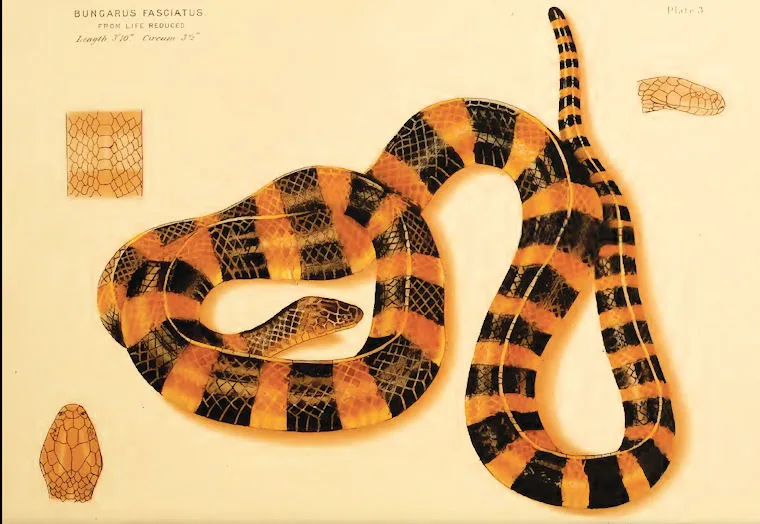
Fig.: भुजङ्गः
(Image source: Details)
केवलम् Adv.: only, alone, completely
विष n.: poison
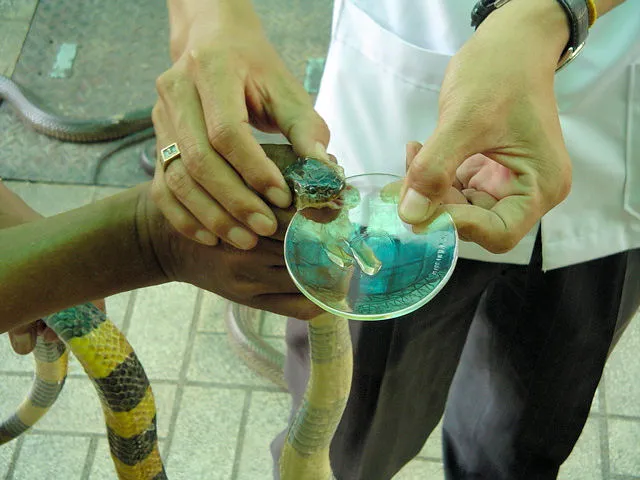
Fig.: भुजङ्गस्य विषम्
(Image source: Details)
शास् 2P शास्ति : to reprimand, to control, to command, to teach
has the weak present stem शिष् : शिष्मस्, but the 3.Pl. P. has the strong stem: शासति (!! ending -ati) alongside occasional शासन्ति. अशासुर्. Also the entire आत्मनेपद has, insofar as it occurs, the strong stem: शास्ते
Perf I शशास, शशासुर्
Fut. शासिष्यति
Pass. -शास्यते । शिष्यते
PPP शिष्ट : learned, wise
Inf. शासितुम्
Absol. -शिष्य । -शास्य
thereof:
शासना f.: royal edict, teaching, religion
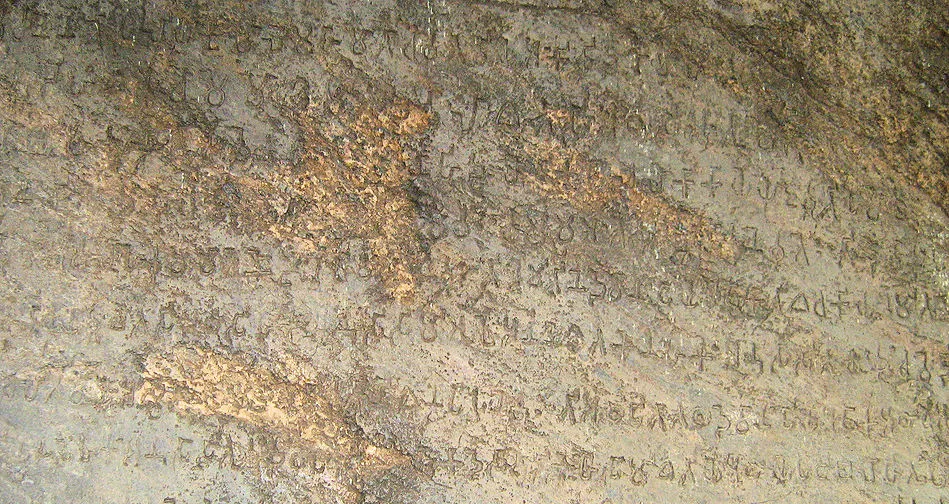
Fig.: शासना
(Image source: Details)
शास्त्र n.: teaching, treatise
शास्त्रिन् m.: learned, scholar
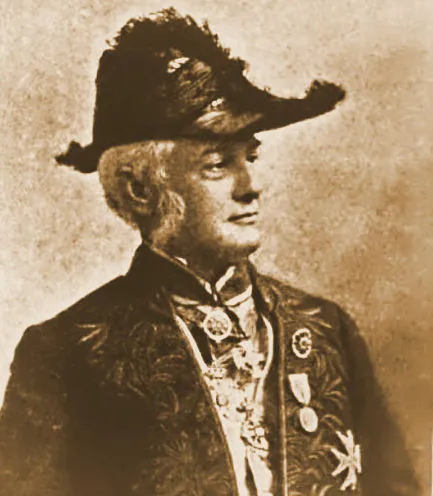
Fig.: शास्त्री
(Image source: Details)
शिष्य 3: to be instructed = student
शरण 3: protecting, shielding; n. protection, refuge, taking refuge
सङ्घ n.: (to सम्-हन् : to strike together): group, multitude, community (e.g. Buddhist)
see also:
Payer, Alois <1944 - >: Vinayamukha : Basic concepts of the monastic rules and monastic law of the Theravāda. -- Part I. -- (Materials on the basic concepts of Buddhism). -- URL: http://www.payer.de/buddhgrund/vinaya01.htm
कन्या f.: young girl, daughter, maiden
अति prefix: over, beyond (in space, in time, in number, in quantity, in order, in power, in intensity), exceedingly
इ + अति 2P अत्येति : to pass by
PPP अतीत : n. past tense
41.4. Exercise
A) Translate the two proverbs at the beginning of the lesson.
B) Translate:
बुद्धम् शरणं गच्छामि धर्मं शरणं गच्छामि सङ्घं शरणं गच्छामीति बुद्धगतैर्वक्तव्यम् ॥१॥
काशीं पत्स्ये गङ्गां द्रक्ष्यामि तत्र च मरिष्यामीति मन्यमानो मान्यो वृद्धनरः पुत्रांश्च पुत्रपुत्रांश्च धनं च तत्याज काशीं च प्राव्रजत् । एवं च रोध्यं दुःखं तरिष्यतीति मन्ये ॥२॥
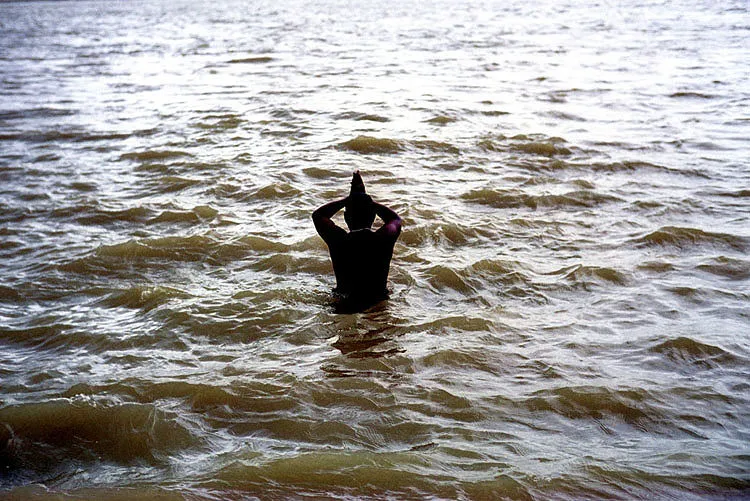
Fig.: काशीं पत्स्ये गङ्गां द्रक्ष्यामि ...
(Image source: Details)
कन्यां व्युवह तस्यां च पुत्रमजनयं महाधनं च लेभ एवं सुखमापेत्यतीते मुमोह । ततः प्रजज्ञौ सुखाद्दुःखं जायते तस्माल्लोकसुखमपि त्यजनीयं न च किंचिदिन्द्रियैः स्प्रष्टव्यमिति ॥३॥
विक्रेयाणि विक्रीयापुत्रवैश्यो भिक्षुभ्यो विक्रयफलमददाद्दानपुण्यं चादत्त । एतत्कर्म स्तुत्यमिति भिक्षवः प्रोचुर्बुद्धिमन्तस्तु विकल्पयन्ति किमेवं कुर्वाणो वश्यः पुण्यं चकारेति ॥४॥
गुरुभिः शिष्याः शासितव्याः शिष्यैरध्ययनमध्येतव्यम् ॥५॥
- Image lekt4102.jpg (Fig.: पुस्तकस्था च या विद्या ...): Bhubaneswar = ଭୁବନେଶ୍ବର [Image source: souravdas. -- http://www.flickr.com/photos/souravdas/2786531408/. -- Accessed on 2009-01-02. -- Creative Commons License (Attribution, non-commercial use)]
- Image lekt4103.jpg (Fig.: विक्रेयाणि पुष्पानि): महाराष्टre [Image source: Harshad Sharma. -- http://www.flickr.com/photos/harshadsharma/57609357/. -- Accessed on 2009-01-03. -- Creative Commons License (Attribution, non-commercial use, no derivatives)]
- Image lekt4106.jpg (Fig.: दृश्यो मन्दिरः): Bahá'í House of Worship, Delhi [Image source: Ray KOH. -- http://www.flickr.com/photos/raykoh/1497654220/. -- Accessed on 2009-01-03. -- Creative Commons License (Attribution, non-commercial use, share alike)]
- Image lekt4107.jpg (Fig.: मान्यः): Dr. Bhimrao Ramji Ambedkar = डॊ.भीमराव रामजी आंबेडकर (1891 - 1956) [Image source: Wikipedia. Public domain]
- Image lekt4108.jpg (Fig.: दर्शनीयं नगरं काशी): काशी द्विजैर्द्रष्टवया, मणिकर्णिका घाट, 1922 [Image source LoC/Wikipedia. Public domain]
- Image lekt4105.jpg (Fig.: भुजङ्गः): Banded Krait (Bungarus fasciatus) [Image source: J. Ewart. The poisonous snakes of India, 1878. Public domain]
- Image lekt4104.jpg (Fig.: भुजङ्गस्य विषम्): Milking snake venom (Krait), Thailand [Image source: TheLawleys. -- http://www.flickr.com/photos/lawley/4918566/. -- Accessed on 2009-01-03. -- Creative Commons License (Attribution)]
- Image lekt4109.jpg (Fig.: शासना): Ashoka Edict, Dhauli, Orissa [Image source: vegdevil. -- http://www.flickr.com/photos/vegdevil/915850174/. -- Accessed on 2009-01-03. -- Creative Commons License (Attribution, non-commercial use)]
- Image lekt4110.jpg (Fig.: शास्त्री): Max Müller (1823 - 1900), ca. 1898 [Image source: Wikipedia. Public domain]
- Image lekt4111.jpg (Fig.: काशीं पत्स्ये गङ्गां द्रक्ष्याมิ ...): [Image source: jpereira_net. -- http://www.flickr.com/photos/jpereira_net/2914877721/. -- Accessed on 2009-01-04. -- Creative Commons License (Attribution, no derivatives)]