
Lesson 61
61.1. Declension of root nouns ending in -ā, -ī, -ū
61.1.1. Root nouns ending in -ā at the end of तत्पुरुष
Before vocalic endings, the stem vowel in the weak cases has the zero grade Ø.
The declension in the masculine and feminine is identical.
Paradigm:
विश्वपा m.f. "protecting all"
| एकवचनम् | द्विवचनम् | बहुवचनम् | |
|---|---|---|---|
| प्रथमा / आमन्त्रितम् | विश्वपास् | विश्वपौ | विश्वपास् |
| द्वितीया | विश्वपाम् | विश्वपस् | |
| तृतीया | विश्वपा | विश्वपाभ्याम् | विश्वपाभस् |
| चतुर्थी | विश्वपे | विश्वपाभ्यस् | |
| पञ्चमी | विश्वपस् | ||
| षष्ठी | विश्वपोस् | विश्वपाम् | |
| सप्तमी | विश्वपि | विश्वपासु |
61.1.2. Feminine root nouns ending in -ī
Vor vokalischer Endung wird -ī durch -iy ersetzt.
In addition to the formations with the regular case endings, formations according to the pattern of multisyllabic feminine nouns in -ī (देवी) also occur in the Dat.Abl.Gen.Loc.sg. and Gen.pl.
Paradigm:
धी f. "thought"
| एकवचनम् | द्विवचनम् | बहुवचनम् | |
|---|---|---|---|
| प्रथमा / आमन्त्रितम् | धीस् | धियौ | धियस् |
| द्वितीया | धियम् | ||
| तृतीया | धिया | धीभ्याम् | धीभिस् |
| चतुर्थी | धिये / धियै | धीभ्यस् | |
| पञ्चमी | धियस् / धिया्स् | ||
| षष्ठी | धियोस् | धियाम् / धीनाम् | |
| सप्तमी | धियि / धियाम् | धीषु |
Irregular: स्त्री f. "woman"
| एकवचनम् | द्विवचनम् | बहुवचनम् | |
|---|---|---|---|
| प्रथमा | स्त्री | स्त्रियौ | स्त्रियस् |
| द्वितीया | स्त्रियम् / स्त्रीम् | स्त्रियस् / स्त्रीस् | |
| तृतीया | स्त्रिया | स्त्रीभ्याम् | स्त्रीभिस् |
| चतुर्थी | स्त्रियै | स्त्रीभ्यस् | |
| पञ्चमी | स्त्रियास् | ||
| षष्ठी | स्त्रियोस् | स्त्रीणाम् | |
| सप्तमी | स्त्रियाम् | स्त्रीषु | |
| आमन्त्रितम् | स्त्रि | स्त्रियौ | स्त्रियस् |
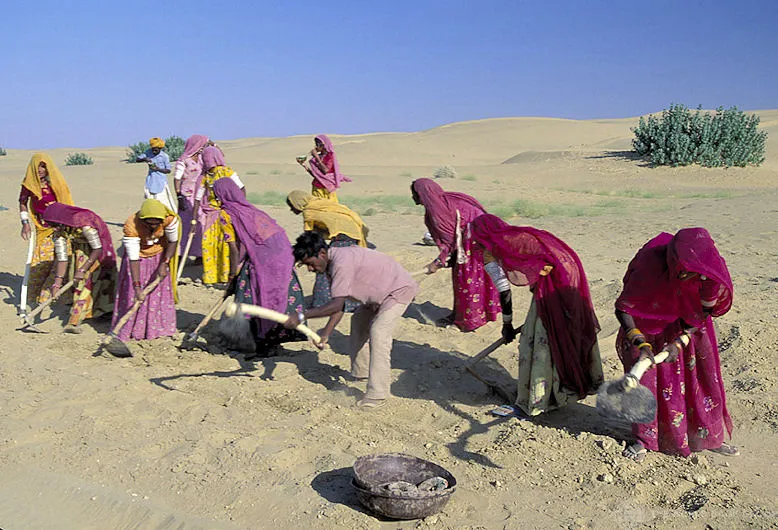
Fig.: स्त्रियः
(Image source: Details)
61.1.3. Root nouns ending in -ī at the end of तत्पुरुष
Before vocalic endings, -ī is replaced by -y if it is preceded only by a consonant belonging to the root. If several consonants belonging to the root precede, the -ī before a vocalic ending is replaced by -iy.
The declension is identical in the masculine and feminine.
Irregularity: Compounds in -नी "leading" have the ending -ām in the Loc.sg (like देवी):
e.g. ग्रामणी "leading a troop/village": Loc.sg.m.f. ग्रामण्याम्
Paradigms:
शुद्धधी m., f. "thinking purely"
| एकवचनम् | द्विवचनम् | बहुवचनम् | |
|---|---|---|---|
| प्रथमा / आमन्त्रितम् | शुद्धधीस् | शुद्धध्यौ | शुद्धध्यस् |
| द्वितीया | शुद्धध्यम् | ||
| तृतीया | शुद्धध्या | शुद्धधीभ्याम् | शुद्धधीभिस् |
| चतुर्थी | शुद्धध्ये | शुद्धधीभ्यस् | |
| पञ्चमी | शुद्धध्यस् | ||
| षष्ठी | शुद्धध्योस् | शुद्धध्याम् | |
| सप्तमी | शुद्धध्यि | शुद्धधीषु |
यवक्री m., f. "buying barley"
| एकवचनम् | द्विवचनम् | बहुवचनम् | |
|---|---|---|---|
| प्रथमा / आमन्त्रितम् | यवक्रीस् | यवक्रियौ | यवक्रियस् |
| द्वितीया | यवक्रियम् | ||
| तृतीया | यवक्रिया | यवक्रीभ्याम् | यवक्रीभिस् |
| चतुर्थी | यवक्रिये | यवक्रीभ्यस् | |
| पञ्चमी | यवक्रियस् | ||
| षष्ठी | यवक्रियोस् | यवक्रियाम् | |
| सप्तमी | यवक्रियि | यवक्रीषु |
61.1.4. Monosyllabic feminine root nouns ending in -ū
Stem before vowel: -uv
Deklination analog zu den femininen Wurzelnomina auf -ī
Paradigm:
भू f. "earth"
| एकवचनम् | द्विवचनम् | बहुवचनम् | |
|---|---|---|---|
| प्रथमा / आमन्त्रितम् | भूस् | भुवौ | भुवस् |
| द्वितीया | भुवम् | ||
| तृतीया | भुवा | भूभ्याम् | भूभिस् |
| चतुर्थी | भुवे / भुवै | भूभ्यस् | |
| पञ्चमी | भुवस् / भुवास् | ||
| षष्ठी | भुवोस् | भुवाम् | |
| सप्तमी | भुवि / भुवाम् | भूषु |
61.1.5. Root nouns ending in -ū at the end of तत्पुरुष
Before vocalic endings, -ū is replaced by -v if it is preceded only by a consonant belonging to the root. If several consonants belonging to the root precede, the -ū before a vocalic ending is replaced by -uv.
The declension is identical in the masculine and feminine.
Paradigm:
खलपू m., f. "sweeping the barn"
| एकवचनम् | द्विवचनम् | बहुवचनम् | |
|---|---|---|---|
| प्रथमा / आमन्त्रितम् | खलपूस् | खलप्वौ | खलप्वस् |
| द्वितीया | खलप्वम् | ||
| तृतीया | खलप्वा | खलपूभ्याम् | खलपूभिस् |
| चतुर्थी | खलप्वे | खलपूभ्यस् | |
| पञ्चमी | खलप्वस् | ||
| षष्ठी | खलप्वोस् | खलप्वाम् | |
| सप्तमी | खलप्वि | खलपूषु |
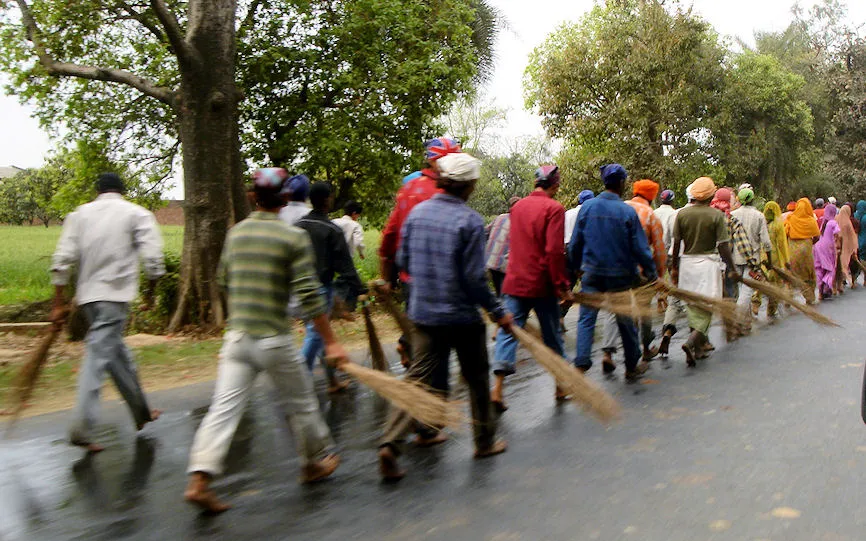
Fig.: रथ्याप्वः
काशीपुर
(Image source: Details)
61.1.6. Declension of polysyllabic feminine nouns ending in -ū
Polysyllabic feminine nouns ending in -ū are declined analogously to polysyllabic stems ending in -ī (देवी), but they end in -s in the Nom. sg.
Paradigm:
वधू f. "young woman, bride"
| एकवचनम् | द्विवचनम् | बहुवचनम् | |
|---|---|---|---|
| प्रथमा | वधूस् | वध्वौ | वध्वस् |
| द्वितीया | वधूम् | वधूस् | |
| तृतीया | वध्वा | वधूभ्याम् | वधूभिस् |
| चतुर्थी | वध्वै | वधूभ्यस् | |
| पञ्चमी | वध्वास् | ||
| षष्ठी | वध्वोस् | वधूनाम् | |
| सप्तमी | वध्वाम् | वधूषु | |
| आमन्त्रितम् | वधु | वध्वौ | वध्वस् |
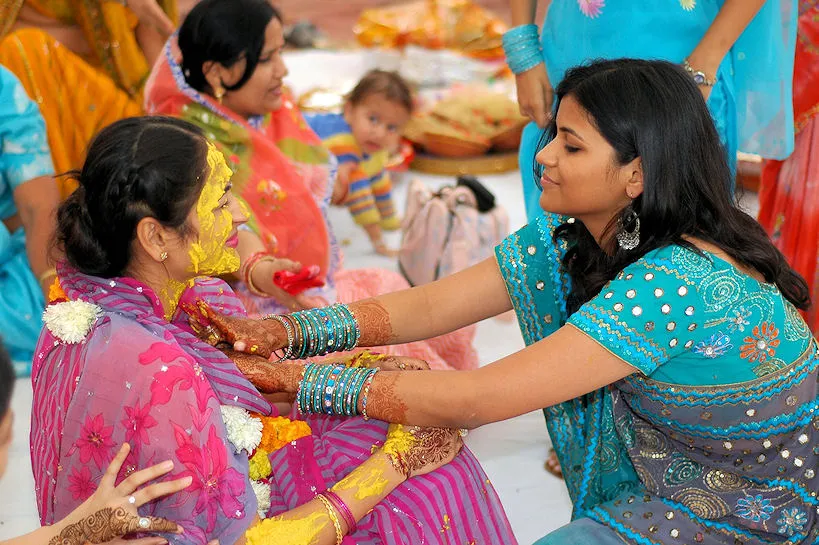
Fig.: वध्वौ
जोधपुर
(Image source: Details)
61.2. The periphrastic future (लुट्)
In addition to the simple future (ऌत्), there is a periphrastic future (लुट्). According to the teaching of native grammarians, it is used to denote the distant future ("after the current day"), while the simple future denotes the near future ("on the current day"). In Classical Sanskrit, it seems that no difference in the use of the two futures is usually made.
Formation:
The periphrastic future is formed by connecting a noun agent in -tṛ with the present tense of अस् 2. As the third person, the simple noun serves in the corresponding number, without distinction in grammatical gender. In the combinations with अस्, the noun in all persons and numbers has the form of the nom.sg. in -tā.
The endings of the periphrastic future are therefore:
| परस्मैपदम् | आत्मनेपदम् | |||||
|---|---|---|---|---|---|---|
| एकवचनम् | द्विवचनम् | बहुवचनम् | एकवचनम् | द्विवचनम् | बहुवचनम् | |
| 1. तृतीयः | -tāsmi (-tā + asmi) | -tāsvas | -tāsmas (-tā smas) | -tāhe | -tāsvahe | -tāsmahe |
| 2. मध्यमः | -tāsi | -tāsthas | -tāstha | -tāse | -tāsāthe | -tādhve |
| 3. प्रथमः | -tā | -tārau | -tāras | -tā | -tārau | -tāras |
Form of the root: The root generally has the same form as in the simple future. The same applies to the connecting vowel -i-.
Examples:
| दा 3U | दातास्मि, दतासि, दाता etc. |
|---|---|
| भू 1P | भवितास्मि ... भाविता etc. |
| तुद् 6U | तोत्तास्मि ... तोत्ता etc. |
| गै 1P | गातास्मि ... गाता etc. |
Paradigm:
दा 3U
| परस्मैपदम् | आत्मनेपदम् | |||||
|---|---|---|---|---|---|---|
| एकवचनम् | द्विवचनम् | बहुवचनम् | एकवचनम् | द्विवचनम् | बहुवचनम् | |
| 1. तृतीयः | दातास्मि | दातास्वस् | दातास्मस् | दाताहे | दातास्वहे | दातास्महे |
| 2. मध्यमः | दातासि | दातास्थस् | दातास्थ | दातासे | दातासथे | दाताध्वे |
| 3. प्रथमः | दाता | दातारौ | दातारस् | दाता | दातारौ | दातारस् |
The verb अस् is separated from the nominal stem only very rarely.
61.3. The intensifier (frequentative) (चर्करीतम्)
From every monosyllabic, consonant-initial root of the first nine present classes, an intensifier (चर्करीतम्) can be formed; that is: with few exceptions, no intensifier can be formed from disyllabic roots (e.g. जागृ), vowel-initial roots, and roots of the 10th present class (चुरादिगण).
The Intensivum means:
that a person or thing repeatedly does or experiences what is expressed by the root
कृ 8U: चेक्रीयते / चर्करीति "he does repeatedly"
भू 1P: बोभूयते / बोभवीति "he is (becomes) often"that a person or thing does or experiences intensively what is expressed by the root:
कृ 8U: चेक्रीयते / चर्करीति "he does intensively, he does vigorously"for roots expressing movement, the Intensivum means curved movement:
व्रज् 1P: वव्रज्यते "he goes in curves" (NOT: "he goes often")for some roots (list: Kielhorn, Grammar § 458b) the Intensivum means blame:
लुप् 6U: लोलुप्यते "he cuts badly"
सद् 1P: सासद्यते "he sits badly"
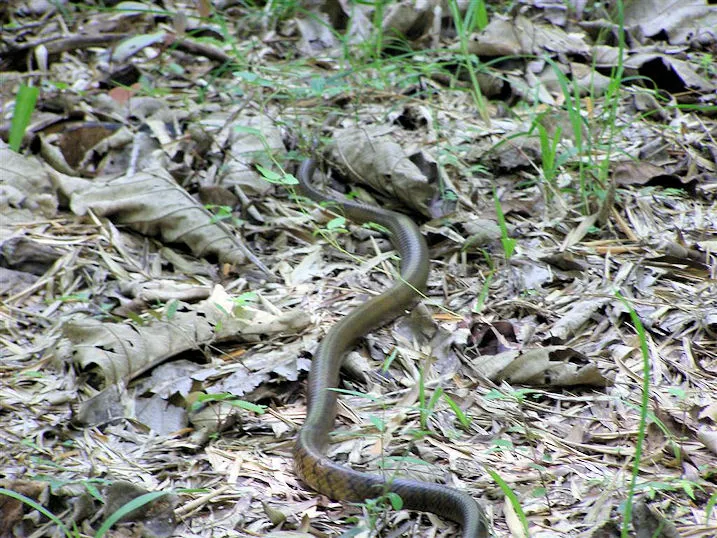
Fig.: सर्पो वव्रज्यते ॥
Karnataka = ಕರ್ನಾಟಕ
(Image source: Details)
Formation of the Intensivum:
There are two types of formation for the Intensivum:
- Ātmanepada-Intensivum
- Parasmaipada-Intensivum
Both are formed from the root reduplicated with strong reduplication. Both differ in meaning not at all. Both can be formed for the same roots.
61.3.1. Ātmanepada-Intensivum
Formation:
reduplicated root + -ya-
Form of the root: in general as in the passive, i.e. mostly in the guṇa grade:
Examples:
स्वप् 2P: Pass. सुप्यते ; Intens. सोषुप्यते
दा 3U: Pass. दीयते ; Intens. देदीयते
The rules in detail in Kielhorn, Grammar § 461.
Reduplikation: nach den allgemeinen Regeln. Reduplikationsvokal aber: statt a,i,u steht ā, e, o
Examples:
| दा 3U | देदीय- |
|---|---|
| भू 1P | बोभूय- |
| कृ 8U | चेक्रीय- |
| जीव् 1P | जेजीव्य- |
| शास् 2P | शेशिष्य- |
| ज्ञा 9U | जाज्ञाय- |
Roots of the form -a-Nasal do not lengthen the vowel in the reduplication syllable, but repeat the nasal.
e.g. यम् 1P: यंयम्य-
For some roots, between the vowel of the reduplication syllable and the initial consonant of the root, -nī- or -rī- appears (-rī- for roots that contain an ṛ in the Intensivum).
e.g.
पत् 1P: पनीपत्य-
वृत् 1Ā: वरीवृत्य-
Conjugation:
- Present stem: like an Ātmanepada of the 4th present class (दिवादिगण).
- Passive and remaining tense stems: if a vowel precedes the -ya- of the Intensivum stem, then the -ya- is replaced by -y-; if a consonant precedes the -ya-, then the -ya- disappears:
- Passive Present: बुध् : बोबुध्यते ; भू : बोभूय्यते
- Perfect: periphrastic: बोबुधाञ्चक्रे ; बोभूयाञ्चक्रे
- Aorist: iṣ-Aorist (Aorist 5): अबोबुधिष्ट ; अबोभूयिष्ट
- Future: seṭ: बोबुधिष्यते ; बोभूयिष्यते
- periphrastic future: बोबुधिता ; बोभूयिता
61.3.2. Parasmaipada Intensified Stem
Present stem (other forms are extremely rare): Formation and conjugation like a verb of the 3rd present class (जुहोत्यादिगण) with the difference that the vowel of the reduplication syllable is strong (udātta), with -a- being lengthened (diṭha).
In the singular indicative present as well as 2.3.sg. imperfect and 3.sg. imperative, an -ī- may be inserted between the root and the ending. If this -ī- is inserted, a short vowel in the penultimate position must not be guṇated.
Regarding reduplication with a nasal as well as the insertion of -nī- or -rī-, the same rules apply as for the Ātmanepada Intensified Stem. Instead of -rī-, -ri- may optionally stand.
Paradigm:
भू 1P
Indicative Present (लट्):
| एकवचनम् | द्विवचनम् | बहुवचनम् | |
|---|---|---|---|
| 1. तृतीयः | बोभोमि । बोभवीमि | बोभूवस् | बोभूमस् |
| 2. मध्यमः | बोभोषि । बोभवीषि | बोभूथस् | बोभूथ |
| 3. प्रथमः | बोभोति । बोभवीति | बोभूतस् | बोभुवति |
Imperfect (लङ्):
| एकवचनम् | द्विवचनम् | बहुवचनम् | |
|---|---|---|---|
| 1. तृतीयः | अबोभवम् | अबोभूव | अबिभूम |
| 2. मध्यमः | अबोभोस् । अबोभवीस् | अबोभूतम् | अबोभूत |
| 3. प्रथमः | अबोभोत् । अबोभवीत् | अबोभूताम् | अबोभुवुर् |
Imperative (लोट्):
| एकवचनम् | द्विवचनम् | बहुवचनम् | |
|---|---|---|---|
| 1. तृतीयः | बोभवानि | बोभवाव | बोभवाम |
| 2. मध्यमः | बोभूहि | बोभूतम् | बोभूत |
| 3. प्रथमः | बोभोतु । बोभवितु | बोभूताम् | बोभुवतु |
Optative (विधिलिङ्):
| एकवचनम् | द्विवचनम् | बहुवचनम् | |
|---|---|---|---|
| 1. तृतीयः | बोभूयाम् | बोभूयाव | बोभूयाम |
| 2. मध्यमः | बोभूयास् | बोभूयातम् | बोभूयात |
| 3. प्रथमः | बोभूयात् | बोभूयाताम् | बोभूयुर् |
61.4. Denominatives (नामधातु)
Denominatives (नामधातवः) are formed, in contrast to the verbs treated so far, not from a verbal root, but from a nominal stem. There are various types of formation here.
61.4.1. Formation without special suffix, Parasmaipada
Meaning:
a person or thing behaves as does, or resembles, that which is designated by the nominal stem.
Conjugation:
in the present stem like a verb of the 1st present class (भ्वादिगण). If the noun has a vowel as its final sound, only the final vowel is treated like the root vowel of the 1st class. Final -a is dropped before the thematic vowel. A vowel before a final nasal is replaced by the corresponding long vowel.
Examples:
| कवि m. "poet" | कवयति "he behaves like a poet" |
|---|---|
| भू f. "earth" | भवति "he behaves like the earth" |
| पितृ "father" | पितरति "he behaves like a father" |
| कृष्ण m. Kṛṣṇa | कृष्णति "he behaves like Kṛṣṇa" |
| माला f. "garland" | मालाति "it resembles a garland" |
| राजन् m. "king" | राजानति "he behaves like a king" |
61.4.2. Formation with the suffix -ya, Parasmaipada
Meaning:
- someone desires what is designated by the nominal stem
- someone treats or regards a person or thing as what is designated by the nominal stem
Stem formation:
before the -ya, the final sound of the nominal stem undergoes the following changes:
- a, ā » ī : पुत्र » पुत्रीय-
- i, u » ī, ū : कवि » कवीय-
- ṛ » rī : कर्तृ » कर्त्रीय-
- o » av : गो » गव्य-
- au » āv : नौ » नाव्य-
- final nasal drops out, preceding vowel is treated according to the rules just mentioned: राजन् » राजीय-
- other final consonants remain unchanged
Examples:
| पुत्र m. "son" | पुत्रीयति "he desires a son" |
|---|---|
| कवि m. "poet" | कवीयति "he desires a poet" |
| गो f. "cow" | गव्यति "he desires a cow" |
| राजन् m. "king" | राजीयति "he desires a king" |
| विष्णु m. Viṣṇu | विष्णूयति "he treats someone as Viṣṇu" |
| प्रासाद m. "palace" | प्रासादीयति "he regards (e.g. his hut) as a palace" |
Note the meaning of:
| तपस् n. "austerity" | तपस्यति "he practices austerity" |
|---|---|
| नमस् n. "veneration" | नमस्यति "he venerates" |
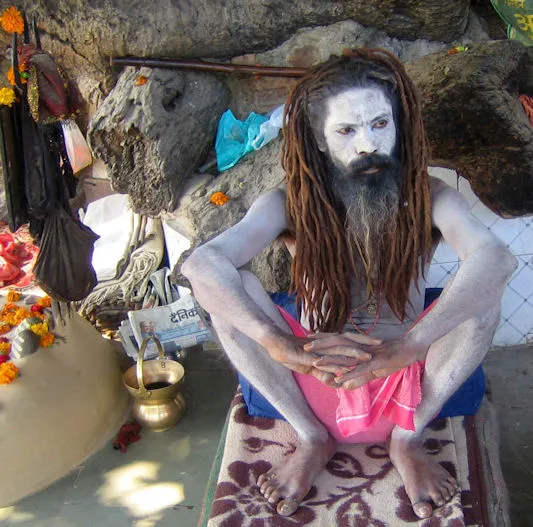
Fig.: किं तपस्यति न वा ?
हरिद्वार
(Image source: Details)
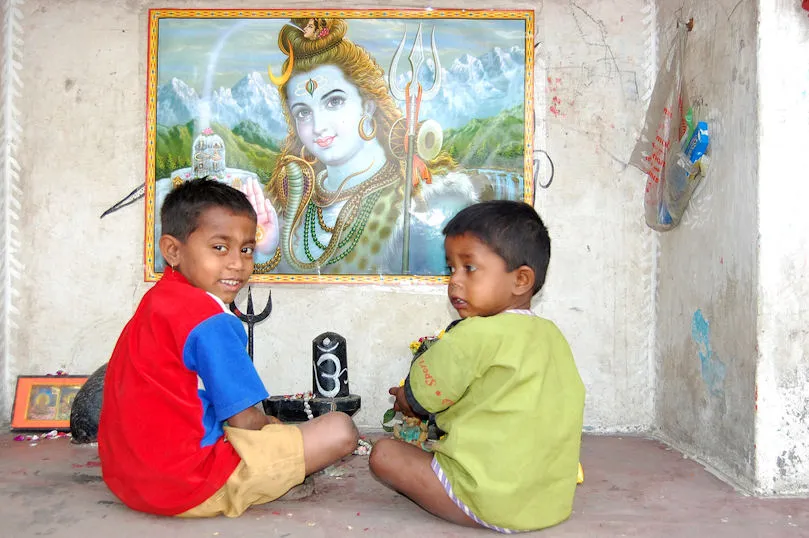
Fig.: बालौ शिवं नमस्यतः ॥
(Image source: Details)
61.4.3. Formation with the suffix -kāmya, Parasmaipada
Meaning:
someone desires what is designated by the nominal stem
Examples:
| पुत्र m. "son" | पुत्रकाय्म्यति "he desires a son" |
|---|---|
| यशस् n. "fame" | यशस्काम्यति "he desires fame" |
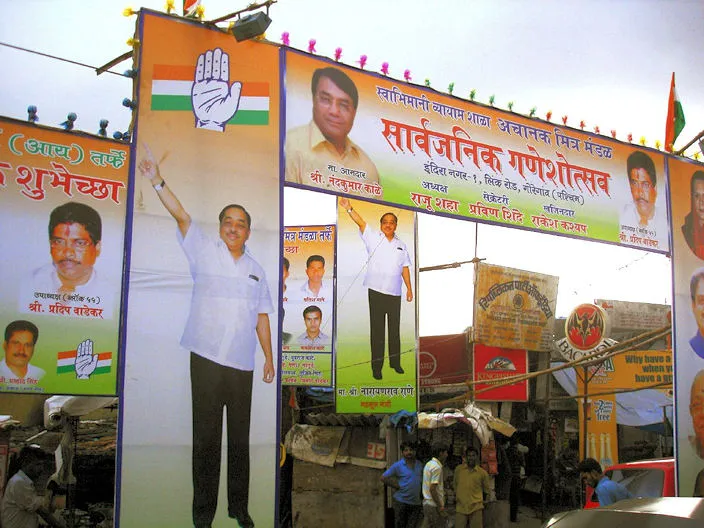
Fig.: यशस्काम्यन्ति
मुंबई
(Image source: Details)
61.4.4. Formation with the suffix -sya or -asya, Parasmaipada
Meaning:
someone desires vehemently what is designated by the nominal stem.
Examples:
| मधु n. "honey" | मधुस्यति । मध्वस्यति "he desires honey vehemently" |
|---|---|
| अश्व m. "stallion" | अश्वस्यति "(the mare) desires the stallion vehemently" |
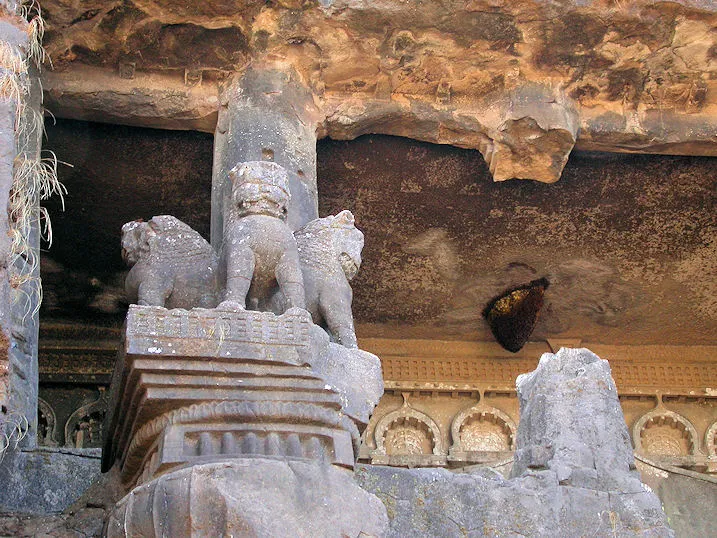
Fig.: कस्तत्र न मधुस्यति ?
Karli
(Image source: Details)
61.4.5. Formation with the suffix -ya, Ātmanepada
Meaning:
someone behaves as, or resembles, what is designated by the nominal stem.
Formation:
- final -a » -ā
- final -ā remains unchanged
- otherwise as before -ya, Parasmaipada (see above 4.2.)
- final -as optionally » -ā
- feminine stem mostly » masculine stem
Examples:
| कृष्ण m. Kṛṣṇa | कृष्णायते "he behaves like Kṛṣṇa" |
|---|---|
| यशस् 3 "famous" | यशायते । यशस्यते "he behaves like a famous person" |
| कुमारी f. "girl" | कुमारायते "he behaves like a girl" |
With some nominal stems, this suffix means: something becomes like that, or becomes what is designated by the nominal stem:
e.g. उन्मनस् 3 "excited": उन्मनायते "he becomes excited"
In some cases, verbs are formed with this suffix in other meanings:
Examples:
दुःख n. "suffering" : दुःखायते "he experiences suffering"
शब्द m. "sound" : शब्दायते "he makes a sound"
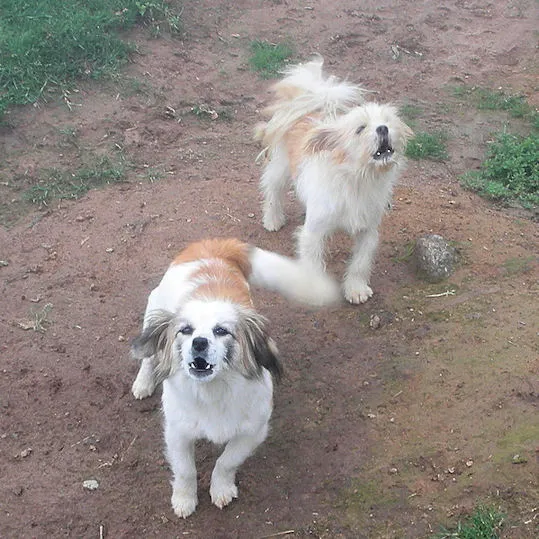
Fig.: श्वानौ शब्दायेते
(Image source: Details)
61.4.6. Formation with the suffix -aya, -āpaya
Various meanings.
Conjugated like causatives.
Examples:
| सत्य 3 "true" | स्तयपायति "he declares true" |
|---|---|
| मुण्ड 3 "shorn bald" | मुण्डयति "he shaves bald" |
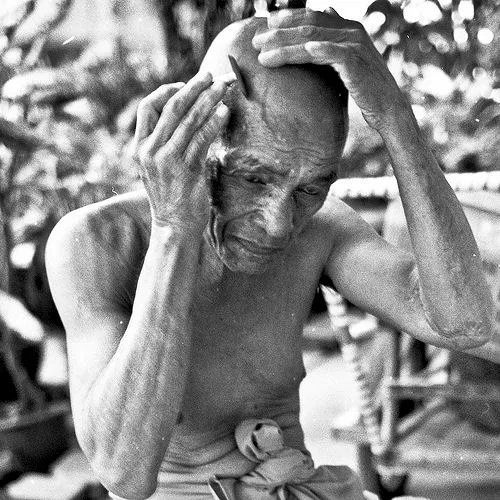
Fig.: भिक्षुर्मुण्डयते ।
Thailand - เมืองไทย
(Image source: Details)
A list of denominatives e.g. in:
Fig.:
1845 - 1878 Professor of Indological and Oriental Philology at the University of Copenhagen
(Image source: Details)
Westergaard, Niels Ludvig <1815-1878>: Radices linguae Sanscritae ad decreta grammaticorum definivit atque copia exemplorum exquisitiorum illustravit / N. L. Westergaard. -- Bonnae ad Rhenum : König, 1841. -- S. 335 - 341.
61.5. The Benediction (आशीर्लिङ्)
Blessing
Blessing
Formation:
Parasmaipada:
guṇa-grade root + yās + secondary ending
e.g. बुध्यासम् "may I recognize!"
Ātmanepada:
(mostly) strong-grade root + sī(y) + secondary ending
or:
(strong-grade) root + ै + sī(y) + secondary ending
e.g.
जि : जेषीय "may I win for my own benefit!"
बुध् : बोधिषीय "may I recognize"
The rules for the form of the root in detail in Kielhorn, Grammar § 380ff.
Paradigm:
Paradigm:
बुध् "to awaken"
| परस्मैपदम् | आत्मनेपदम् | |||||
|---|---|---|---|---|---|---|
| एकवचनम् | द्विवचनम् | बहुवचनम् | एकवचनम् | द्विवचनम् | बहुवचनम् | |
| 1. तृतीयः | बुध्यासम् | बुध्यास्व | बुध्यास्म | बोधिषीय | बोधिषीवहि | बोधिषीमहि |
| 2. मध्यमः | बुध्यास् | बुध्यास्तम् | बुध्यास्त | बोधिषीष्ठास् | बोधिषीयास्थाम् | बोधिषीध्वम् |
| 3. प्रथमः | बुध्यात् | बुध्यास्ताम् | बुध्यासुर् | बोधिषीष्ट | बोधिषीयास्ताम् | बोधिषीरन् |
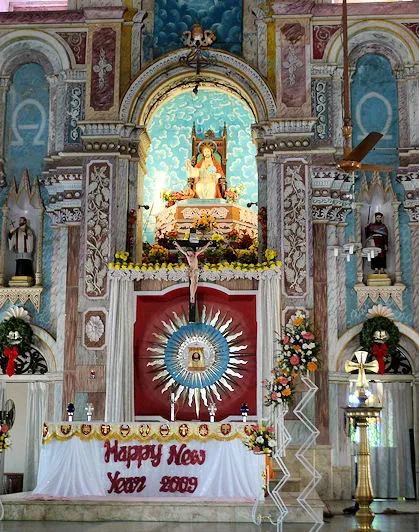
Fig.: नववर्षं शुभं भूयात् ॥
Santa Cruz Basilica, Kochi = കൊച്ചി
(Image source: Details)
61.6. The Conditional (ऌङ्)
The Conditional (ऌङ्) is used when one wishes to express in conditional sentences that what is stated as the condition is not the case / has not been the case / will not be the case. The conditional must be used in such sentences in both the conditional clause and the main clause.
Example:
सुवृष्टिश्चेदभविष्यत्सुभिक्षमभविष्यत् "If it had rained well (or would rain), there would be abundant food. (But it has not (sufficiently) rained.)"
Formation of the Conditional (ऌङ्):
Augment + stem of the simple future (ऌत्) + secondary ending
i.e., like an imperfect (लङ्) to the future stem.
e.g., अदास्यम् ; अभविष्यम् ; अतोत्स्यम्
Paradigm:
भू "to be, to become"
| परस्मैपदम् | आत्मनेपदम् | |||||
|---|---|---|---|---|---|---|
| एकवचनम् | द्विवचनम् | बहुवचनम् | एकवचनम् | द्विवचनम् | बहुवचनम् | |
| 1. तृतीयः | अभविष्यम् | अभविष्याव | अभविष्याम | अभविष्ये | अभविष्यावहि | अभविष्यामहि |
| 2. मध्यमः | अभविष्यस् | अभविष्यतम् | अभविष्यत | अभविष्यथास् | अभविष्येथाम् | अभविष्यध्वम् |
| 3. प्रथमः | अभविष्यत् | अभविष्यताम् | अभविष्यन् | अभविष्यत | अभविष्येताम् | अभविष्यन्त |
61.7. Declension of Nouns ending in -ai, -o, -au
Before vowels, these stems end in -ai, -o, -au; before consonants in -āy, -av, -āv
गो m.f. "ox, cow" has stem gradation. See the explanation in detail in Thumb-Hauschild § 296/7.
Paradigms: Kielhorn, Grammar § 153:
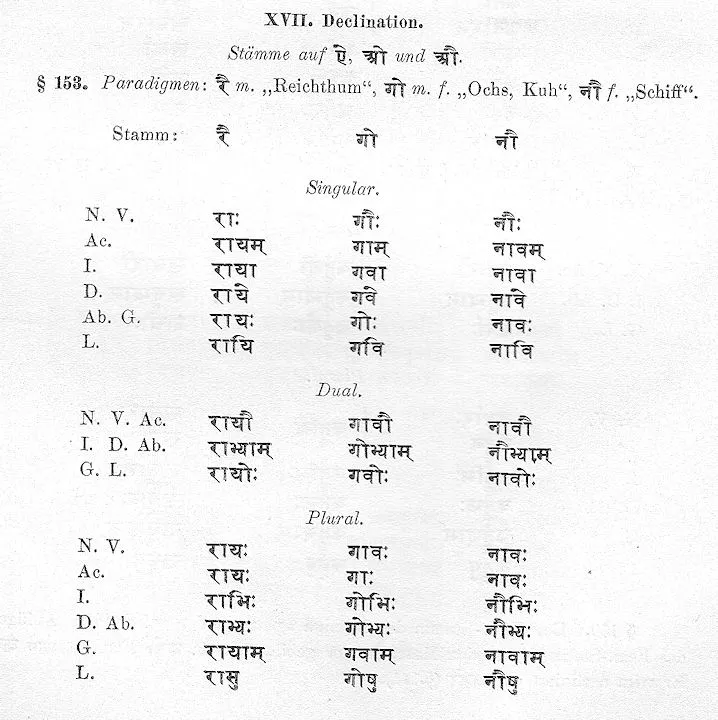
(Image source: Details)
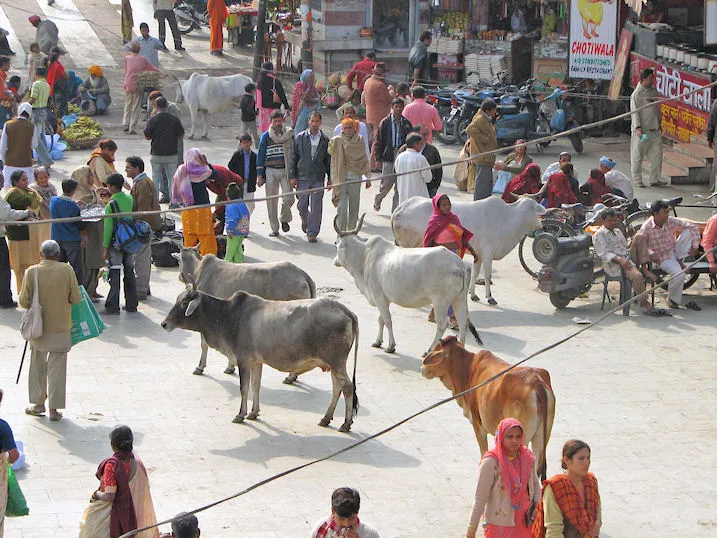
Fig.: हरिद्वारे गावः ॥
(Image source: Details)
61.8. Remaining Pronouns
61.8.1. अस्मद्युष्मदोर्द्विवचनम्
Kielhorn, Grammar § 177:
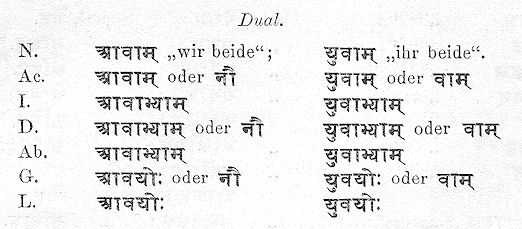
(Image source: Details)
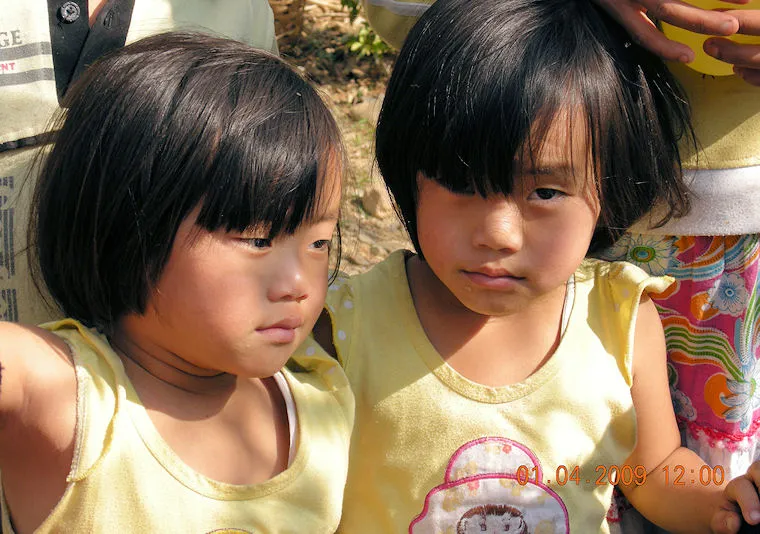
Fig.: आवां स्वसारौ ॥
Apatani people, Arunachal Pradesh
(Image source: Details)
61.8.2. Demonstrative Pronoun अदस् "that (distant)"
Masculine (पुंस्)
| एकवचनम् | द्विवचनम् | बहुवचनम् | |
|---|---|---|---|
| प्रथमा | असौ | अमू | अमी |
| द्वितीया | अमुम् | अमून् | |
| तृतीया | अमुना | अमूभ्याम् | अमीभिस् |
| चतुर्थी | अमुष्मै | अमीभ्यस् | |
| पञ्चमी | अमुष्मात् | ||
| षष्ठी | अमुष्य | अमुयोस् | अमीषाम् |
| सप्तमी | अमुष्मिन् | अमीषु |
Neuter (नपुंसक)
| एकवचनम् | द्विवचनम् | बहुवचनम् | |
|---|---|---|---|
| प्रथमा | अदस् | अमू | अमूनि |
| द्वितीया |
Rest as Masculine
Feminine (स्त्री)
| एकवचनम् | द्विवचनम् | बहुवचनम् | |
|---|---|---|---|
| प्रथमा | असौ | अमू | अमूस् |
| द्वितीया | अमूम् | ||
| तृतीया | अमुना | अमूभ्याम् | अमूभिस् |
| चतुर्थी | अमुष्यै | अमूभ्यस् | |
| पञ्चमी | अमुष्यास् | ||
| षष्ठी | अमुयोस् | अमूषाम् | |
| सप्तमी | अमुष्याम् | अमूषु |
61.9. Release into the Ocean of Sanskrit Literature: ಶ್ರೀಗಣನಾಥ / श्रीगणनाथ
After completing the Sanskrit course, the actual "swimming" in the ocean of Sanskrit literature only begins. Since this ocean is full of obstacles, it is appropriate to begin this new phase of life with an invocation of Gaṇeśa:
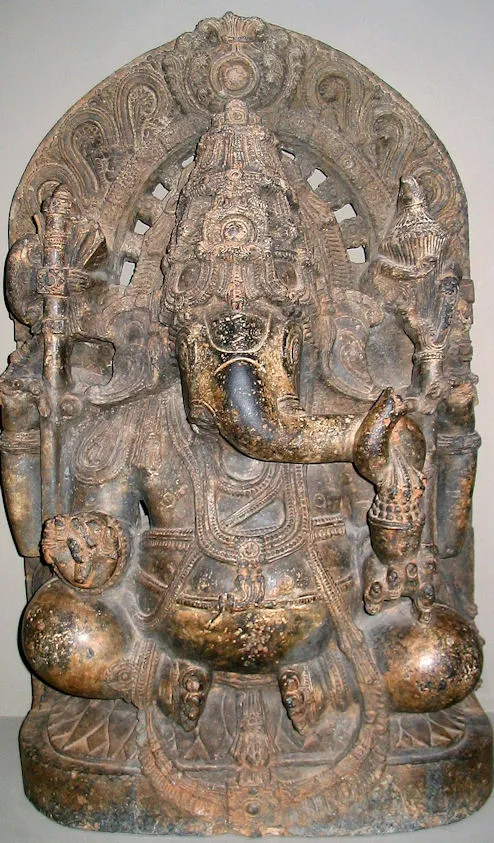
Fig.: श्रीगणनाथः
Halebidu (ಹಳೆಬೀಡು), 12th/13th century CE.
(Image source: Details)
| ಶ್ರೀಗಣನಾಥ ಸಿನ್ಧುರವರ್ಣ ಕರುಣಾಸಾಗರ ಕರಿವದನ ಲಮ್ಬೋದರ ಲಕುಮೀಕರ ಅಮ್ಬಾಸುತ ಅಮರವಿನುತ ಲಮ್ಬೋದರ ಲಕುಮೀಕರ ಸಿದ್ಧಚಾರಣ ಗಣಸೇವಿತ ಸಿದ್ಧಿವಿನಾಯಕ ತೇ ನಮೋ ನಮೋ ಲಮ್ಬೋದರ ಲಕುಮೀಕರ ಅಮ್ಬಾಸುತ ಅಮರವಿನುತ ಲಮ್ಬೋದರ ಲಕುಮೀಕರ ಸಕಲವಿದ್ಯಾದಿಪೂಜಿತ ಸರ್ವೋತ್ತಮ ತೇ ನಮೋ ನಮೋ ಲಮ್ಬೋದರ ಲಕುಮೀಕರ ಅಮ್ಬಾಸುತ ಅಮರವಿನುತ ಲಮ್ಬೋದರ ಲಕುಮೀಕर | श्रीगणनाथ सिन्धुरवर्ण करुणासागर करिवदन लम्बोदर लकुमीकर अम्बासुत अमरविनुत लम्बोदर लकुमीकर १ सिद्धचारण गणसेवित सिद्धिविनायक ते नमो नमो लम्बोदर लकुमीकर अम्बासुत अमरविनुत लम्बोदर लकुमीकर सकलविद्यादिपूजित सर्वोत्तम ते नमो नमो लम्बोदर लकुमीकर अम्बासुत अमरविनुत लम्बोदर लकुमीकर १ लकुमीकर ≈ लक्ष्मीकर |
ಶ್ರೀಗಣನಾಥ / श्रीगणनाथ by Purandaradāsa (ಪುರಂದರ ದಾಸ) (1484 - 1564)
Composer and poet: Purandaradāsa (ಪುರಂದರ ದಾಸ) (1484 - 1564)
Rāga: Malahari (corresponding to मायामाळवगौळ = Māyāmālavagauḷa = ಮಾಯಾಮಾಲವಗೌಳ = மாயாமாளவகௌளை):
ārohaṇa: s r1 m1 p d1 S
avarohaṇa: S d1 p m1 g3 r1 s
Tāla: Rūpaka: o |4
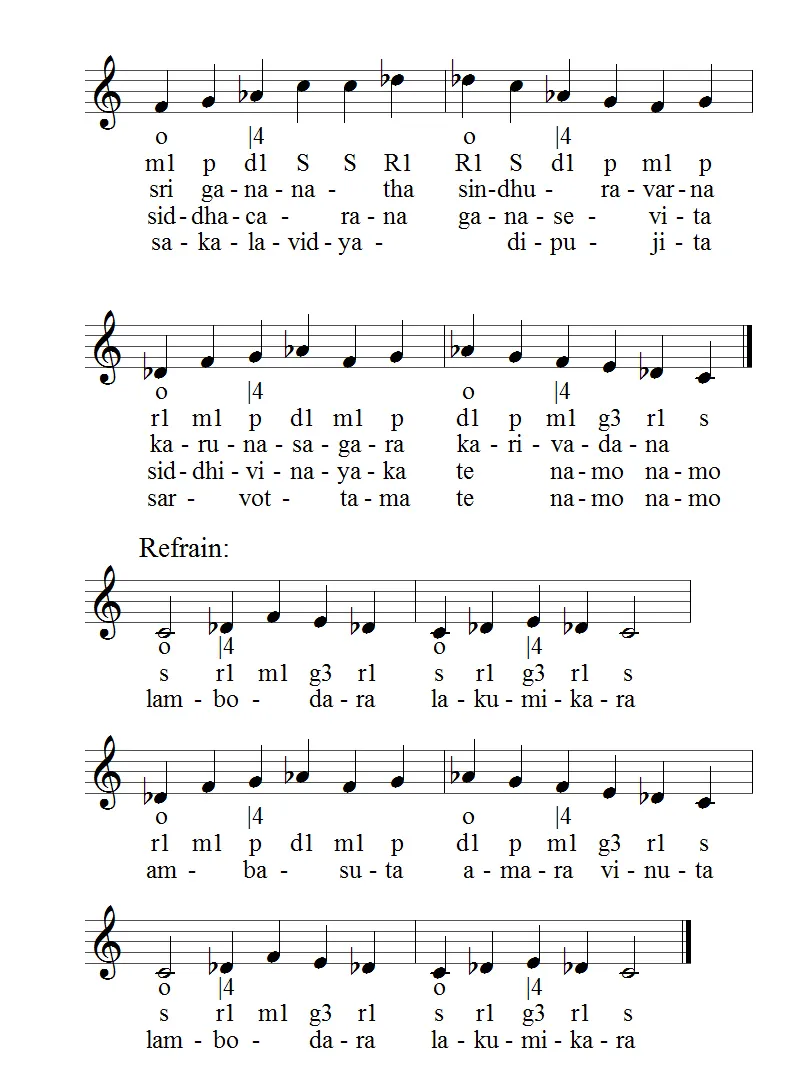
Fig.: Melody, referenced to c, can be transposed depending on vocal range.
(Image source: Details)
ಶ್ರೀಗಣನಾಥ / श्रीगणनाथ stands at the beginning of instruction in Kannarese music. See the video: http://www.youtube.com/watch?v=tG91JF-qKIY. -- Accessed on 2009-03-05
Now that you have learned the basics of Sanskrit, you are hopefully like the toddlers in the video: sometimes clumsy, but eager to learn and acquire knowledge, and enjoying the process. Keep "a beginner's mind" until the end of your life.
This is your wish, Alois Payer
Ofterdingen, 2009-03-09
ॐ
END OF THE SANSKRIT COURSE
lekt6102: [Image source: World Bank / Curt Carnemark. -- http://www.flickr.com/photos/worldbank/2241690863/. -- Accessed on 2009-03-06. -- Creative Commons License (Attribution, Non-commercial, No derivatives)]
lekt6106: काशीपुर [Image source: Sumit. -- http://www.flickr.com/photos/sumit/107861850/. -- Accessed on 2009-03-09. -- Creative Commons License (Attribution, non-commercial use, share alike)]]
lekt6107: जोधपुर [Image source: thebigdurian. -- http://www.flickr.com/photos/thebigdurian/2200364164/. -- Accessed on 2009-03-09. -- Creative Commons License (Attribution, non-commercial use, share alike)]
lekt6104: Karnataka = ಕರ್ನಾಟಕ [Image source: Jessica Rabbit's Flickr. -- http://www.flickr.com/photos/jessicarabbit/179116811/. -- Accessed on 2009-03-08. -- Creative Commons License (Attribution, non-commercial use, no derivatives)]
lekt6105: हरिद्वार [Image source: Naresh Dhiman. -- http://www.flickr.com/photos/nareshdhiman/311832594/. -- Accessed on 2009-03-08. -- Creative Commons License (Attribution)]
lekt6103: [Image source: frisse82. -- http://www.flickr.com/photos/frisse82/496195924/. -- Accessed on 2009-03-08. -- Creative Commons License (Attribution, non-commercial use)]
lekt6109: मुंबई [Image source: FrogStarB. -- http://www.flickr.com/photos/wormtongue/237776303/. --- Accessed on 2009-03-09. -- Creative Commons License (Attribution, non-commercial use, no derivatives)]
lekt6110: Karli [Image source: Makwa. -- http://www.flickr.com/photos/makwa/140499307/. -- Accessed on 2009-03-09. -- Creative Commons License (Attribution, non-commercial use, no derivatives)]
lekt6111: [Image source: technicolorcavalry. -- http://www.flickr.com/photos/technicolorcavalry/155364212/. -- Accessed on 2009-03-09. -- Creative Commons License (Attribution, share alike)]
lekt6113: Thailand - เมืองไทย [Image source: Sailing "Footprints: Real to Reel" (Ronn ashore). -- http://www.flickr.com/photos/12392252@N03/2505961590/. -- Accessed on 2009-03-09. -- Creative Commons License (Attribution, non-commercial use, no derivatives)]
lekt6112: 1845 - 1878 Professor of Indological and Oriental Philology at the University of Copenhagen
lekt6114: Santa Cruz Basilica, Kochi = കൊച്ചി [Image source: monsieur paradis. -- http://www.flickr.com/photos/zacharyparadis/3189670791/. -- Accessed on 2009-03-09. -- Creative Commons License (Attribution, non-commercial use)]
lekt6118: [Image source: mckaysavage. -- http://www.flickr.com/photos/mckaysavage/2086490984/. -- Accessed on 2009-03-09. -- Creative Commons License (Attribution)]
lekt6117: Apatani people, Arunachal Pradesh [Image source: ahinsajain. -- http://www.flickr.com/photos/ahinsajain/3165501187/. -- Accessed on 2009-03-09. -- Creative Commons License (Attribution)]
lekt6101: Halebidu (ಹಳೆಬೀಡು), 12th/13th century CE. [Image source: Quadell / Wikipedia. GNU FDL license]::::