
Exercise 13
A) Translate and convert into active present tense sentences:
१. अग्निना गृहं दग्धम् ।
A fire has burned the house.
अग्निर्गृहं दहति ।
२. बुद्धेन सत्यं बुद्धम् ।
Buddha has awakened to the truth. Buddha has recognized the truth.
बुद्धः सत्यं बुध्यते / बोधति ।
३. बोध्या गौतमो मुक्तः ।
The knowledge has liberated Gautama. By the knowledge, Gautama was liberated.
बोधिर्गौतमं मुञ्चति ।
४. शूद्रा मूढाः । (2 possibilities)
The Śūdras / Śūdra women are deluded.
शूद्रा मुह्यन्ति ।
५. ब्राह्मणेन मोक्ष इष्टः ।
The Brahmin desired liberation.
ब्राह्मणो मोक्षमिच्छति ।
६. रामेण पुण्यं कृतम् ।
Rāma tat ein verdienstvolles Werk. Rāma tat Verdienstliches.
रामः पुण्यं करोति ।
७. ऋषिभिः सत्यमेवोदितमित्युदितम् ।
It is said that Vedic sages have spoken only the truth.
ऋषयः सत्यमेव वदन्तीति वदन्ति ।
८. धर्मेण स्वर्गं नीतम् ।
The Dharma has led to a heaven.
धर्मः स्वर्गं नयति ।
९. साधुनाधर्मो न कृतम् ।
A saint has done nothing wrongful.
साधुरधर्मं न करोति ।
१०. मन्त्रेण मोक्षो लब्धः ।
By means of the mantra, liberation has been attained.
मन्त्रेण मोक्षं लभन्ते ।
११. कया रक्षिकयेयं बाला रक्षिता ॥
What kind of amulet has protected this girl?
का रक्षिका बालां रक्षति ॥
B) Translate and convert into passive sentences of the past
१. राम इष्टमपि मोक्षं न लभते ।
Although Rāma desires liberation, he does not attain it.
रामेणेष्टो ऽपि मोक्षो न लब्धः ।
२. योज्ञो न मुञ्चति ।
Sacrifice does not liberate.
यज्ञेन न मुक्तः ।
३. साधवो देवान्स्मरन्ति ।
Saints visualize the gods.
साधुभिर्देवाः स्मृताः ।
४. पुण्यवान्पुत्रो देवान्यजते ।
The virtuous son sacrifices to the gods.
पुण्यवता पुत्रेण देवा इष्टाः ।
५. सुखवान्क्षत्रियो धर्मं रक्षति ।
The fortunate Kṣatriya guards the Dharma.
सुखवता क्षत्रियेण धर्मो रक्षितः ।
६. पुत्रवान्नरकं न गच्छति ।
Whoever has sons, comes to no hell.
पुत्रवान्न्रकं न गतः ।
७. धर्मवती पापं न करोतीति गुरुर्वदति ।
The master says that a pious woman does no evil.
धर्मवत्या पापं न कृतमिति गुरुणोदितम् ।
८. बुद्धिमन्तः सत्यवतो धर्मं प्र्च्छन्ति ।
The insightful question those who possess the truth about the Dharma.
बुद्धिमद्भिः सत्यवन्तो धर्मं पृष्टाः ।
९. धर्मवन्तः फलवत्पुण्यं कुर्वन्ति ।
Religious persons do meritorious deeds, which bear fruit.
धर्मवद्भिः फलवत्पुण्यं कृतम् ।
१०. ब्राह्मणा गुणवतः पुत्रानिच्छन्ति ।
Brahmins desire excellent sons.
ब्राह्मणैर्गुणवन्तः पुत्रा इष्टाः ।
११. कयृग्वेदं शृण्वन्ति ।
Which men hear the Ṛgveda?
कैरृग्वेदः श्रुतः ।
१२. किमीश्वरः सृजति ।
What does the LORD create?
किमीश्वरेण सृष्टम् ।
१३. साधुः कृतं पापं सहते ।
A holy person endures evil inflicted upon him.
साधुना कृतं पापं सोढम् ।
१४. पार्थिवो धनमिच्छतीति नीचा मन्यन्ते ।
Low-minded people think that rulers desire wealth.
पार्थिवेन धनमिष्टमिति नीचैर्मतम् ।
१५. नैवासुरो जयतीत्यृषयः पश्यन्ति ।
The Vedic sages see that the demon does not win in any case.
नैवासुरेण जितमित्यृषिभिर्दृष्टम् ।
१६. ब्राह्मणाः किं पिबन्ति खादन्ति च ॥
What do Brahmins eat and drink?
ब्राह्मणैः किं पीतं खादितं च ॥
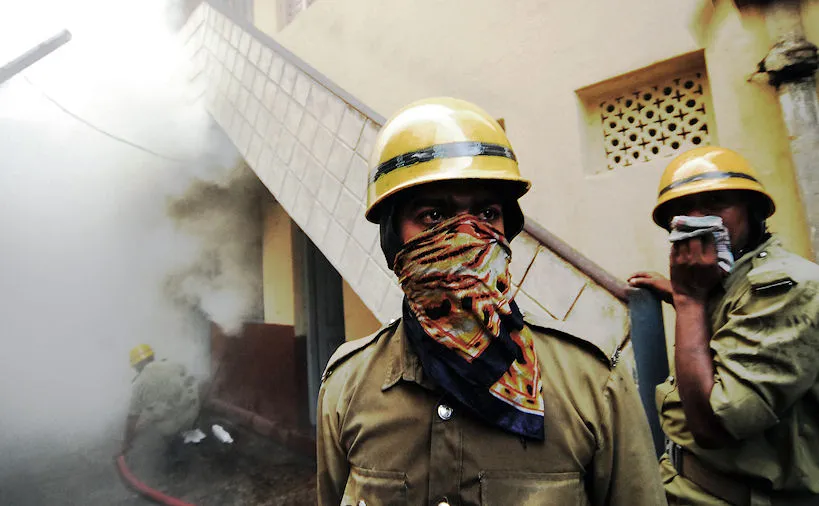
Fig.: अग्निर्गृहं दहति ।
(Image source: Details)
Additional Exercises
A) Translate the following sentences.
B) Put the sentences from Exercise A) into the passive voice.
C) Form a PPP construction for the sentences from Exercise A).
१. रामो मार्गेण ग्रामं गच्छति ।
Rāma geht auf dem Weg ins Dorf.
रामेण मार्गेण ग्रामं गम्यते । रामेण मार्गो ग्रामं गम्यते । रामो मार्गेण ग्रामं गतः । रामेण मार्गो ग्रामं गतम् ।
२. नरा धनेन सुखमिच्छन्ति ।
People desire happiness through wealth.
नरैर्धनेन सुखमिष्यते । सुखमिष्टम् ।
३. नरः पुत्रेण नगरं पद्यते ।
The man goes to the city with his son.
नरेण पुत्रेण (सह) नगरं पद्यते । नरः पुत्रेण (सह) नगरं पन्नः ।
४. देवो लोकान्सृजति ।
God creates the worlds.
देवेन लोकाः सृज्यन्ते । सृष्टाः ।
५. बाला जलं पिबति ।
The girl drinks water.
बालया जलं पीयते । पीतम् ।
६. कवयो धनं लुभ्यन्ति ।
Poets desire wealth.
कविबिर्धनं लुभ्यते । लुब्धम् ।
७. बलवान्क्षत्रियः शूद्राञ्जयति ।
The powerful Kṣatriya defeats the Śūdras.
बल्वता क्षत्रियेण शत्रवो जीयन्ते । जिताः ।
८. गुणवान्द्विष्टमपि शत्रुं न युध्यते ।
A virtuous person does not fight his enemy, even if he is hateful to him.
गुणवता द्विष्तो ऽपि शत्रुर्न युध्यते । युद्धः ।
९. अधर्मः क्रोधश्च द्वेषश्च लोभश्चेत्यृषिर्वदति ।
The Vedic sage says that anger, hatred, and greed are unjust.
अधर्मः क्रोधश्च द्वेषश्च लोभश्चेत्यृषिणोद्यते । लोभश्चेत्यृषिणोदितम् ।
१०. बाला अन्नेन बलमाप्नुवन्ति ।
Boys become strong through food.
बालैरन्नेन बलमाप्यते । बालाभिरन्नेन बलमाप्यते । बलमाप्तम् ।
११. बुद्धिमन्तः सत्यen मोक्षं लभन्ते ।
The insightful attain liberation through the truth.
बुद्धिमद्भिः सत्येन मोक्षो लभ्यते । लब्धः ।
१२. इमाः साध्व्यः पापं सहन्ते ।
These holy women endure the evil.
इमाभिः साध्वीभिः पापं सह्यते । सोढम् ।
१३. कां देवतामृषिः पश्यति ।
Which deity does the Ṛṣi see?
का देवतर्षिना दृश्यन्ते । दृष्टा ।
१४. कान्देवान्ब्राह्मणक्षत्रियवैश्या यजन्ते ।
To which gods do Brahmins, Katriyas, and Vaśyas sacrifice?
के देवा ब्राह्मणक्षत्रियवैश्यैरिज्यन्ते । ब्राह्मणक्षत्रियवैश्यैरिष्टाः ॥
D) From which sound combinations could the following Sandhi forms have arisen? Provide all possibilities:
- -a before vowel (except a-): -as
- -ā- : -a + -a/-ā -ā + a-/ā-
- -ā before vowel: -ās
- -ā before voiced consonants: -ās
- -ī-: -i + i-/ī-, -ī + i-/-ī
- -ū-: -u/-ū + u-/ū-
- -ṝ-: -ṛ/-ṝ + ṛ-/ṝ-
- -e-: -a/-ā + i-/ī-
- -e before Avagraha: -e + a-
- -o-: -a/-ā + u-/ū-
- -o before Avagraha: -o
- -o before voiced consonants -as
- -ai-: -a/-ā + e-/ai-
- -au-: -a/-ā + e-/ai-
- -y before vowel: -i/-ī
- -v before vowel: -u/-ū
- -r before vowel: -ṛ/-ṝ
- -ay before vowel: -e
- -av before vowel: -o
- -ar-: -a/-ā + ṛ-/ṝ-
- -ir before vowel or voiced consonant: -is
- -īr before vowel or voiced consonant: -īs
- -ur before vowel or voiced consonant: -us
- -ūr before vowel or voiced consonant: -ūs
- -er before vowel or voiced consonant: -es
- -or before vowel or voiced consonant: -os
- -air before vowel or voiced consonant: -ais
- -aur before vowel or voiced consonant: -aus
- -ñj-: -n + j-
- -ñś-: -n + ś
- -ñch-: -n + ch-
- -ṇḍ(h)-: -n + ḍ(h)-
- -śc-: -s + c-
- -ṣṭ-: -s + t-
- -st(h)-: -s + t(h)-
- Anusvara before consonant: -m
- -ṃśc-: -n + c-
- -ṃṣṭ-: -n + ṭ-
- -mst-: -n + t-
E) Translate into Sanskrit:
The goddess was angry.
देवी कुपिता । देव्या कुपितम्Śūdras have gone to a heaven.
शूद्रैः स्वर्ग आप्तः । स्वर्गो ऽष्टः ।The farmers have gone the way.
कर्षकैर्मार्गो गतः । कर्षका मार्गं गताः ।The people were liberated through the Buddha's teaching.
धर्मेण जना मुक्ताः ।The son danced.
पुत्रेण नृत्तम् ।The amulet protected the teacher.
रक्षिकया गुरू रक्षितः ।A Brāhmaṇa did not speak an untruth.
ब्राह्मणेनानृतं नोदितम् ।Śūdra women worshipped the goddess with offerings.
शूद्राभिर्देवीष्टा ।Buddha has awakened to the truth = Buddha has recognized the truth.
बुद्धेन सत्यं बुद्धम् । बुद्धः सत्यं बुद्धः ।The Vedic sages have heard the Śruti.
ऋषिभिः श्रुतिः श्रुता ।The sacrificial priests have pressed the Soma.
यजकैः सोमः सुतः ॥
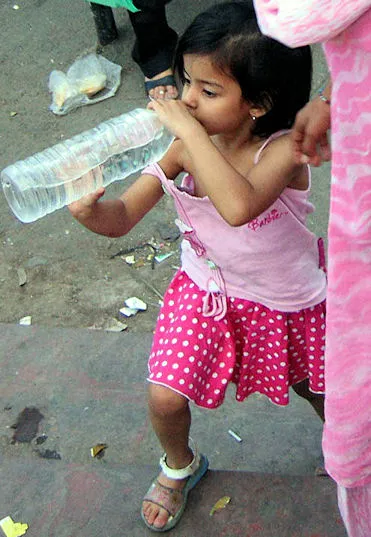
Fig.: बाला जलं पिबति । बालया जलं पीयते ।
(Image source: Details)