
Lesson 14
14.1. The Expression of the Relationship of Noun-Designated Entities: the Genitive (ṣaṣṭhī f. = षष्टी = sixth case ending)
If the relationship expressed by two nouns is to be indicated, the genitive (ṣaṣṭhī f. "sixth case ending") is used. The genitive differs from all other cases in that it -- with a few exceptions -- does not serve to further specify the action expressed by the verb, but rather to express the relationship between persons or things designated by nouns. Frequently, the genitive answers the question: Whose?
Examples:
कवेः पुत्रः "The poet's son"
धनस्य लोभः "Greed for wealth"
नगरस्यार्धम् "The half of the city"
रामस्य कृतम् "The / A deed of Rāma"
The normal word order is:
Determining word in the genitive — Further specified noun in another case
Genitive and PPP:
With PPPs, the genitive can stand instead of the instrumental (tṛtīyā) for the agent (kartṛ); In the construction with the instrumental, the PPP is regarded as a passive verbal form (that which stands in the instrumental denotes the agent), in the construction with the genitive, the PPP is regarded as a noun or adjective (that which stands in the genitive is thus not actually an agent).
According to Pāṇini 2.3.67, with a PPP in the genitive, if the PPP has present-tense meaning (see above), the instrumental is used if the PPP has past-tense meaning:
रामस्येष्टं फलम् "The fruit desired by Rāma = The fruit that Rāma currently desires"
रामेणेष्टं फलम् "The fruit that Rāma has desired"
Naturally, with a neuter singular PPP used as a verbal abstract -- i.e., as a noun -- the genitive is used.
14.2. Formation of Genitive Forms (ṣaṣṭhī f. = षष्ठी)
The genitive is formed from the weak stem for verbal stems with stem gradation.
Genitive of consonant-ending stems:
After a consonant, the regular genitive endings are:
- Singular: -as
- Plural: -ām
| Nominal Stem | Schwacher Stem | Genitive Singular | Genitive Plural |
|---|---|---|---|
| guṇa-vant- गुणवन्त् | guṇa-vat- गुणवत् | guṇa-vat-as गुणवतस् | guṇa-vat-ām गुणवताम् |
| paśu-mant- पशुमन्त् | paśu-mat- पशुमत् | paśu-mat-as पशुमतस् | paśu-mat-ām पशुमताम् |
Genitive of vowel-ending stems, except monosyllabic root nouns and diphthong-ending stems:
Plural:
The genitive plural of vowel-ending stems is formed as follows:
-long final vowel of the stem + -nām
| Nominal stem | Genitive Plural |
|---|---|
| deva m. देव | devā-nām देवानाम् |
| phala n. फल | phalā-nām फलानाम् |
| devatā f. देवता | devatā-nām देवतानाम् |
| kavi m. कवि | kavī-nām कवीनाम् |
| śruti f. श्रुति | śrutī-nām श्रुतीनाम् |
| devī f. देवी | devī-nām देवीनाम् |
| paśu m. पशु | paśū-nām पशूनाम् |
| dhenu f. धेनु | dhenū-nām धेनूनाम् |
Genitive singular of vowel-final stems:
The genitive singular of vowel-final stems is formed irregularly and must be memorized well.
| Stem | Genitive Singular |
|---|---|
| deva m. देव | devasya देवस्य |
| phala n. फल | phalasya फलस्य |
| devatā f. देवता | devatāyās देवतायास् |
| kavi m. कवि | kaves कवेस् |
| paśu m. पशु | paśos पशोस् |
| devī f. देवी | devyās देव्यास् |
| śruti f. श्रुति | śrutes / śrutyās श्रुतेस् / श्रुत्यास् (d.h. entweder wir kavi oder wie devī) |
| dhenu f. धेनु | dhenos / dhenvās धेनोस् / धेन्वास् (d.h. entweder wir paśu oder wie mehrsilbige Feminina auf -ū) |
Interrogative and demonstrative pronouns:
| kim | tad | etad | idam | ||
|---|---|---|---|---|---|
| Masculine / Neuter | Genitive Singular | kasya कस्य | tasya तस्य | etasya एतस्य | asya अस्य |
| Genitive Plural | keṣām केषाम् | teṣām तेषाम् | eteṣām एतेषाम् | eṣām एषाम् | |
| Feminine | Genitive Singular | kasyās कस्यास् | tasyās तस्यास् | etasyās एतस्यास् | asyās अस्यास् |
| Genitive Plural | kāsām कासाम् | tāsām तासाम् | etāsām एतासाम् | āsām आसाम् |
Formal identity:
In all nominal stems except for masculines and neuters ending in -a, and except for pronouns, the form of the genitive singular is identical to that of the ablative (pañcamī "fifth case ending") singular!
Note that in consonant-final stems, the ablative and genitive singular sound the same as the accusative plural masculine and feminine!
14.3. Further on the use of the genitive (षष्ठी)
Contrary to the basic rule above, the genitive is used to express the object of certain verbs, e.g. verbs of remembrance:
देवानां स्मरति "He remembers the gods"
With all these verbs, however, the object can also be in the accusative:
देवान्स्मरति "He remembers the gods"
14.4. Word List
- śīla n. (शील) : (good) character, morality
- bhūṣ-aṇa n (भूषण) : ornament
- dīpa m. (दीप) : lamp
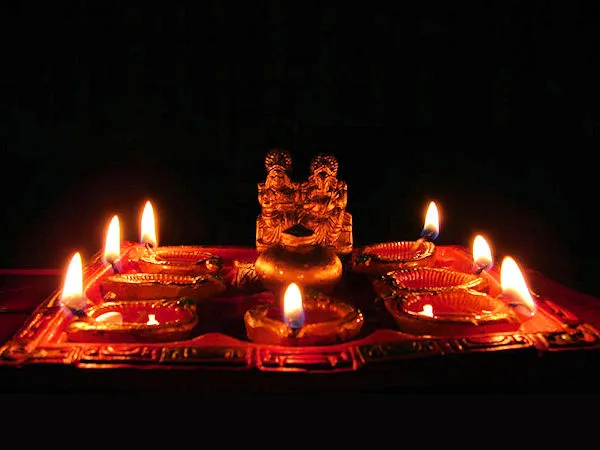
Fig.: दीपाः
(Image source: Details)
- bala n. (बल) : violence, power, strength; military force, army
- bāla 3 (बाल) : young, childish, foolish; m. boy
- bālā f. (बाला) : young girl
- nara m. (नर) : man, human being
- śatru m. (शत्रु) : enemy
- loka m. (लोक) : world; Sing. and Plur.: the people, the humans, the populace
- jala n. (जल) : water
- jan 4 Ā (jāyate), Pass. janyate / jāyate, PPP jāta (जन् जायते जन्यते जायते जात) : to be born, to arise, to appear
- jan-a m. (जन) : creature, human being, people
- vac 2 P (vakti, no 3rd plur.!), Pass. ucyate, PPP ukta (वच् वक्ति उच्यते उक्त) : to say, to speak to (accusative)
- uk-ti f. (उक्ति) : utterance, word
- vac-ana n. (वचन) : speaking, the word
- vāk-ya n. (वाक्य) : word, speech
14.5. Subhāṣitāni = सुभाषितानि = Proverbs
Translate the following proverbs and memorize them:
नीचो वदati न कुरुते वदति न साधुः करोत्येव ॥१॥
शीलं नरस्य भूषणम् ॥२॥
सत्येन जनानां सुखं भवति ॥३॥
पापा नराः स्वर्गं न लभन्ते ॥४॥
सत्यं लोकस्य दीपः ॥५॥
14.6. Exercise
A) Form the Genitive Singular and Plural for the following words. Provide meaning and gender for the words:
१. अनृत
२. ऋषि
३. पाद
४. बुद्धि
५. गुरु
६. स्वर्ग
७. नगर
८. धेनु
९. द्विज
१०. मुक्ता
११. विद्या
१२. वर्ण
१३. द्विजाति
१४. रूप
१५. प्रतिग्रह
१६. सोढ
१७. नायिका
१८. साध्वी
१९. अग्नि
२०. वैश्या
२१. लोक
२२. उक्ति
२३. शत्रु
२४. सुखवन्त्
२५. पुत्रवती
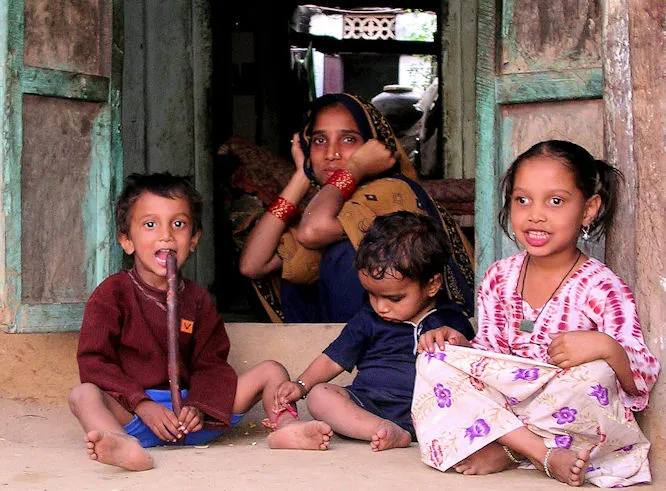
Fig.: पुत्रवती
(Image source: Details)
२६. जल
२७. मार्ग
२८. मोक्ष
२९. शूद्रा
३०. अन्न
३१. साधु
३२. नीति
३३. योध
३४. सत्यवन्त्
३५. लाभ
३६. मोह
३७. गति
३८. प्रश्न
३९. सृष्टि
४०. नेत्र
४१. गुरुता
४२. ईश्वर
४३. कारण
४४. कृत
४५. धर्मवन्त्
४६. युद्ध
४७. दर्शन
४८. धातु
४९. गूढा
५०. ईष्टा (2 meanings)
५१. उदित
५२. इदम्
५३. किम्
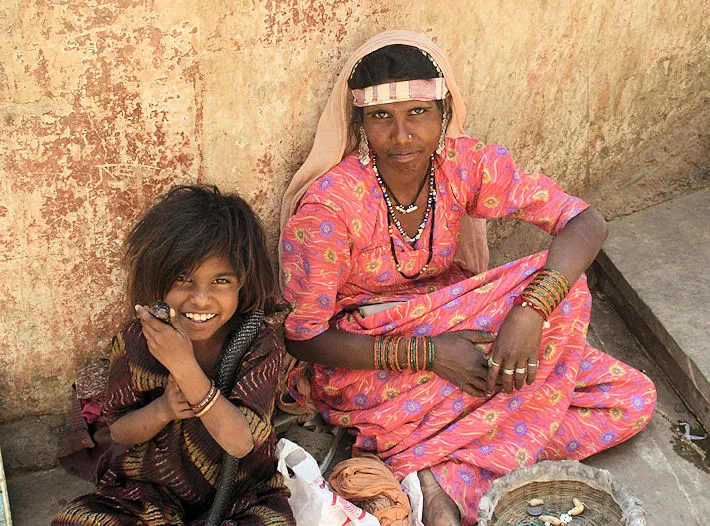
Fig.: अयं बालः कस्याः पुत्रः ।
(Image source: Details)
B) Translate:
१. ब्राह्मणस्य पुत्रो ब्राह्मण्या ग्रामं गतः । (2 possibilities)
२. यज्ञस्याग्निनान्नं दग्धम् ।
३. बुद्धः सत्यस्य बुद्ध्या मुक्तः ।
४. अधर्मो ऽनृतस्य वदनमित्यृषयो वदन्ति ।
५. नरा देवानां यज्ञैर्न मुच्यन्ते ।
६. बलवन्तः क्षत्रियाः शत्रूणां धनवन्ति नगराणि जयन्ति ।
७. कवेरुक्तिं शृण्वन्ति ।
८. कविर्देव्याः कृतं वदति ।
९. द्विजाः पशोर्लाभमिच्छन्ति ।
१०. रामः पुण्यवतो गुरोर्मन्त्रस्य स्मरति ।
११. अयं बालः कस्याः पुत्रः ।
१२. केषामिमानि गृहाणि ।
१३. कस्यान्नमनेनर्षिणेष्टम् ।
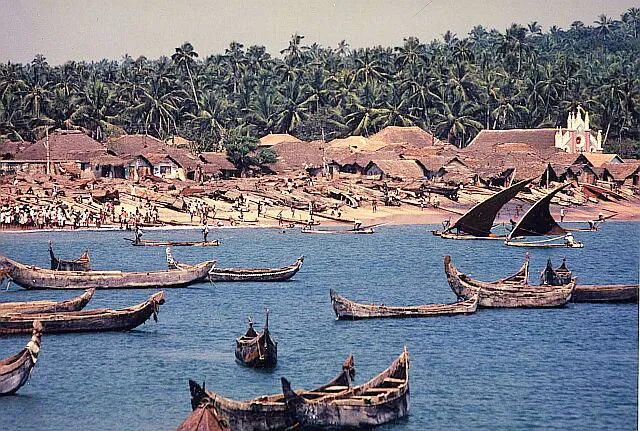
Fig.: केषामिमानि गृहाणि ।
(Image source: Details)