
Lesson 33
33.1. Reduplication (अभ्यास m.)
- The third present class
- (as well as some verbs of other present classes),
- the perfect,
- the reduplicated aorist,
- the frequentative, and
- the desiderative
are formed by means of reduplication. The part of a reduplicated form that is placed before the root is called the reduplication syllable.
The reduplication syllable consists of (a consonant and) a vowel.
33.1.1. The Reduplication Consonant
1. Usually:
Repetition of the first consonant of the root
Examples:
दा 3 "to give"
- 3.sg.P.Ind.Pres. ददाति
पॄ 3 "to fill"
- 3.sg.P.Ind.Pres. पिपर्ति
मा 3Ā "to measure"
- 3.sg.Ā.Ind.Pres. मिमीते
2. An aspirated initial consonant of a root is reduplicated by the corresponding unaspirated consonant.
Examples:
धा 3 "to place"
- 3.sg.P.Ind.Pres. दधाति
भी 3 "to fear"
- 3.sg.P.Ind.Pres. बिभेति
3. A guttural is reduplicated by the corresponding unaspirated palatal:
क्, ख् by च्
ग्, घ् by ज्
ह् is always reduplicated by ज्.
Examples:
हु 3 "(to pour) into the fire (as an offering)"
- 3.sg.P.Ind.Pres. जुहोति
4. If a root begins with several consonants, only the first (possibly applying rule 2 or 3) is repeated.
5. If a root begins with a sibilant + voiceless consonant cluster, the sibilant is not reduplicated, but the following voiceless consonant is reduplicated according to the above rules.
Example:
स्था 1 "to stand"
- 3.sg.P.Ind.Pres. तिष्ठति
33.2. The third present class (जुहोत्यादि = "जुहोति etc.")
Formation:
strong stem:
reduplicated strong-grade root + ending
weak stem:
reduplicated weak-grade root + ending
The rules given above apply to the reduplication consonant.
33.2.1. The Reduplication Vowel of the 3rd Present Class
- The regular reduplication vowel is -i-
- Roots containing u reduplicate with -u-
- The roots दा, धा, हा with -a-
Examples:
हु 3P "(to pour) into the fire (as an offering)"
- strong stem: जुहो
- weak stem: जुहु
| 3. sg. P. | 3. pl. P. | 3. sg. Ā. | 3. pl. Ā. | |
|---|---|---|---|---|
| Indikativ Present | जुहोति | जुह्वति juhu + ati | <जुहुते> | <जुह्वते> juhu + ate |
| Imperfect | अजुहोत् a-juho-t | जुहवुर् a-juho + ur | <अजुहुत> | <अजुह्वत> a-juhu + ata |
| Optative | जुहुयात् juhu-yā-t | जुहुयुर् juhu-y-ur | <जुह्वीत> juhu + ī-ta | <जुह्वीरन्> juhu + ī-ran |
33.3. On the Ablaut of ā
ā kann
- einerseits die Dehnstufe einer der Ablautreihen mit -a-
- andrerseits Hochstufe in einer Ablautreihe der ā-Gruppe sein
Die beiden wichtigsten Ablautreihen der ā-Gruppe sind:
A.
- Weak grade
- before consonant: -i-
e.g. धा PPP: हित (hi-ta) - before vowel: Ø
e.g. धा 3.pl.P.Ind.Präs. दधति (dadh-ati)
- before consonant: -i-
- Strong grade: -ā-
e.g. धा 3.sg.P.Ind.Präs. दधाति
Also belonging here, for example:
स्था 1
- PPP स्थित (sthi-ta)
- 3.sg.P.Fut. स्थास्यति (sthā-sya-ti)
B.
- Weak grade: -ī-
e.g. पा 1: PPP पीत (pī-ta) - Strong grade: -ā-
e.g. पा 1: Inf. पातुम्
33.4. Roots ending in -ā of the third conjugation class
Roots ending in -ā (except दा and धा) usually have an ablaut of -ī- in the weak stem (see Thumb-Hauschild Vol. 1,1 p. 271. Presumably, the ablaut series B mentioned above acted as a model here, although these roots otherwise ablaut according to series A), before vocalic endings the root vowel disappears completely (see ablaut series A).
Examples:
मा 3Ā "to measure"
| 3. sg. Ā. | 3. pl. Ā. | |
|---|---|---|
| Indikativ Present | मिमीते mimī-te | मिमते mim-ate |
| Imperfect | अमिमीत | अमिमत |
| Optative | मिमीत mim-ī-ta ! | मिमीरन् mim-ī-ran |
हा 3P "to leave"
| 3. sg. P. | 3. pl. P. | |
|---|---|---|
| Indikativ Present | जहाति | जहति jah-ati |
| Imperfect | अजहात् | अजहुर् |
| Optative | जह्यात् jah-yā-t (Die Root हा hat vor dem Optative-yā/y die gleiche Form wie vor Vokalen!) | जह्युर् jah-y-ur |
33.4.1. The roots दा and धा
The roots दा and धा reduplicate with the vowel -a- and lose the root vowel in the weak stem.
Note the aspiration dissimilation rule for धा!
धा 3U "to place, to fix, to allot"
| 3. sg. P. | 3. pl. P. | 3. sg. Ā. | 3. pl. Ā. | |
|---|---|---|---|---|
| Indikativ Present | दधाति | दधति dadh-ati | धत्ते dadh-te (Explanation: Thumb-Hauschild 1,1 S. 302f.) | दधते dadh-ate |
| Imperfect | अदधात् | अदधुर् | अधत्त a + dadh + ta | अदधत |
| Optative | दध्यात् dadh-yā-t | दध्युर् | दधीत dadh-ī-ta | दधीरन् |
The forms of दा are obtained by replacing dh with d in the paradigm of धा. Thus:
दा 3U "to give"
| 3. sg. P. | 3. pl. P. | 3. sg. Ā. | 3. pl. Ā. | |
|---|---|---|---|---|
| Indikativ Present | ददाति | ददति | दत्ते | ददते |
| Imperfect | अददात् | अददुर् | अदत्त | अददत |
| Optative | दद्यात् | दद्युर् | ददीत | ददीरन् |
33.5. The Present Participle Parasmaipada of the roots of the 3rd conjugation class
The verbs of the 3rd class form all forms of the Present Participle Parasmaipada from the weak stem.
Exception: Nominative/Accusative Plural Neuter can optionally be formed from the strong or weak stem.
दा Present Participle Parasmaipada:
| Masculine पुंल्लिङ्ग | Neuter नपुंसकलिङ्ग | Feminine स्त्रीलिङ्ग | |
|---|---|---|---|
| Singular | |||
| 1. Nominative | ददत् dad-at + s | ददत् dad-at-Ø | ददती |
| 2. Accusative | ददतम् dad-at-am | ददत् | |
| Plural | |||
| 1. Nominative | ददतस् | ददति dad-at-i ददन्ति dad-ant-i | |
| 2. Accusative | ददतस् | ददति ददन्ति |
Similarly जुह्वत् (juhu-at + s)
33.6. Word List
दा 3U ददाति: to give
Fut. दास्यति
Pass. दीयते
Caus. दापयति
PPP दत्त
Inf. दातुम्
thereof:
दान n.: giving, gift, generosity
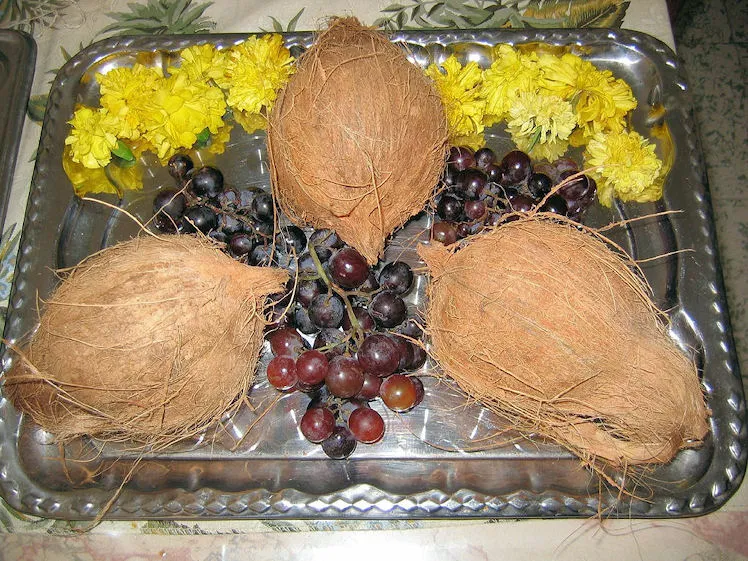
Fig.: दानम्
(Image source: Details)
दा + आ 3Ā अदत्ते: (to receive) to take, to take possession of, to take along
Absol. आदाय: with Acc.: accompanied by, with
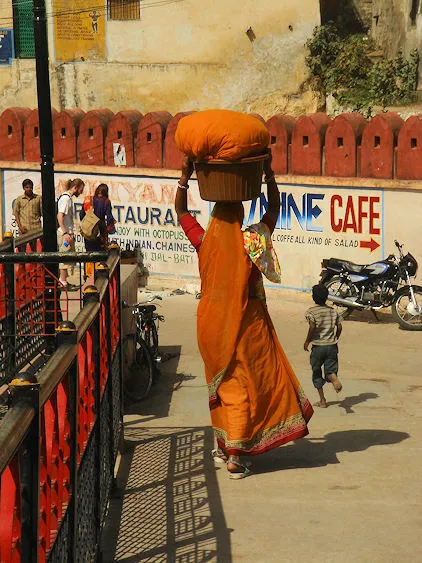
Fig.: सा पुत्रमादाय भारं बिभ्रती गच्छति
(Image source: Details)
धा 3U दधाति: to place, to set, to allot
Fut. धास्यति
Pass. धीयते
Caus. धापयति
PPP हित (!!)
Inf. धातुम्
धा + सम् + आ 3U समादधाति: to direct all attention to something, to collect oneself
thereof:
समाधि m.: inner collection, highest attention
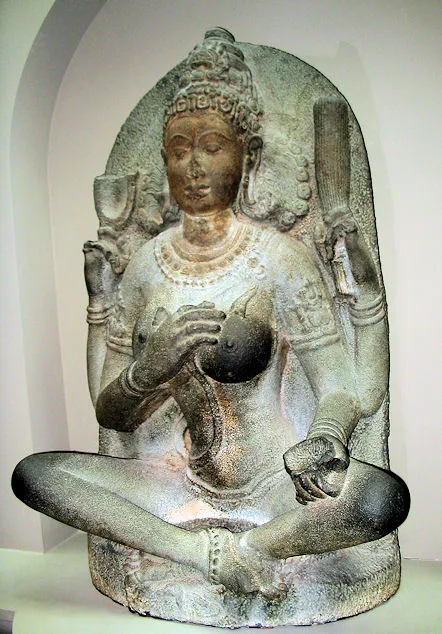
Fig.: समाधि
(Image source: Details)
पॄ 3P पिपर्ति: to fill, to fulfill
Note:
3.pl.P पिपुरति
3.sg.Impf.P अपिपर् (from: *apipart)
3.pl.Impf.P अपिपरुर्
3.sg.Opt.P पिपूर्यात्
Fut. परिष्यति / परीष्यति
Pass. पूर्यते
Caus. पूरयति / पारयति
PPP पूर्ण / पूर्त / पूरित
पॄ + सम् only Pass. सम्पूर्यते and Caus.: to fill completely
भी 3P बिभेति: to fear (Abl., Gen.)
Fut. भेष्यति
Pass. भीयते
Caus. भाययति
PPP भीत
Inf. भेतुम्
thereof:
भय n.: fear, dread; danger (the subjective and the objective side)

Fig.: भयम्
(Image source: Details)
भृ 3U बिभर्ति: to carry, to bring; to sustain, to nourish
Fut. भरिष्यति
Pass. भ्रियते
Caus. भारयति
PPP भृत
Inf. भर्तुम्
thereof:
भार m.: burden
मा 3Ā मिमीते: to measure
Fut. मास्यति / मास्यते
Pass. मीयते
Caus. मापयति
PPP मित
Inf. मातुम्
मा + उप 3Ā उपमिमीते: compare
thereof:
उपमा f.: comparison
प्रतिमा f.: image, likeness
हा 3P जहाति: to leave
Fut. हास्यति
Pass. हीयते
Kaus. हापयति
PPP हीन: left by, lacking, deficient
Inf. हातुम्
from PPP हीन:
हीनयान n.: the deficient vehicle (of Buddhism): derogatory term used by the representatives of the "great vehicle", the महायान; the deficient path (यान to या 2: to go, to drive). The expression हीनयान should no longer be used. The form of the old Buddhism that still exists today is called थेरवाद.
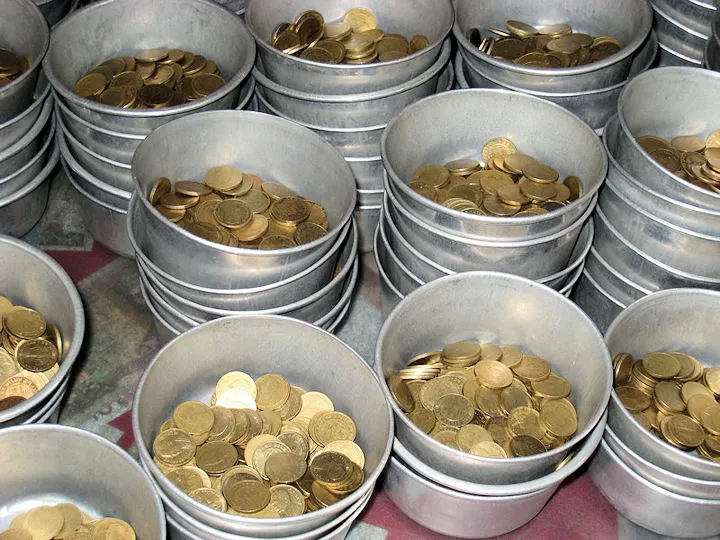
Fig.: हीनयानमेव
(Image source: Details)
हु 3P जुहोति: to pour into fire (as an offering, esp. melted butter)
Fut. होष्यति
Pass. हूयते
Kaus. हावयति
PPP हुत
Inf. होतुम्
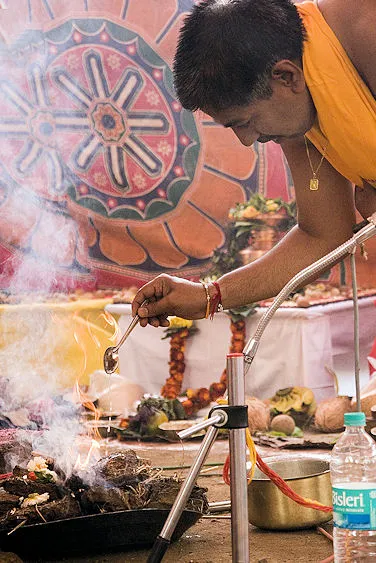
Fig.: घृतमग्नौ जुहोति
(Image source: Details)
घृत n.: melted butter, ghee (घी / گھی / ঘী)
"Ghee is made by simmering unsalted butter in a large pot until all water has boiled off and protein has settled to the bottom. The cooked and clarified butter is then spooned off to avoid disturbing the milk solids on the bottom of the pan. Unlike butter, ghee can be stored for extended periods without refrigeration, provided it is kept in an airtight container to prevent oxidation and remains moisture-free. Texture, colour, or taste of ghee depends on the source of the milk from which the butter was made. In India, ghee is usually made with water buffalo's milk as it tends to be whiter than cow's milk."
[Source: http://en.wikipedia.org/wiki/Ghee. -- Accessed on 2008-12-26]
33.7. Exercise
A) Insert the corresponding forms of the words in parentheses into the following sentence pattern:
रामस् ... (चतुर्थ्येकवचने बहुवचने च) ... अन्नं ददाति । (भिक्षु । अग्नि । शूद्रा । गुनवान्पुत्र । देवान्स्तुवन्कवि । ब्राह्मणी । महान्साधु । धेनु)
B) Insert the corresponding forms of the verbs specified in parentheses in the Indicative Present, Imperfect, and Optative:
ब्राह्मणो घृतमग्नौ ... (हु) ॥१॥
बुद्धगता भयान्न ... (भी) ॥२॥
सुगतः कुलम् ... (हा) ॥३॥
दुर्जना भिक्षुभ्यो ऽन्नं न ... (दा) ॥४॥
साधुः कृष्णे मतिम् ... (धा + सम् + आ) ॥५॥
ईश्वरो लोकान् ... जनास्तु न ... (मा) ॥६॥
दासा भारान् ... (भृ) ॥७॥
ब्राह्मणी पात्रं जलेन ... (पॄ) ॥८॥
C) Translate and convert singular sentences into plural sentences and vice versa:
योगयुक्तो मतिं दुःखमक्षनयन्त्यां प्रज्ञायां समाधत्ते ॥१॥
यो भिक्षवे दानानि दद्यात्सो ऽपि दानपुण्यमाददीत ॥२॥
ब्राह्मणा भारं न बिभ्रतीति ब्राह्मणदासो भारं गृहमबिभः ॥३॥
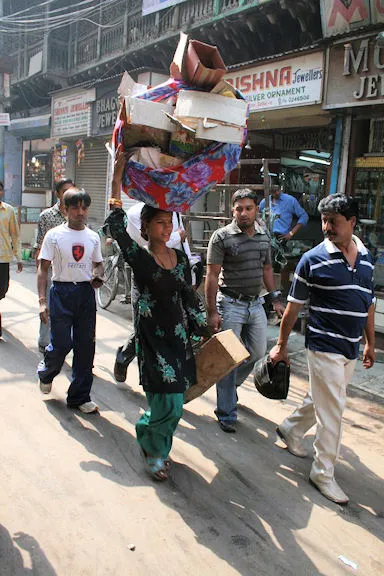
Fig.: पुरुषा भारं न बिभ्रतीति स्त्री भारं गृहमबिभः
(Image source: Details)
क्षत्रियशूरः पुत्रमादाय योद्धुं कुलमजहात् । स युद्धे शत्रुहतत्वाच्छरीरं हित्वा पुनर्भवमैत् ॥४॥
देवदत्तमपि सुखं दुःखमोक्षेष्टिं न पिपर्ति । सेष्टिः प्रज्ञयैव सम्पूर्यते ॥५॥
यः साधुर्भूतेभ्यो ऽभयं ददाति तस्माद्भूतानि न बिभ्यति स च तेभ्यो न बिभेति ॥६॥
मितमतयो नरकभयात्स्वर्गलोभाच्च पुण्यं कुर्वन्ति पापं च जहति । अमितप्रज्ञाबुद्धा हि नरकेभ्यो न बिभीयुः स्वर्गांश्च न लुभ्येयुः । ते भयं च लोभं चारुन्धन् ॥७॥
Ghee Definition & Details:
- Source: http://en.wikipedia.org/wiki/Ghee (Accessed: 2008-12-26)
Image Directory & Licenses:
- Fig. lekt3306 (wedding party, Chennai): Image source: http://www.pbase.com/chandra/image/62118318 (Accessed on 2008-12-27). Creative Commons License (Attribution, non-commercial use, share alike).
- Fig. lekt3307 (Udaipur carrier): Image source: gscottie8 (http://www.flickr.com/photos/gscottie/2152543713/, Accessed on 2008-12-27). Creative Commons License (Attribution, non-commercial use, no derivatives).
- Fig. lekt3305 (Samadhi yogini, Kaveripakkam): Image source: Quadell / Wikipedia (GNU FDL).
- Fig. lekt3304 (bhaya carrier, Mumbai): Image source: sameer5678in (http://www.flickr.com/photos/guptasameer/3080350405/, Accessed on 2008-12-26). Creative Commons License (Attribution).
- Fig. lekt3303 (Hinayana Thailand): Image source: grrrrl (http://www.flickr.com/photos/11619899@N00/867938692/, Accessed on 2008-12-26). Creative Commons License (Attribution, non-commercial use).
- Fig. lekt3302 (Yajna, Shiva Ashram, Ganeshpuri): Image source: Dey (http://www.flickr.com/photos/dey/466758922/, Accessed on 2008-12-26). Creative Commons License (Attribution, non-commercial use, share alike).
- Fig. lekt3308 (woman carrier, Delhi): Image source: Ondrej Jaura (http://www.flickr.com/photos/ondrejj/2073900069/, Accessed on 2008-12-27). Creative Commons License (Attribution, non-commercial use, no derivatives).