
Lesson 15
15.1. सुभाषितम्
गुरुशुश्रूषया विद्या
पुष्कलेन धनेन वा ।
अथवा विद्यया विद्या
चतुर्थी नैव विद्यते ॥
15.2. Determinative compounds = Tatpuruṣa m. = तत्पुरुष
The relationship between entities designated by nouns (substantives and adjectives) can be expressed not only through a genitive construction but also through a Tatpuruṣa (तत्पुरुष). Likewise, attributive subordination of adjectives or appositional subordination of substantives can be expressed through a specific type of Tatpuruṣa, namely so-called Karmadhāraya (m.) = कर्मधारय.
तत्पुरुषः = तस्य पुरुषः "his servant", i.e., as a designation for this type of compound, an example of such compounds is used.
In determinative compounds (Tatpuruṣa), a noun (substantive or adjective) is specified more precisely by another noun or adverb. The specified word usually forms the second member (padānta) of the compound.
The relationship of the first member (determining padādi) to the second member (determined padānta) can be:
- attributive or appositional: upon resolution of the compound, the first member forms a more precise specification of the second member in the same case (i.e., outside a sentence context in the nominative (प्रथमा), in a sentence in the syntactically required case)
- casusal: the first member, upon resolution of the compound, stands in a different case than the second member (i.e., not in the nominative - प्रथमा)
- adverbial: the first member is an indeclinable word
The case relationship of both members of a compound is independent of the case in which the compound stands: the compound is, after all, a single declinable word:
e.g.
Nom. sg. तत्पुरुषः = तस्य पुरुषः
Acc. sg. तत्पुरुषम् = तस्य पुरुषम्
Instr. sg. तत्पुरुषेण = तस्य पुरुषेण
Gen. sg. तत्पुरुषस्य = तस्य पुरुषस्य
Nom. pl. तत्पुरुषाः = तस्य पुरुषाः
etc.
Das Geschlecht eines Tatpuruṣa ist - mit wenigen Ausnahmen - das seines Hintergliedes.
15.3. Determinative compounds with attributive / appositional first member = Karmadhāraya m. = कर्मधारय
Upon resolution of the Karmadhāraya, both members of the compound stand in the same case.
e.g.
गुणवत्पुत्रः = गुणवान्पुत्रः = "a son with good qualities"
Acc. sg. गुणवत्पुत्रम्
Nom. pl. गुणवत्पुत्राः
पुण्यवत्क्षत्रिया = पुण्यवती क्षत्रिया = "a Kṣatriya woman of merit"
साधुजनाः = साधवो जनाः = "good people"
इष्टदेवता = इष्टा देवता = "the desired deity = the deity to whom one has a special relationship of devotion and refuge"
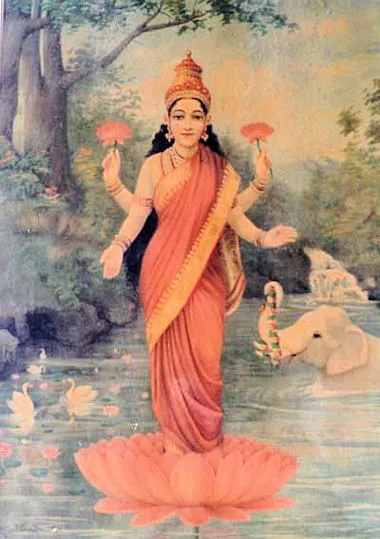
Fig.: लक्ष्मी
(Image source: Details)
Zur Abfolge der Glieder in einem Karmadhāraya ist folgende Sonderregel zu beachten:
if a Karmadhāraya expresses a COMPARISON, then that which is being compared stands in the second member of the compound:
नरसिंहः = सिंह इव नरः = "a man like a lion"
पुरुषव्याघ्रः = व्याघ्र इव पुरुषः = "a man like a tiger"if, however, a Karmadhāraya expresses an apposition (further specification of the second member by a noun), then the specifying element stands in the first member, as the general rule for the order of elements in a Tatpuruṣa requires:
नरसिंहः can also be resolved: नर एव सिंहः = "A lion, who (in reality) is a man."
Such appositional Karmadhārayas are resolved in the indigenous commentaries, as in the example above, by means of एव.
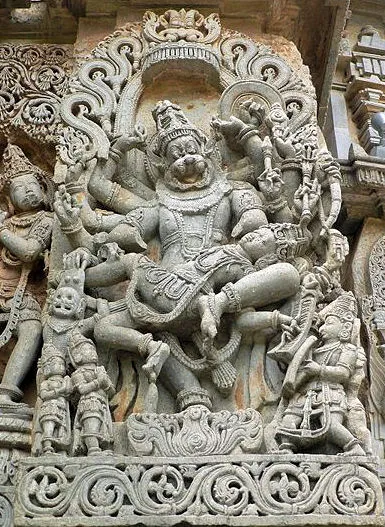
Fig.: नरसिंहः
(Image source: Details)
15.4. Determinative compounds with a first member that stands in a non-attributive/appositional case relationship to the second member = Tatpuruṣa in the narrower sense
Tatpuruṣa combinations are possible for combinations of nouns (nouns and adjectives), in which the first member - according to the rules of syntax - can stand in any case. As expected, the first member most frequently represents a genitive (षष्ठी), since this is the case for expressing the relationship between nouns.
e.g.
क्षत्रियपुत्रः = क्षत्रियस्य पुत्रः = "the son of a Kṣatriya", "a young Kṣatriya", "a member of the group of Kṣatriyas"
Acc. sg. क्षत्रियपुत्रम्
Gen. sg. क्षत्रियपुत्रस्य
etc.
गुरुभावः = गुरोर्भावः = "the nature of a teacher"
धनलोभः = धनस्य लोभः = "desire for wealth, avarice"
लोकगतिः = लोकस्य गतिः = "the course of the world, the behavior of the people"
Almost every genitive relationship can be replaced by a Tatpuruṣa. The few exceptions see e.g. in Kale, A higher Sanskrit grammar § 211, there also the corresponding passages in Pāṇini.
The first member of a Tatpuruṣa can, in principle, represent any case. However, not all syntactically possible case relationships can be replaced by a Tatpuruṣa. The corresponding rules can be found in case of doubt in Kale, A higher Sanskrit grammar § 203 - 217 or Pāṇini 2,1,22 - 2,2,22.
The first member can stand in the singular, dual, or plural when resolving the compound. Which possibility is present must be inferred from meaning and context.
Examples:
The first member represents the accusative (द्वितीया): e.g. in certain PPPs to verbs of motion (Pāṇini 2,1,24):
ग्रामगतः = ग्रामं गतः = "one who has gone into the village"
नरकपतिता = नरकं पतिता = "one who has fallen into a hell"
The first member represents the instrumental (तृतीया): e.g. frequently the agent (कर्तृ) of nominal formations with kṛt suffixes (e.g. PPP):
देवकृतम् = देवेन / देवैः कृतम् = "made by a god / by gods"
Could also be resolved: देवस्य / देवानां कृतम् = "deed / action of a god / by gods; divine deed, deed of gods"
बुद्धरक्षिता = बुद्धेन रक्षिता = "the one who was protected by the Buddha" (a proper name)
15.5. Decomposition of Compounds (except Dvandvas)
Although compounds of any length can be formed in Sanskrit and are also formed very frequently (compounds consisting of 10 to 30 members are no rarity!), nevertheless, with the exception of Dvandvas, all compounds are progressively hierarchical and can be decomposed into two parts each:
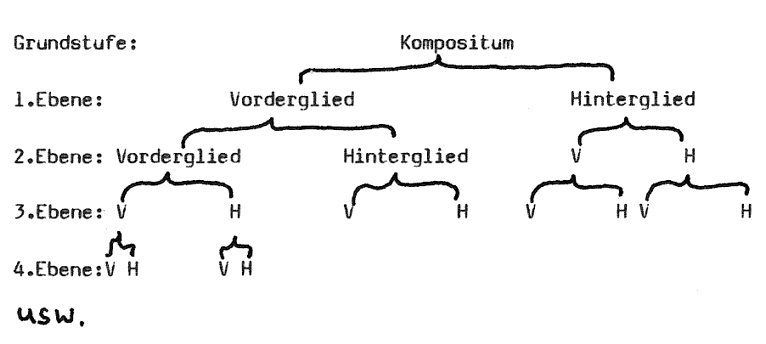
Fig.: समासविच्छेदः
(Image source: Details)
etc. until one reaches the individual word stems.
e.g.
गुणवत्पुत्रकृतपुण्यम्
1st stage (main caesura): गुणवत्पुत्रकृतं ॥१॥ पुण्यम्
2nd stage (1st secondary caesura): गुणवत्पुत्रेण ॥२॥ कृतं ॥१॥ पुण्यम्
3rd stage (2nd secondary caesura): गुणवता॥३॥ पुत्रेण ॥२॥ कृतं ॥१॥ पुण्यम्
= "the meritorious deed (the merit) that my virtuous son has performed"
In this process, different types of compounds can be mixed, e.g. foreground member: Bahuvrīhi (बहुव्रीहि) - background member: Tatpuruṣa, etc.
e.g.
ब्राह्मणक्षत्रियवैश्यधर्मः
1st stage: ब्राह्मणक्षत्रियवैश्यानां धर्मः (foreground member: Itaretaradvandva)
2nd stage: ब्राह्मणानां क्षत्रियाणां वैश्यानां च धर्मः
= "the dharma of Brāhmaṇas, Kṣatriyas, and Vaiśyas"
Very often, there are various possibilities for resolving a compound. Whether the correct or at least the best one is, can only be decided from the context and the content of the text. Sometimes such a decision is not possible. Often, two resolution possibilities are presumably intended by the author. Then one must render both resolution possibilities in the translation (connected with "and", "or", "respectively", and the like.
e.g.
पुण्यवत्पुत्रकृतम्
1st stage: either - or
- पुण्यवत्पुत्रेण कृतम्
- पुण्यवत्पुत्रस्य कृतम्
- पुण्यवत् पुत्रकृतम्
2nd stage: accordingly
- पुण्यवता पुत्रेण कृतम् = "the done by my meritorious son"
- पुण्यवतः पुत्रस्य कृतम् = "the deed of my meritorious son"
- पुण्यवत् पुत्रेण कृतम् = "the meritorious, done by my son"
- पुण्यवत् पुत्रस्य कृतम् = "the meritorious deed of my son"
15.6. The form of the foreground member in compounds (समास m.)
In all types of compounds, the foreground member is usually the unchanged word stem. Two-stemmed nouns stand in the weak stem. Feminine adjectives, which specify a following member in the compound, generally stand in the masculine stem:
e.g.
पुण्यवत्क्षत्रिया = पुण्यवती क्षत्रिया = "a Kṣatriya woman who possesses merit"
गुणवत्पुत्रः = गुणवान् पुत्रः = "a son with good qualities"
15.7. Classification of तत्पुरुष
- प्रथमातत्पुरुषः : foreground member stands in विग्रहवाक्य in the nominative (प्रथमा)
- द्वितीयातत्पुरुषः : foreground member stands in विग्रहवाक्य in the accusative (द्वितीया)
- तृतीयातत्पुरुषः : foreground member stands in विग्रहवाक्य in the instrumental (तृतीया)
- चतुर्थीतत्पुरुषः : foreground member stands in विग्रहवाक्य in the dative (चतुर्थी)
- पञ्चमीतत्पुरुषः : foreground member stands in विग्रहवाक्य in the ablative (पज्चमी)
- षष्ठीतत्पुरुषः : foreground member stands in विग्रहवाक्य in the genitive (षष्ठी)
- सप्तमीतत्पुरुषः : foreground member stands in विग्रहवाक्य in the locative (सप्तमी)
- कर्मधारयः : appositional Tatpuruṣa, among others:
- उपमानपूर्वपदकर्मधारयः : विग्रहवाक्य with इव after the first member
- उपमानोत्तरपदकर्मधारयः : विग्रहवाक्य with इव after the second member
- रूपकसमासः : विग्रहवाक्य with एव
- द्विगुसमासः : numeral in the first member
- नञ्तत्पुरुषः (निषेधतत्पुरुषः) : with negation a-, an- in the first member
- गतिसमासः : with preposition in the first member
- प्रथमातत्पुरुषः etc. (see above)
15.7.1. Classification of the कर्मधारय
- विशेषणपूर्वपदकर्मधारयः : first member is an adjective (विशेषण)
- विशेषणोभयपदकर्मधारयः : both members are adjectives; this category also includes adjectives expressing a sequence of time: "first bathed, then anointed"
- उपमानपूर्वपदकर्मधारयः (= उपमासमासः): comparison in the first member, compared quality in the second member: e.g., "beautiful like a lotus"
- उपमानोत्तरपदकर्मधारयः (= उपमितसमासः): comparison in the second member
- रूपकसमासः : विग्रहवाक्य with एव after the first member (metaphor)
- संभावनपूर्वपदकर्मधारयः : both members refer to the same person or thing, e.g., कालिदासकविः = कालिदास इति कविः = "the poet Kālidāsa"
- कर्मधारयः with कु / कद् as the first member: "bad..."
- कर्मधारयः with किम् as the first member: censure
- PPP + negated PPP: "partially", e.g., कृताकृतम् = "partially done"
- द्विगुसमासः : numeral in the first member
15.8. Word List
पुष्कल 3: splendid, magnificent, abundant
वा : or (postposed)
अथवा : or (preposed)
चतुर्थ 3 (f.: चतुर्थी): fourth
विद् "to find" 6 U विन्दति ; Pass. विद्यते ; PPP विन्न / वित्त
विद् "to know" 2 P वेत्ति ; Pass. विद्यते ; PPP विदित
पत् "to fly, to fall" 1 P पतति ; Pass. पत्यते ; PPP पतित
अर्ध 3: half, m.n. half
पूजा f.: honor, honorable reception, religious worship (Pūjā)
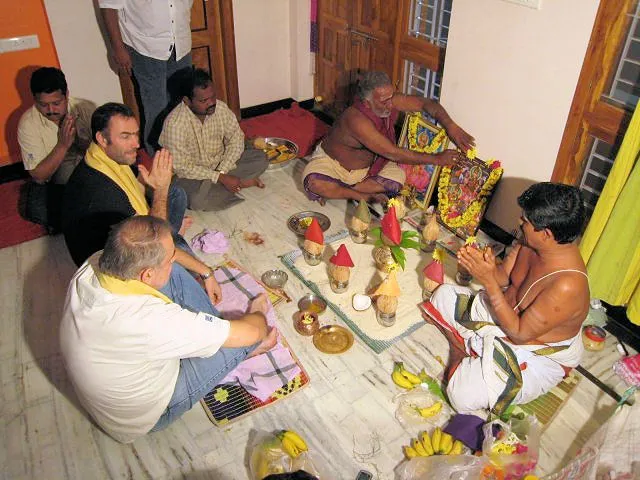
Fig.: पूजा
(Image source: Details)
कुल n.: herd, multitude, race, lineage, family
इन्द्र m.: prince, first, best among ; king of gods Indra
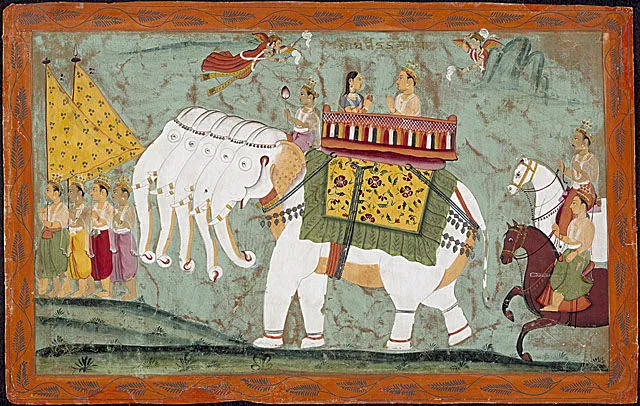
Fig.: इन्द्रः
(Image source: Details)
दास m.: slave, serf, servant
दासी f.: female slave, serf, servant
काल m.: time, (right) moment ; fate, death ; god of death Kāla
काल 3: black, dark blue, dark
पुरुष m.: human being, man, servant
-जन as the second member of Tatpuruṣas often expresses the plural
स्तु 2 स्तौति ; Pass. स्तूयते ; PPP स्तुत : to praise, to extol
from this:
स्तुति f.: praise, hymn of praise
स्तोत्र n.: (means of praise =) hymn of praise, hymn
सिंह m.: lion (Panthera leo persica)
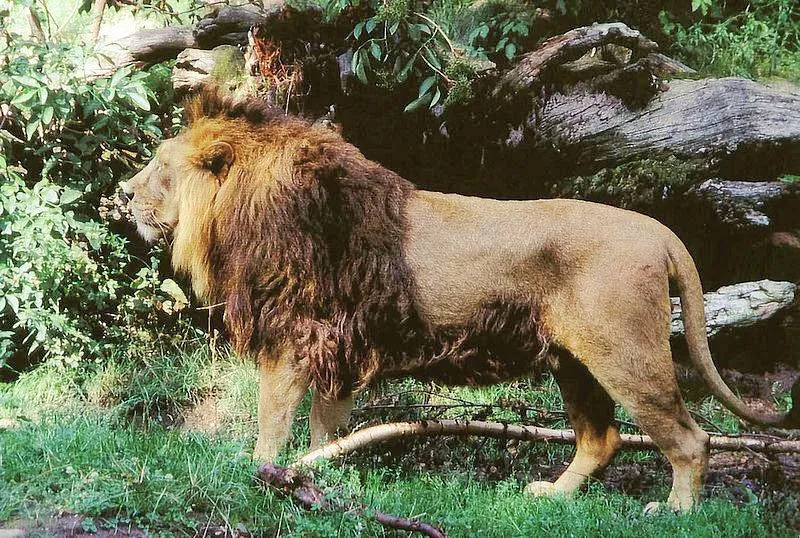
Fig.: सिंहः
(Image source: Details)
व्याघ्र m.: tiger (Panthera tigris tigris) (lit.: yawner)
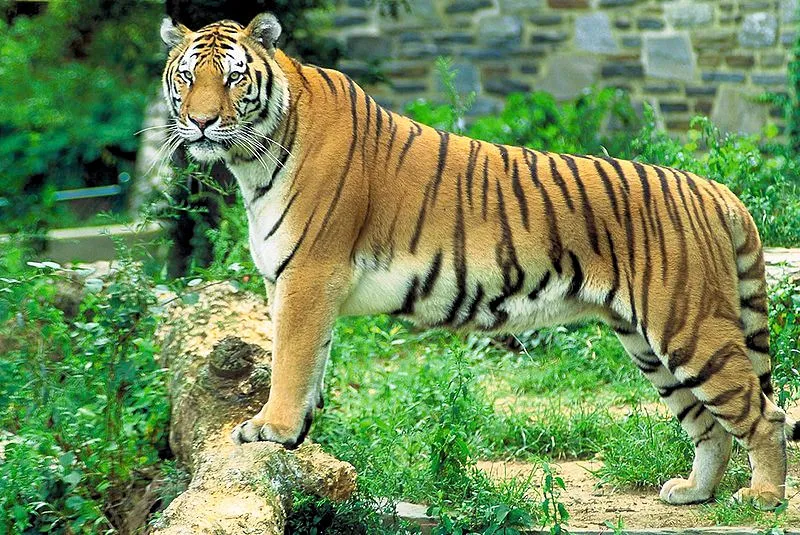
Fig.: व्याघ्रः
(Image source: Details)
इव (postposed): as if, like (in comparisons: व्याघ्र इव पुरुषः = "a man like a tiger", "a tiger-like man"
एव (postposed): emphasizes the preceding, often corresponds in German to the emphasis, a kind of emoticon \<!\>, e.g. सत्यमेव जयति "only the truth prevails", "precisely the truth prevails", "the truth prevails"
अरि m.: enemy (according to Thieme, Der Fremdling im Ṛgveda: originally = stranger)
आर्य 3: Aryan, noble; m. Aryan (self-designation of the Sanskrit-speaking ancient Indians, literally: hospitable (Thieme)); Noble, gentleman of honor
to जन्
जाति f.: birth, kind, caste (to जाति as caste see Basham, Wonder, p. 148ff.)
मृ 4 Ā म्रियते ; Pass. म्रियते ; PPP मृत : to die (according to Indian grammarians: 6 Ā)
therefrom:
मरण n.: dying, death
मृति f.: dying, death
मृत्यु m.: death; personified: god of death
15.9. Exercise 1
Resolve the following compounds as Tatpuruṣa in Sanskrit and provide a German translation. Provide all resolutions and translations that seem possible to you. Also indicate which case and number the entire compound represents.
१. देवेन्द्रस्य
२. दुःखदग्धा
३. मोक्षधर्मः
४. अन्नजातानि
५. गृहकरणम्
६. शूद्रकृतेन
७. ईश्वरपूजा
८. देवेश्वरः
९. क्षत्रिययज्ञम्
१०. वैश्यभावेन
११. देवगुरोः
१२. धनलोभः
१३. गृहदासी
१४. दुःखमोहः
१५. ग्रामेश्वरम्
१६. नगरजनाः
१७. यज्ञकालस्य
१८. देवगृहाणि
१९. देवपुत्राणाम्
२०. पश्विष्टिः
२१. स्मृत्युक्तम्
२२. गुरुगृहम्
२३. सोमयज्ञेन
२४. स्वर्गगताः
२५. सुखप्रश्नम्
२६. पशुधर्मः
२७. स्वर्गलोकः
२८. ऋषियज्ञैः
२९. तत्कालम्
३०. सत्यवदनम्
15.10. Exercise 2
Resolve the following Tatpuruṣa as in Exercise 1:
१. देवतागृहम्
२. देवीस्तोत्रम्
३. ब्राह्मणगृहम्
४. वैश्यापुत्राः
५. शूद्रधर्मः
६. अग्निगृहम्
७. साधुगता
८. सत्यवचनेन
९. धर्मयज्ञानाम्
१०. सत्यधर्मः
११. अनृतवदनस्य
१२. देवीदासः
१३. द्विजदासान्
१४. अग्निदग्धम्
१५. साधुवादः
१६. बालमृगः
१७. धनसर्गः
१८. अन्नद्वेषम्
१९. देवदेवम्
२०. देवप्रश्नेन
२१. गृहजनानाम्
२२. गुरुपूजायाः
२३. गुरुगतैः
२४. स्वर्गमार्गेण
२५. नरकदेवतया
२६. गृहेश्वरः
२७. ग्रामधर्मः
२८. देवीपूजाम्
२९. देवदर्शनम्
३०. देवपादान्
३१. धनजाता
३२. बालभावेन
३३. लोकगुरोः
३४. देवपुत्रः
३५. देवमार्गम्
३६. स्वर्गसुखम्
३७. सोमसुतिः
३८. देवपूजायाः
३९. लोकधर्मेण
४०. देवजनाः
४१. पापलोकः
४२. पुण्यफलानि
४३. सत्यवादः
४४. ऋषिपुत्रः
४५. पुत्रपुत्राः
४६. धर्मवादः
४७. देवलोकम्
४८. यज्ञेश्वरः
४९. ग्रामदेवता
५०. दुःखलोकः
५१. देवशत्रुणा
५२. क्षत्रियधर्मः
५३. द्विजेन्द्रः
५४. अग्निकृतम्
५५. साधूक्तानि
५६. ब्राह्मणभावेन
५७. देवधर्मः
५८. गृहदेवता
५९. कारुकुशीलवकृतम्
६०. द्विजातिशुश्रूषया
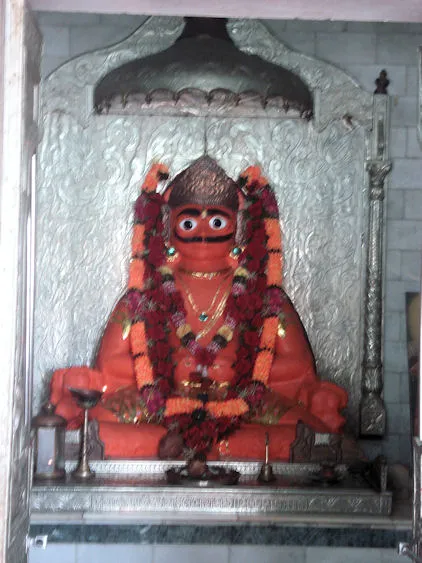
Fig.: ग्रामदेवता
(Image source: Details)
15.11. Exercise 3
A) Translate the proverb at the beginning of the lesson
B) Resolve the following Tatpuruṣa compounds:
१. बलकृतः
२. बालधनस्य
३. नरककाकम्
४. लोकगुरोः
५. जलेश्वरेण
६. जनपानम्
७. वाक्यसारथीन्
८. गुणवचनानि
९. मृगेश्वरैः
१०. बुद्धिकृतायाः
११. धर्मयज्ञेन
१२. यज्ञाङ्गानि
१३. गृहजनेन
१४. ग्रामलेखकाः
१५. नागदेवः
१६. पुण्यजिताभिः
१७. पापलोकम्
१८. सत्यवदनस्य
१९. दानधर्मेण
२०. सुखप्रश्नः
२१. दुःखमोहस्य
२२. सोमपात्राणि
२३. स्वर्गमार्गः
२४. कामधेन्वा
२५. वर्णधर्मः
२६. श्रुत्युदितम्
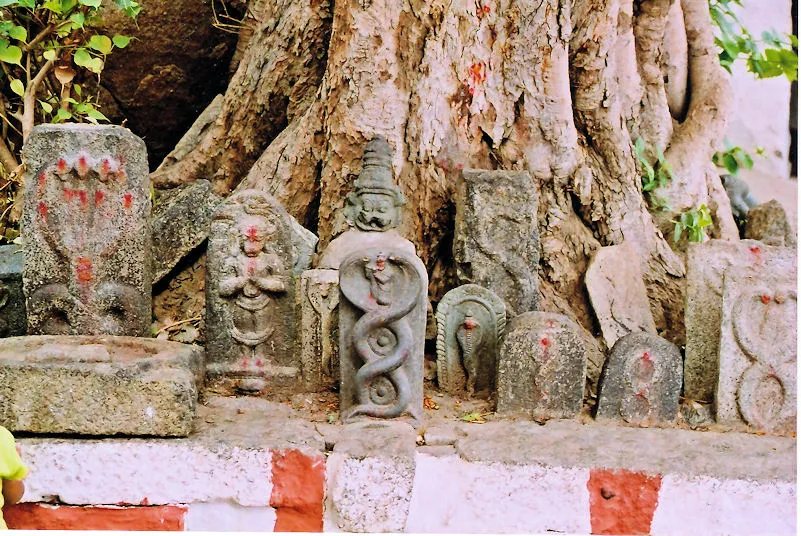
Fig.: नागदेवाः
(Image source: Details)
- Fig.: लक्ष्मी (Lakshmi): Painting by राजा रवि वर्मा (1848 - 1906). Image source: Wikipedia, Public domain.
- Fig.: नरसिंहः (Narasimha): Belur (ಬೇಲೂರು), Karnataka (ಕರ್ನಾಟಕ). Image source: Wikipedia, Public domain.
- Diagram (lekt1502.jpg): Diagram for the decomposition of compounds. Image source: Alois Payer / Original course graphic.
- Fig.: पूजा (Puja): A Puja ceremony held in Kakinada (ಕಾಕಿನಾಡ), Andhra Pradesh (ಆಂಧ್ರ ಪ್ರದೇಶ), India. Image source: Wikipedia, Public domain.
- Fig.: इन्द्रः (Indra): Folio from a Panchakalyanaka, Rajasthan, Amber. Image source: Wikipedia, Public domain.
- Fig.: सिंहः (Lion): Panthera leo persica. Image source: Wikipedia, GNU FDLicense.
- Fig.: व्याघ्रः (Tiger): Bandhavgarh National Park (बांधवगढ राष्ट्रीय उद्दान). Image source: U.S. Fish and Wildlife Service / Wikipedia, Public domain.
- Fig.: ग्रामदेवता (Gramadevata): Lord Virpanath @ Pasvadal village, Vadgam, Gujarat, India. Image source: ganuullu (Flickr), Creative Commons License.
- Fig.: नागदेवाः (Nagadevatas): Hampi (ಹಂಪೆ), Karnataka (ಕರ್ನಾಟಕ). Image source: Dineshkannambadi / Wikipedia, GNU FDLicense.