
Lesson 21
21.1. Further Present Stems in -nt
21.1.1. Present Participle (लडादेशः) Parasmaipada
This participle is a nominal formation derived from the present stem, i.e., a true participle. It is an adjective indicating that someone or something is currently performing the action expressed by the verbal root (+ prefix) while something else is happening. A permanent state can also be expressed with it.
Examples:
"While father reads, he smokes = the reading father smokes"
"a being (= real, true) friend"
| Formation des Partizip Present Parasmaipada zu thematischen Presentstämmen: | ||
|---|---|---|
| Masculine, Neuter | ||
| starker Stem | Present Stem + -nt- | |
| schwacher Stem | Present Stem + -t- | |
| Feminine | ||
| Present Stem + -nt- + -ī (Deklination wie devī देवी) | ||
| 6. Presentklasse | Present Stem + -nt- + -ī oder::brPresent Stem + -t- + -ī | |
Examples:
1. Present class:
yajant :brयजन्त् "one venerating with a sacrifice"
| Masculine पुंस् | Neuter नपुंसक | Feminine स्त्री | ||
|---|---|---|---|---|
| Singular एकवचन | 1. Nominative प्रथमा | यजन् aus yaja-nt-s | यजत् yaja-t-Ø | यजन्ती yaja-ant-ī |
| 2. Accusative द्वितीया | यजन्तम् yaja-nt-am | यजत् | wie devī देवी | |
| 3. Instrumental तृतीया | यजता yaja-t-ā | यजता | ||
| 6. Genitive षष्ठी | यजतस् yaja-t-as | यजतस् | ||
| Plural बहुवचन | 1. Nominative प्रथमा | यजन्तस् yaja-nt-as | यजन्ति yaja-nt-i | |
| 2. Accusative द्वितीया | यजतस् yaja-t-as | यजन्ति | ||
| 3. Instrumental तृतीया | यजद्भिस् aus yaja-t-bhis | यजद्भिस् | ||
| 6. Genitive षष्ठी | यजताम् yaja-t-ām | यजताम् |
Note the identity of यजन्ति (Nom. pl. Neuter) with the 3. pl. P.!
4. Present class
नृत्यन्त् "dancing"
- Masculine Nom. sg. नृत्यन्
- Neuter Nom. Acc. sg. नृत्यत्
- Feminine Nom. sg. नृत्यन्ती
6. Present class
विशन्त् "entering"
- Masculine Nom. sg. विशन्
- Neuter Nom. Acc. sg. विशत्
- Feminine Nom. sg. विशन्ती । विशती
| Formation des Partizip Present Parasmaipada zu athematischen Presentstämmen (ausser 3. Presentklasse): | ||
|---|---|---|
| Masculine, Neuter | ||
| starker Stem | Present Stem + -ant- | |
| schwacher Stem | Present Stem + -at- (Der Auslaut des schwachen Present Stemes lautet gleich wie vor der 3. Plur. P.) | |
| Feminine | ||
| Present Stem + -at- + -ī (Deklination wie devī देवी) | ||
2. Present class:
अस् "to be": सन्त् "being, genuine, good, true"
| Masculine पुंस् | Neuter नपुंसक | Feminine स्त्री | ||
|---|---|---|---|---|
| Singular एकवचन | 1. Nominative प्रथमा | सन् aus s-ant-s | सत् s-at-Ø | सती s-at-ī |
| 2. Accusative द्वितीया | सन्तम् s-ant-am | सत् | wie devī देवी | |
| 3. Instrumental तृतीया | सता s-at-ā | सता | ||
| 6. Genitive षष्ठी | सतस् s-at-as | सतस् | ||
| Plural बहुवचन | 1. Nominative प्रथमा | सन्तस् s-ant-as | सन्ति s-ant-i | |
| 2. Accusative द्वितीया | सतस् s-at-as | सन्ति | ||
| 3. Instrumental तृतीया | सद्भिस् aus s-at-bhis | सद्भिस् | ||
| 6. Genitive षष्ठी | सताम् s-at-ām | सताम् |
¹ सती "a good (faithful) woman (who burns herself with her husband's corpse in later times)" English: sati
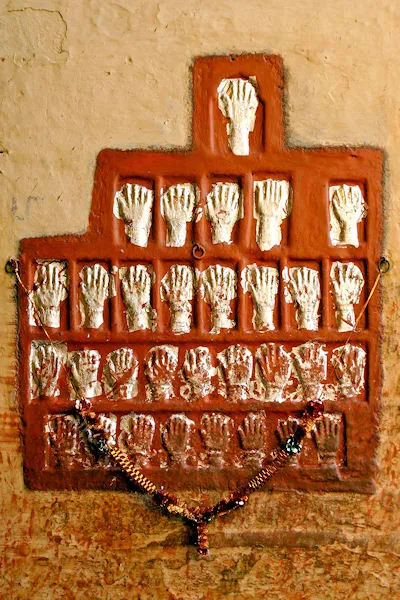
Fig.: सती memorial plaque
सती memorial plaque in the palace of Jodhpur - जोधपुर / Rajasthan - राजस्थान
(Image source: Details)
5. Present class:
सु "to press": सुन्वन्त्
- Masculine Nom. sg. सुन्वन्
- Neuter Nom. Acc. sg. सुन्वत्
- Feminine Nom. sg. सुन्वती
8. Present class
कृ "to do": कुर्वन्त्
- Masculine Nom. sg. कुर्वन्
- Neuter Nom. Acc. sg. कुर्वत्
- Feminine Nom. sg. कुर्वती
21.1.2. महान्त् "great"
| Masculine, Neuter | ||
| starker Stem | महान्त् | |
| schwacher Stem | महत् | |
| Feminine | ||
| महती wie devī देवी |
| Masculine पुंस् | Neuter नपुंसक | Feminine स्त्री | ||
|---|---|---|---|---|
| Singular एकवचन | 1. Nominative प्रथमा | महान् aus mahānt-s | महत् mahat-Ø | महती mahat-ī |
| 2. Accusative द्वितीया | महान्तम् mahānt-am | महत् | wie devī देवी | |
| 3. Instrumental तृतीया | महता mahat-ā | महता | ||
| 6. Genitive षष्ठी | महतस् mahat-as | महतस् | ||
| Plural बहुवचन | 1. Nominative प्रथमा | महान्तस् mahānt-as | महान्ति mahānt-i | |
| 2. Accusative द्वितीया | महतस् mahat-as | महान्ति | ||
| 3. Instrumental तृतीया | महद्भिस् aus mahat-bhis | महद्भिस् | ||
| 6. Genitive षष्ठी | महताम् mahat-ām | महताम् |
As the first member of a compound, instead of महत् महा appears:
Examples:
महादेव "the great god" (e.g. शिव)
महादेवी "the great goddess, the principal wife of a king (देव)"
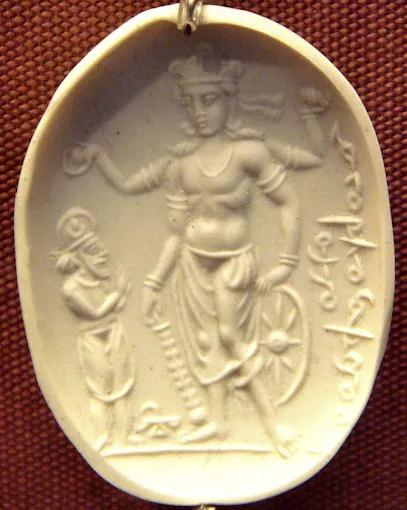
Fig.: महादेवो विष्णुः
"A 4th-6th century CE Sardonyx seal representing Vishnu with a worshipper. The inscription in cursive Bactrian reads: "Mihira, Vishnu and Shiva".
(Image source: Details)
"A 4th-6th century CE Sardonyx seal representing Vishnu with a worshipper. The inscription in cursive Bactrian reads: 'Mihira, Vishnu and Shiva'."
21.2. Sandhi for final nasals
After a short vowel, final nasals – except -m – are doubled before an initial vowel.
Example:
जयन् + अरिः » जयन्नरिः "the victorious enemy"
21.3. Polite forms of address
In Sanskrit, one can address someone in the 2nd person singular without being impolite. However, if one wishes to be polite, one can use a noun meaning "Venerable" and the like, and put the verb in the 3rd person singular or plural, or use a passive construction. The escalation of politeness in the use of person in address is roughly as follows:
2. sg. » 2. pl. » 3. sg. with corresponding noun » 3. pl. with corresponding noun
The most important such politeness noun is भवन्त् , fem.: भवती . It corresponds in its usage to our polite "You" (formal).
This भवन्त् is a contraction of भगवन्त्, its declension is that of nouns ending in -vant (see Lesson 13). This भवन्त् is to be distinguished from the present participle P of भू "to become" भवन्त् : the nom. sg. masc. of भवन्त् "You" (formal) is भवान्, that of the participle भवन्.
Examples:
किं भवान्करोति = किं भवता क्रियते = "What are you doing?"
more politely:
किं भवन्तः कुर्वन्ति = किं भवद्भिः क्रियते
Feminine:
किं भवती करोति = किं भवत्या क्रियते
किं भवत्यः कुर्वन्ति = किं भवतीभिः क्रियते
Further words that can be used similarly to भवन्त्:
- आर्य (f.: आर्या) "Noble". e.g. यदार्य इच्छति "What you wish"
- महाभाग "he whose share / fortune is great = Noble". Often used by women in address or when speaking about men of good standing. Very common in modern spoken Sanskrit.
If one wishes to express not only politeness but also reverence for someone, one uses अत्रभवन्त् instead of भवन्त् for someone who is present or nearby, and तत्रभवन्त् for someone absent or distant. अत्रभवन्त् and तत्रभवन्त् can be translated as "You", "Your Venerability", "Your Excellency", etc.:
किमत्रभवत्यत्रभवतां भार्या = "Is the gracious (here present) woman your wife?"
किं तत्रभवतां कुशलवृत्तम् (in a letter or telephone conversation) = "Are you well?"
21.4. Word List
भज् 1 U भजति Pass. भज्यते PPP भक्त : to allot to someone (Acc.), to assign, to love someone, to honor, to revere
thereof:
भक्ति f.: devotion, loyalty, love (in the religious sphere: love and respect for a personal god. see Basham, Wonder p. 332f.)
भाग m.: share, part
भग m.: (good) share, fortune, well-being, dignity
भगवन्त् 3: fortune-having, dignity-having (epithet of विष्णु – कृष्ण)
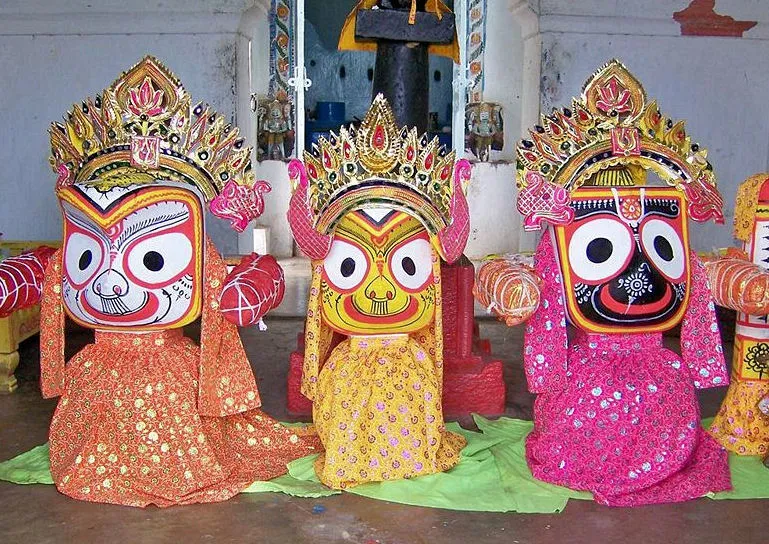
Fig.: भगवान्कृष्णः
भगवान्कृष्णः as जगन्नाथ (right) with his half-sister सुभद्रा (center) and his older brother बलराम, Orissa = ଓଡ଼ିଶा
(Image source: Details)
भगवद्गीता f.: "Song (गीता) of the Worthy One (कृष्ण)"
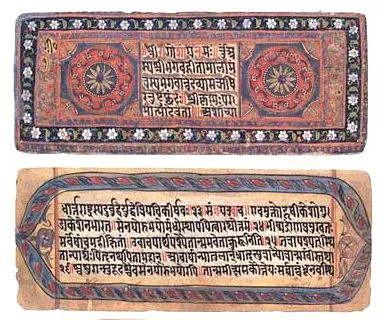
Fig.: भगवद्गीता
भगवद्गीता - Manuscript, 19th century.
(Image source: Details)
भिक्ष् 1 Ā भिक्षते Pass. भिक्ष्यते PPP भिक्षित (actually a desiderative of भज्: to wish that one participates): to beg
thereof:
भिक्षु m.: beggar, monk
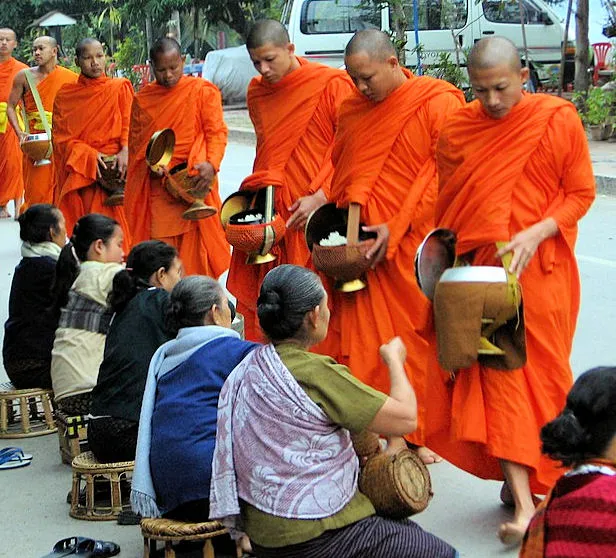
Fig.: भिक्षवः
Luang Prabang = ຫລວງພະບາງ, Laos = ປະເທດລາວ
(Image source: Details)
दुष् 4 P दुष्यति Pass. दुष्यते PPP दुष्ट : to ruin (intransitive), to go bad, to be disgraced
दोष m.: error
पच् 1 U पचति Pass. पच्यते (no PPP, instead पक्व 3: cooked, brewed) Absol. पक्त्वा : to cook (transitive) = to boil, to roast, to toast, etc.
21.5. Exercise
A) Translate the following compounds:
१. अनादिकालिकसंसारः
२. अनादिमध्यान्तः
३. महामैत्रीकरुणाचित्तः
४. सर्वहतान्धकारः
B) Translate:
मृतं दहन्नग्निः सतीमपि दहति ॥१॥
सद्गुरुर्महाकविस्तोत्रैर्महादेवं स्तौति ॥२॥
महान्ति फलान्यदन्तो बाला जलमापि पिबन्ति ॥३॥
पूजां कुर्वञ्जनो यजते च स्तौति च देवताम् ॥४॥
गुरूपनीतनरो द्विजः ॥५॥
जितक्रोधो घ्नन्तमप्यरिं न द्वेष्टि । क्रोधजितस्तु द्वेष्टि ॥६॥
lekt2101: सती memorial plaque in the palace of Jodhpur - जोधपुर / Rajasthan - राजस्थान [Image source: Flicka / Wikipedia. GNU FDLicense]
lekt2102: "A 4th-6th century CE Sardonyx seal representing Vishnu with a worshipper. The inscription in cursive Bactrian reads: "Mihira, Vishnu and Shiva". [Image source: PHGCOM / Wikipedia. GNU FDLicense]
lekt2103: भगवान्कृष्णः as जगन्नाथ (right) with his half-sister सुभद्रा (center) and his older brother बलराम, Orissa = ଓଡ଼ିଶा [Image source: Sujitkumar / Wikipedia. GNU FDLicense]
lekt2104: Luang Prabang = ຫລວງພະບາງ, Laos = ປະເທດລາວ [Image source: Hanoi Mark. -- http://www.flickr.com/photos/riverdaleto/112938743/. -- Accessed on 2008-12-12. -- Creative Commons License (Attribution, non-commercial use)]
lekt2105: भगवद्गीता - Manuscript, 19th century. [Image source: Wikipedia, Public domain]