
Lesson 40
40.1. सुभाषितानि
विद्या ददाति विनयं
विनयाद्याति पात्रताम् ।
पात्रत्वाद्धनमाप्नोति
धनाद्धर्मं ततः सुखम् ॥१॥
सुखार्थी चेत्त्यजेद्विद्यां
विद्यार्थी चेत्त्यजेत्सुखम् ।
सुखार्थिनः कुतो विद्या
कुतो विद्यार्थिनः सुखम् ॥२॥
आचार्यात्पादमादत्ते
पादं शिष्यः स्वमेधया ।
पादं सब्रह्मचारिभ्यः
पादं कालक्रमेण च ॥३॥
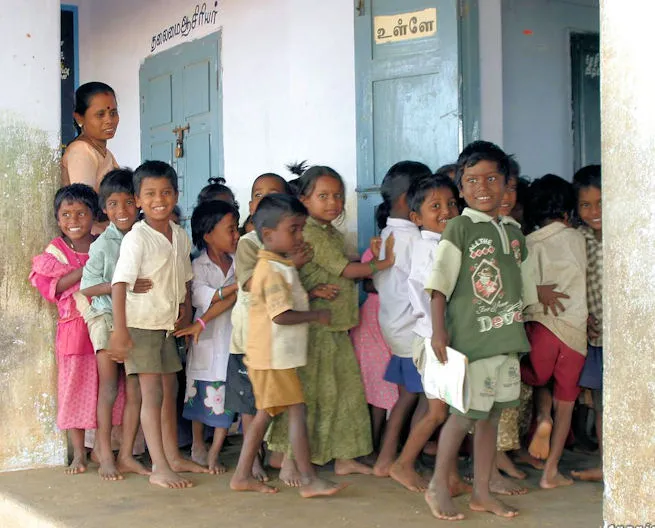
Fig.: पादं सब्रह्मचारिभ्यः
(Image source: Details)
40.2. Formation of the first person perfect verb forms (लिट्)
Endings of the first person (तृतीयः) in the perfect (लिट्)
| परस्मैपदम् | ← | आत्मनेपदम् | ← |
|---|---|---|---|
| एकवचनम् | बहुवचनम् | एकवचनम् | बहुवचनम् |
| -a | -ma | -e | -mahe |
Note that the endings of the 1st person singular P,Ā are identical to those of the 3rd person singular. Therefore, in all perfect types except type III(a,b) and type V(a,b,c), the forms of the 1st singular P or Ā are always identical to those of the 3rd singular P or Ā.
In type IV, the 1st sg. P ends like the 3rd sg. P in -au.
In perfect types III and V, the 1st singular Ā is always identical to the 3rd singular Ā.
In perfect types III and V, the 1st singular P and the 3rd singular P are optionally identical: the 3rd sg. P must always be in the guṇa grade for these formation types, while the 1st sg. P can optionally be in the strong grade or the guṇa grade.
Before consonant-initial endings, the connecting vowel -i- occurs with the majority of roots.
Except before the ending -re, before which -i- must always occur, the connecting vowel before consonant-initial endings never occurs with eight roots ending in -ṛ or -u, namely
- कृ 8U (except संस्कृ)
- भृ 1U
- वृ 9U "to choose"
- सृ 1P
- द्रु 1p "to run"
- श्रु 5P
- स्तु 2U
- स्रु 1P "to flow"
With so-called optional अनिट्-roots, the connecting vowel may optionally be inserted or not. (List of these roots in Kielhorn, Grammar p. 92 § 298b,2,3)
40.2.1. Perfect Type I: no stem gradation
1.sg. = 3.sg.
Verbs following this type:
- Consonant-Long Vowel-Consonant
- Consonant-Vowel-Consonant-Consonant
- a-Consonant(-Consonant)
- ā-Konsonant
बन्ध् 9P
- 1.sg.P बबन्ध
- 1.pl.P बबन्धिम
जीव् 1P
- 1.sg.P जिजीव
- 1.pl.P जिजिविम
अश् 5Ā
- 1.sg.Ā आनशे
- 1.pl.Ā आनशिमहे
अस् 2P and अस् 4P
- 1.sg.P आस
- 1.pl.P आसिम (a + as-i-ma)
40.2.2. Perfect Type II: strong stem strong grade, weak stem low grade
Verbs following this type:
- (Consonant-)i/u/ṛ/ḷ-Consonant
भिद् 7U
1.sg.P बिभेद
1.pl.P बिभिदिम
1.sg.Ā बिभिदे
1.pl.Ā बिभिदिमहे
मुह् 4P optionally अनिट्
1.sg.P मुमोह
1.pl.P मुमुहिम । मुमुह्म
40.2.3. Perfect Type III: Strong stem Guṇa/long vowel grade
1.sg.P optionally Guṇa or long vowel grade
40.2.3.1. Perfect Type IIIa: Strong stem Guṇa/long vowel grade, weak stem Low grade
Verbs following this type:
- (Consonant-)(Consonant-)i/ī/u/ū
- (Consonant-)-ṛ
इ 2P
1.sg.P इयाय । इयय (i+e+a)
1.pl.P ईयिम (i+iy+i+ma)
नी 1U
1.sg.P निनाय । निनय
1.pl.P निन्यिम (ni-nī + i + ma !!!)
1.sg.Ā निन्ये
1.pl.Ā निन्यिमहे
स्तु 2U strictly अनिट्
1.sg.P तुष्टाव । तुष्टव (tu-sto + a)
1.pl.P तुष्टुम
1.sg.Ā तुष्टुवे
1.pl.Ā तुष्टुमहे
कृ 8U strictly अनिट्
1.sg.P चकार । चकर
1.pl.P चकृम
1.sg.Ā चक्रे
1.pl.Ā चकृमहे
40.2.3.2. Perfect Type IIIb: Strong stem Guṇa/long vowel grade, weak stem Guṇa grade
Verbs following this type:
- (Consonant-)(Consonant-)-ṝ
- Konsonant-Konsonant-ṛ
पॄ 3P
1.sg.P पपार । पपर
1.pl.P पपरिम
स्मृ 1P
1.sg.P सस्मार । सस्मर
1.pl.P सस्मरिम
संस्कृ 8U
1.sg.P सञ्चस्कार । सञ्चस्कर
1.pl.P सञ्चस्करिम
1.sg.Ā सञ्चस्करे
1.pl.Ā सञ्चस्करिमहे
40.2.4. Perfect Type IV: Roots ending in -ā / -ai
- Strong stem:
- 1.,3. sg. Parasamaipadiya: -au
- Weak stem:
- before consonant: Low grade-i
- before vowel: Low grade-ø
दा 3U
1.sg.P ददौ
1.pl.P ददिम (da-d-i-ma)
1.sg.Ā ददे
1.pl.Ā ददिमहे
40.2.5. Perfect Type V: Consonant-a-Consonant
1.sg.P. optionally Guṇa or long vowel grade
40.2.5.1. Perfect Type Va: Consonant-a-Consonant, weak stem Low grade
Verbs following this type:
- gam "to go"
- han (»ghan) "to strike"
- jan "to be born"
- vac "to speak"
- vad "to speak"
- yaj "to sacrifice"
- etc.
गम् 1P
1.sg.P जगाम । जगम
1.pl.P जग्मिम (ja-gm-i-ma)
हन् 2P
1.sg.P जघान । जघन
1.pl.P जघ्निम
जन् 4Ā
1.sg.Ā जज्ञे
1.pl.Ā जज्ञिमहे
वच् 2P
1.sg.P उवाच । उवच
1.pl.P ऊचिम (u + uc-ima)
वद् 1P (Ā)
1.sg.P उवाद । उवद
1.pl.P ऊदिम
1.sg.Ā ऊदे
1.pl.Ā ऊदिमहे
यज् 1U
1.sg.P इयाज । इयज
1.pl.P ईजिम
1.sg.Ā ईजे
1.pl.Ā ईजिमहे
40.2.5.2. Perfect Type Vb: Consonant-a-Consonant, initial consonant not guttural, aspirate, h, Weak stem without reduplication, with -e-
पच् 1U
1.sg.P पपाच । पपच
1.pl.P पेचिम
1.sg.Ā पेचे
1.pl.Ā पेचिमहे
40.2.5.3. Perfect Type Vc: Consonant-a-Consonant, weak stem strong grade
Verbs that follow this type:
- All other roots with medial -a-
क्रम् 1U
1.sg.P चक्राम । चक्रम
1.pl.P चक्रमिम
1.sg.Ā चक्रमे
1.pl.Ā चक्रमिमहे
40.2.6. Special Perfect formations
विद् 2P present perfect:
1.sg.P वेद (= 3.sg.P)
1.pl.P विद्म
अह् 1st person not commonly used!
भू 1P
1.sg.P बभूव (= 3.sg.P)
1.pl.P बभूविम
जि 1P
1.sg.P जिगाय (= 3.sg.P) । जिगय
1.pl.P जिग्यिम (ji-gi + i + ma !)
40.3. Formation of the verb forms of the first person of the periphrastic perfect (अनुप्रयोगलिट्)
The periphrastic perfect is formed from:
- derived verbal stems (causative, desiderative, frequentative, denominative), especially causative
- roots that begin with a long vowel (except ā)
- roots: vowel (except a-)-consonant-consonant
- some others
- for some roots both perfects can optionally be formed: uṣ "to burn", vid "to know", jāgṛ "to wake", daridrā "to be poor"
- for the following roots both perfects can optionally be formed and also the periphrastic perfect is reduplicated, namely with the reduplication syllable of the present stem:
- bhī "to fear"
- bhṛ "to carry"
- hu "to sacrifice"
- hrī "to be ashamed"
ईक्ष् 1Ā
1.sg.Ā ईक्षां चक्रे । ईक्षामास । ईक्षां बभूव
1.pl.Ā ईक्षां चकृमहे । ईक्षामासिम । ईक्षां बभूविम
बन्ध् Causative P: बन्धयति
1.sg.P बन्धयां चकर । बन्धयां चकार (= 3.sg.P) । बन्धयामास (= 3.sg.P) । बन्धयां बभूव (= 3.sg.P)
1.pl.P बन्धयां चकृम । बन्धयामासिम । बन्धयां बभूविम
40.4. Syntax of the first person (तृतीयः)
Since a finite verb (conjugated verb) expresses the agent (कर्तृ), the "I", "we" in non-passive verbal sentences with finite verb does not need to be expressed additionally by a personal pronoun
40.5. Personal pronouns (पुरुषार्थकसर्वनाम) of the 1st person singular and plural
The form of the personal pronoun (personal pronoun) is the same for all genders.
| एकवचनम् "ich" | बहुवचनम् "wir" | |
|---|---|---|
| प्रथमा | अहम् | वयम् |
| द्वितीया | माम् / मा | अस्मान् / नस् |
| तृतीया | मया | अस्माभिस् |
| चतुर्थी | मह्यम् / मे | अस्मभ्यम् / नस् |
| पञ्चमी | मत् | अस्मत् |
| षष्ठी | मम / मे | अस्माकम् / नस् |
| सप्तमी | मयि | अस्मासु |
The shorter forms, which stand in second place above (मा, मे, नस्) must never be used at the beginning of a sentence or verse.
Before the particles च, वा, एव, these so-called enclitic forms must not be used either:
only: ... मां च ... "and me"
The genitive (षष्ठी) of the personal pronouns is used as a possessive pronoun:
मम । मे = "my"
अस्माकम् । नस् = "our"
As the first member of compounds, the stems for these pronouns are:
- sg. मद्
- pl. अस्मद्
e.g. मत्पुस्तकम् "my book" ; अस्मद्पुस्तकानि "our books"
40.6. Word List
पात्र n.: Venerable, Master, Worthy One
मेधा f.: Wisdom, Intellect, Thought
पुस्तक m.n.: Manuscript, Book
कॢप् 1Ā कल्पते : to be in proper order, to fit (Loc.) ; to take shape, to form ; to resolve to, to condescend to (Dative)
Perf. II चकॢपे optionally अनिट्
Fut. कल्पिष्यते । कल्प्स्यते
Caus. कल्पयति : to put in order, to create, to form in the imagination, to imagine
PPP कॢप्त
Inf. कल्पितुम् । कल्प्तुम्
from this:
कल्पना f.: The forming in thought, the assumption of something non-existent in reality, fiction
कॢप् + वि Caus. विकल्पयति : (to imagine differently =) to question, to doubt
from this:
विक्ल्प m.: Alternative, doubt
तुद् 6U तुदति : to strike
Perf. II तुतोद, तुतुदुर्
Fut. तोत्स्यति
Pass. तुद्यते
Caus. तोदयति
PPP तुन्न (tud + na)
Inf. तोत्तुम्
तॄ 1P तरति : to cross over, to cross, to save oneself from someone (Acc. = to cross someone)
Perf. IIIb ततार, ततरुर् । तेरुर्
Fut. तरिष्यति । तरीष्यति
Pass. तीर्यते
Caus. तारयति
PPP तीर्ण
Inf. तरितुम् । तरीतुम्
from this:
तीर्थ n.: Ford, sacred bathing place, pilgrimage site
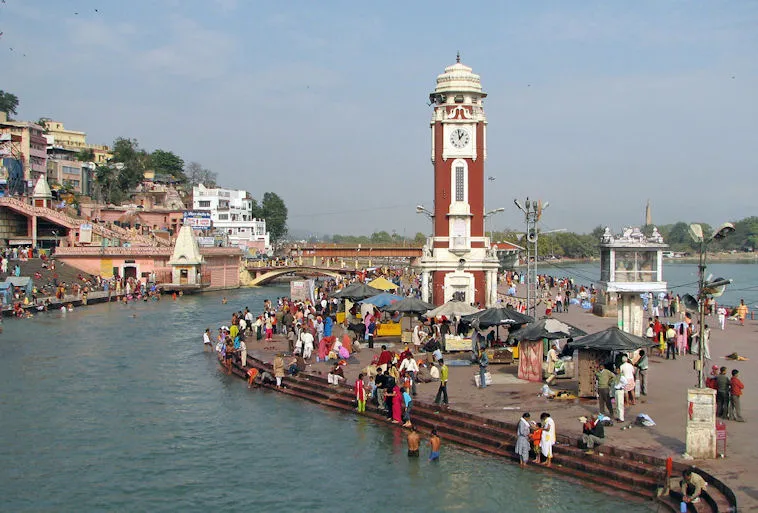
Fig.: हरिद्वारे तीर्थम्
(Image source: Details)
तीर्थङ्कर m. (from: तीर्थम्+ कृ): Ford-maker (beyond suffering) = the 24 teachers of the Jains
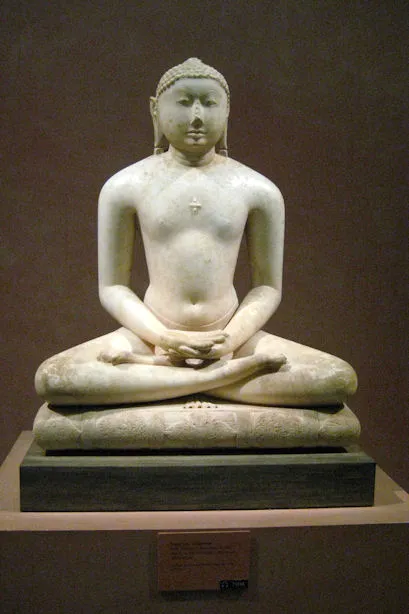
Fig.: तीर्थङ्करः
(Image source: Details)
अव Preverb.: down, downward, away, off-
तॄ + अव 1P अवतरति : to descend
from this:
अवतार m.: (Descender, Descent) Incarnation of a god, esp. Viṣṇu's 10 incarnations (see Basham, Wonder pp. 304 - 309)
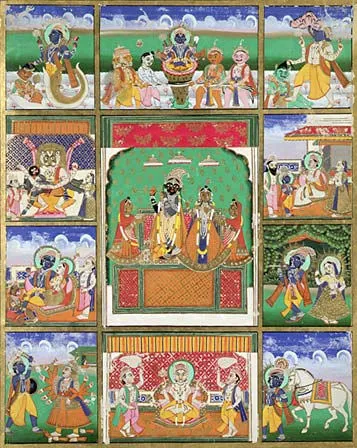
Fig.: विष्णोर्दशावताराः
(Image source: Details)
स्वप् 2P स्वपिति, स्वपन्ति : to sleep, to go to sleep
Impf. अस्वपीत् । अस्वपत्
Perf. सुष्वाप, सुषुपुर्
Fut. स्वप्स्यति
Pass. सुप्यते (from *svp-ya-te)
Caus. स्वापयति
PPP सुप्त
Inf. स्वप्तुम्
from this:
स्वप्न m.: Sleep, dream
सुप्ति f. (from *svp-ti): Sleep, esp. deep sleep
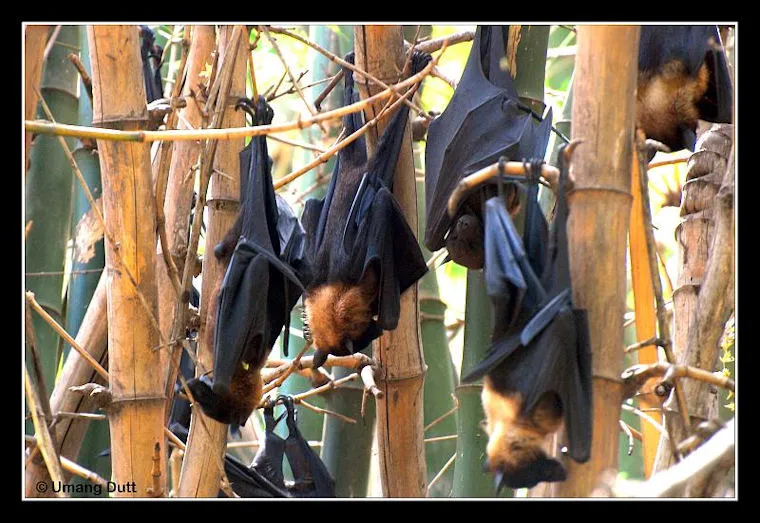
Fig.: स्वपन्ति
(Image source: Details)
40.7. Exercise
A) Translate the सुभाषितानि at the beginning of the lesson.
B) Transform the following verbal forms into the corresponding perfect forms. If there are multiple possibilities, please provide all possibilities.
(Explanation of symbols: अ = अनिट्, इ = optional अनिट्)
- अश्नीमः
- स्मः
- स्रक्ष्यामि
- स्तुमहे अ
- वर्धामहे
- आवर्ते
- सेक्ष्यामि
- अलुभ्याम
- रुन्धे
- रोदिमि
- अयुध्यामहि
- युञ्ज्मः
- अजानीम
- ददामि
- अबिभयम्
- वच्मः
- कामये
- वसामः
- अभवाम
- अस्यामि
- अबिभ्रि अ
- कल्पामहे इ
- त्यज्यामि
- अतरम्
- चिन्मः
- पृच्छामः
- अनश्याम इ
- चरामः
- अवदाम
- शोचयामः
- दध्महे
- पिबामि
- धरामः
- म्रिये
- दूषयामः
- मन्ये
- स्वपिमः
- पामि
- शृणुमः अ
- अतुदम्
- अमिम
- तिष्ठामि
- अवहाम
- अकुर्महि अ
- जहीमः
- अस्पृशम्
- नेष्यामः
- तन्महे
- अक्रीणि
- पुने
- भुञ्ज्मः
- स्मरिष्यामः
- अभजाम (follows Type Vb)
- जेष्यामः
- आसे (periphrastic)
- विन्दामः
- धक्ष्यामः
- शक्नुमः
- भिनद्मि
- भोत्स्ये
- लभे
- नर्तिष्यामि
- अगमयम्
- द्विष्महे
- चोरये
- अजुहुम
- अहनम्
- पश्यामः
- ईक्षे
40.8. Review Exercise on Morphology
- ददे
- ददते
- पापे
- आसे
- एते
- इते
- इतः
- यतः
- यते
- ईयते
- यत्
- यदा
- अस्तुवि
- अस्तुवति
- अस्तवीत्
- ब्रह्मिणः
- ब्रह्मणः
- ब्राह्मणः
- लभे
- लाभे
- लेभे
- लोभे
- काश्चन
- तन्त्रे
- तत्र
- मनौ
- मेने
- सत्स्यामि
- वेत्स्यामः
- कच्चित्
- तत्त्यागः
- तत्याज
- विद्ये
- विद्याम्
- एनेन
- ऐक्षे
- आह
- आहन्
- Image lekt4005.jpg (Fig.: पादं सब्रह्मचारिभ्यः): Vadaseri, Thanjavur District = தஞ்சாவூர் மாவட்டம் [Image source: kifo. -- http://www.flickr.com/photos/turningpoint/2209292/. -- Accessed on 2009-01-02. -- Creative Commons License (Attribution, share alike)]
- Image lekt4003.jpg (Fig.: हरिद्वारे तीर्थम्): [Image source: mckaysavage. -- http://www.flickr.com/photos/mckaysavage/2085710183/. -- Accessed on 2009-01-02. -- Creative Commons license (Attribution)]
- Image lekt4002.jpg (Fig.: तीर्थङ्करः): [Image source: wallyg. -- http://www.flickr.com/photos/wallyg/1657905479/. -- Accessed on 2009-01-02. -- Creative Commons License (Attribution, non-commercial use, no derivatives)]
- Image lekt4001.jpg (Fig.: विष्णोर्दशावताराः): Clockwise: मत्स्य, कुर्म, वाराह, वामन, कृष्ण, कल्कि, बुद्ध, परशुराम, राम, नरसिंह, in the center: कृष्ण [Image source: Wikipedia. Public domain]
- Image lekt4004.jpg (Fig.: स्वपन्ति): Indian flying foxes (Pteropus giganteus), Ahmedabad = અમદાવાદ [Image source: Umang Dutt. -- http://www.flickr.com/photos/snapflickr/2456084948/. -- Accessed on 2009-01-02. -- Creative Commons License (Attribution, non-commercial use, no derivatives)]