
Lesson 20
20.1. Possessive Compounds = बहुव्रीहि m.
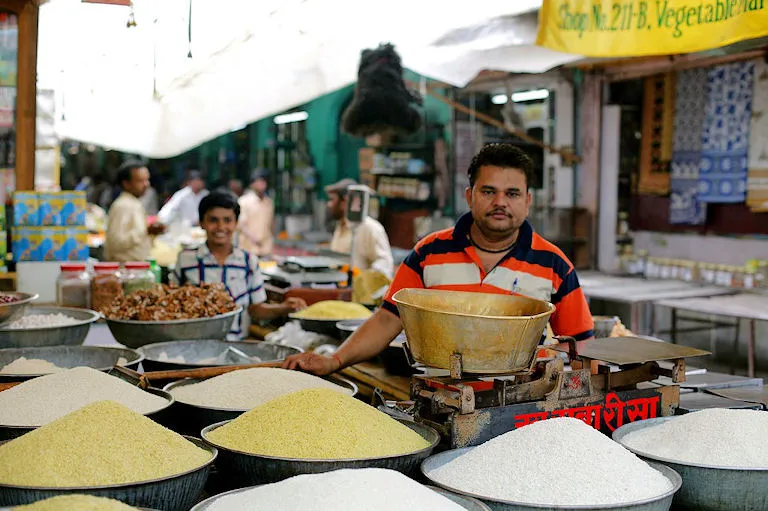
Fig.: बहुव्रीहिः पुरुषः
Jodhpur = जोधपुर
(Image source: Details)
बहुव्रीहिः = बहवो व्रीहयो यस्य सः = "one who possesses much rice"
A Bahuvrīhi denotes something different from what is expressed by its members: whereas बालपुत्रः resolved as a Tatpuruṣa means "a young son," i.e., something expressed by the final member of the compound (पुत्र), बालपुत्रः resolved as a Bahuvrīhi means "one whose son is young," i.e., the denoted entity is neither the son (पुत्र) nor necessarily young (बाल), but a person distinct from the young son, namely his father.
Possessive compounds are initially always adjectives, which can, however, be substantivized. Therefore, the grammatical gender of a Bahuvrīhi depends on what the Bahuvrīhi refers to, and not on the gender of the final member of the compound.
Schema for resolving a Bahuvrīhi:
1. First member usually in the Nominative (प्रथमा) Singular, Dual, or Plural -- 2. Second member in the Nominative Singular, Dual, or Plural -- Relative pronoun in a case other than the Nominative (usually Genitive - षष्ठी) and in gender and number of the total Bahuvrīhi -- Demonstrative pronoun in number, case, and gender of the total Bahuvrīhi.
Examples:
गतपापः = गतं पापं यस्य सः = "one whose evil has gone" = "one who is free from misdeeds"
Acc. sg. गतपापम् = गतं पापं यस्य तम्
Inst. sg. गतपापेन = गतं पापं यस्य तेन
Gen. sg. गतपापस्य = गतं पापं यस्य तस्य
Nom. pl. गतपापाः = गतानि पापानि yeषां ते
etc.
अस्तमोहा = अस्तो मोहो यया सा = "a (woman) who has cast off delusion"
प्राप्तोदको ग्रामः = प्राप्तमुदकं यं s ग्रामः = "A village to which the water has come" = "a village threatened by flooding"
पुण्यवत्पुत्रः as a Bahuvrīhi = पुण्यवान्पुत्रो यस्य सः, or: पुण्यवन्तः पुत्रा यस्य सः = "one whose son possesses merit" or: "one whose sons possess merit"
The relationship between the first and second member in a Bahuvrīhi can be:
- attributive
- appositional
- casual
- adverbial
As with the Tatpuruṣa, the more specifically determined member usually stands in the second position.
Traditionally, one distinguishes:
समानाधिकरणबहुव्रीहिः : in विग्रहवाक्य the first and second members are in the same case
व्यधिकरणबहुव्रीहिः : in विग्रहवाक्य the first and second members are in different cases
20.2. Bahuvrīhi with an attributive first member
Schema:
Adjective -- Noun
Example:
गुणवत्पुत्रो ब्राह्मणः = गुणवान्पुत्रो यस्य स ब्राह्मणः = "a Brahmin, whose son / sons possesses / possess good qualities"
Especially frequent is the -- rare in Tatpuruṣa -- attributive determination by a PPP. The relative pronoun then usually stands in the instrumental (तृतीया) (rarely in the genitive / षष्ठी).
Rule of thumb:
- PPP - noun = mostly Bahuvrīhi
- noun -- PPP = mostly Tatpuruṣa
Example:
कृतफल ३ = कृतं फलं yeन सः । यया सा । yeन तत् = "one / a / an, who / which has produced a result, someone / something effective"
20.3. Bahuvrīhi with appositional first member
Schema:
Noun -- Noun
Examples:
शूरपुत्रो नरः = शूरा एव पुत्रा यस्य स नरः = "a man, whose sons are heroes"
तदन्त ३ = सो ऽन्तो यस्य सः । यस्याः सा । यस्य तत् = "the / that, whose end is this" = "ending with that"
Very important are appositional Bahuvrīhi with the final members आदि । आदिक । आद्य "first, beginning", less frequently प्रभृति "beginning". Such compounds correspond to "etc.":
Example:
देवा इन्द्रादयः = इन्द्र आदिर्येषां ते देवाः = "the gods, whose beginning is Indra" = "the gods Indra etc." = "Indra and the remaining gods"
To express "only", one can use bahuvrīhis with मात्रा f. "measure, limit" as the final member:
Example:
शब्दमात्रम् = शब्दो मात्रा यस्य तत् = "that, whose measure is a word" = "only a word"
मात्र after a PPP is to be translated as "as soon as":
Example:
जातमात्रं शत्रुं घ्नन्ति = जातं मात्रा यस्य तं शत्रुं घ्नन्ति = "they slay an enemy, whose measure is the arising" = "they slay the enemy as soon as he has arisen"
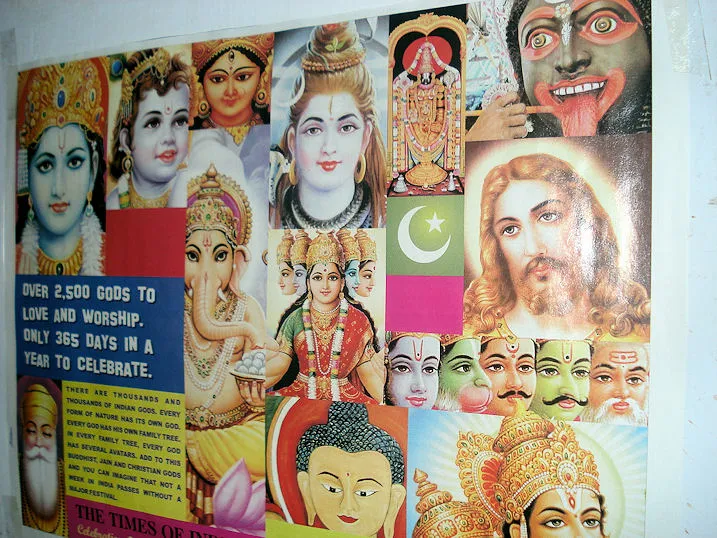
Fig.: देवा यीश्वादयः
Jesus and the remaining gods, Ahmedabad
(Image source: Details)
20.4. Bahuvrīhi with casus obliquus first member
i.e. Bahuvrīhi, whose first member represents a case other than the nominative (प्रथमा).
Example:
देवरूपा = देवस्यैव रूपं यस्याः सा = "a (woman), whose form is that of a god" "a woman of divine appearance"
Exception to the general rule regarding the order of compound members:
The casus obliquus member stands in the second position if it denotes a body part (esp. the hand):
Example:
दण्डहस्तः = दण्डो हस्ते (Loc. sg.) यस्य सः = "one, in whose hand a staff is located" = "one who carries a staff in his hand."
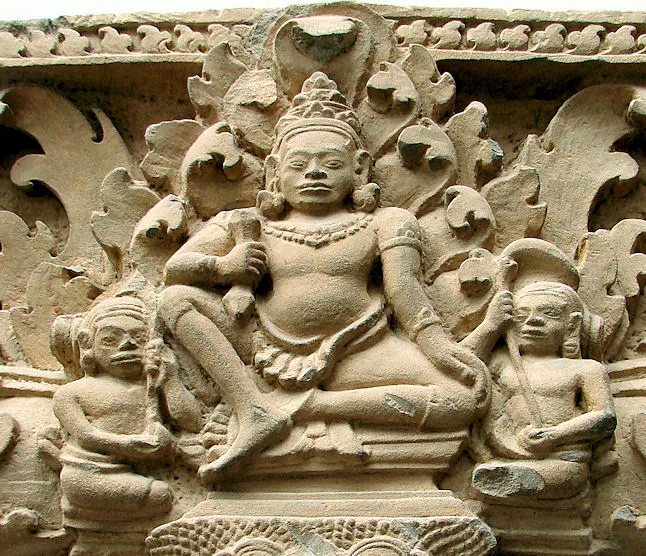
Fig.: इन्द्रो वज्रपाणिः
Siemreap (ក្រុងសៀមរាប), Cambodia, 9th cent. CE
(Image source: Details)
20.5. Bahuvrīhi with adverbial first member
The first member contains an adverb, a preposition, a preverb, or another indeclinable; such compounds are generally नित्यसमास.
Examples:
अपुत्रो नरः = पुत्रो यस्य नास्ति स नरः = "a man who has no son" = "a sonless man"
दुर्बल ३ = "someone / something whose strength is bad" = "weak, feeble"
सह "with" as the first member of a Bahuvrīhi is often replaced by स.
Example:
सपुत्रः = सहपुत्रः = पुत्रेण सहितः । पुत्रेण सह् = "with a son", "accompanied by a son"
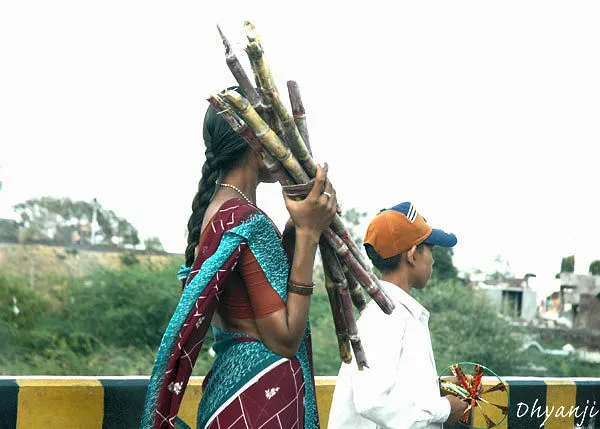
Fig.: सपुत्रा
Madhya Pradesh
(Image source: Details)
20.6. Inflection of the final member of a Bahuvrīhi
The final member of a Bahuvrīhi is inflected as a multi-gender adjective, regardless of its original gender. Thus, if in a compound the final member has a gender different from its original one, it must be a Bahuvrīhi, unless it is a Samāhāradvanva (Neuter singular).
In adjectivization,
- -ā-stems in Masculine and Neuter become -a-stems
- -a-stems (m., n.) form their Feminine on -ā or -ī
- -ī-stems (f.) must take the suffix -ka, -kā, -ka (n.) at the end of Bahuvrīhis; this suffix can or must also be taken by many other Bahuvrīhis
20.7. Another classification of types of Bahuvrīhis
The examples here are given for later study; for some, the necessary grammar and vocabulary have not yet been discussed.
- qualifying word in the first member -- qualified word in the second member: स्थिरचित्तः = स्थिरं चित्तं यस्य सः
- indeclinables in the first member: उच्चैःश्रवस्
- comparison in the first member: कुशाग्रधीः = कुशाग्र इव धीर्यस्य सः
- implicit comparison: उष्ट्रमुखः = उष्ट्रस्य मुखमिव मुखं यस्य सः = "camel-mouthed" = whose mouth is like that of a camel
- numeral as the second member for approximate number: उपसशाः = दशानां समीपे ये सन्ति ते = "approximately ten"
- both members are numerals: एकद्वाः = एको वा द्वौ वा = "one or two"
- with sa-/saha- in the first member: सपुत्रः । सहपुत्रः
- with sa- (= समान) in the first member: सजनपदः = समानो जनपदो यस्य सः
- नञ्बहुव्रीहिः = with a-/an- in the first member: अपुत्रः = न विद्यते पुत्रो यस्य सः ; अनङ्गः = न विद्यते अङ्गं यस्य सः
- with preposition etc. in the first member: प्रवातः =प्रकृष्टो वातो यस्मिन् सः ; निर्धनः = निर्गतं धनं यस्मात्सः ; सुबुद्धिः = सुष्ठु बुद्धिर्यस्य सः ; दुर्बुद्धिः = दुष्टा बुद्धिर्यस्य सः
- directional terms to indicate intermediate directions: पुर्वोत्तरा "northeast"
- PPP as the first member: कृतकटः = कृतः कटो येन सः
- and others
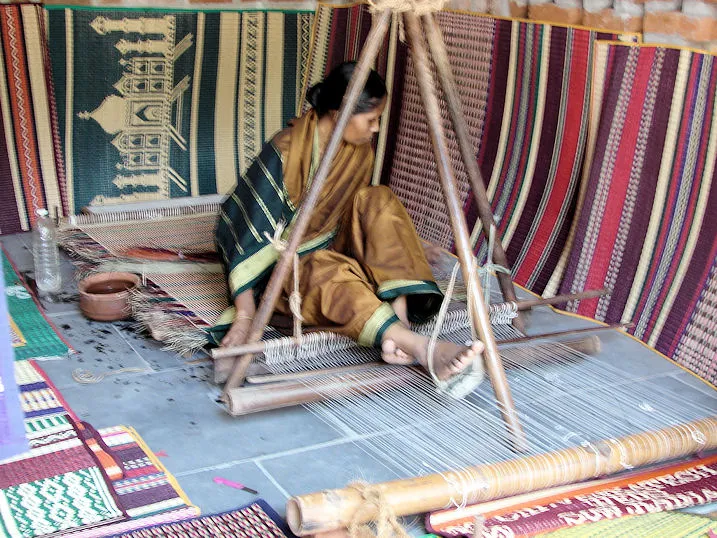
Fig.: कृतकटा
Chennai = சென்னை
(Image source: Details)
20.8. Relationship between Bahuvrīhi and Relative Clause
Although every Bahuvrīhi can be resolved into a relative clause, not every relative clause can be replaced by a Bahuvrīhi. Hermann Georg Jacobi (1850 - 1937), who examined the relationship between the two in more detail (Compositum und Nebensatz, 1897), writes:
"If one translates from German or another modern language into Sanskrit, not all subordinate clauses can be rendered by compounds, but only the embellishing and descriptive ones; those, however, which contain a conceptually necessary or important determination, also appear in Sanskrit as relative clauses."
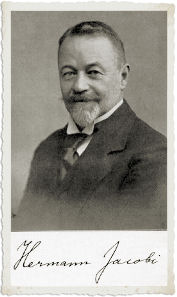
Fig.: Hermann Jacobi
(Image source: Details)
That may be true. However, then the Indians view many things as embellishing and descriptive, which we would consider "conceptually necessary or important."
20.9. Word List
वा : or
आश्रम m., n.: hermitage, stage of life, phase of life (namely as ब्रह्मचरिन्, गृहस्थ, वनप्रस्थ and possibly as सन्न्यासिन् ; see Basham, Wonder p. 159f.)
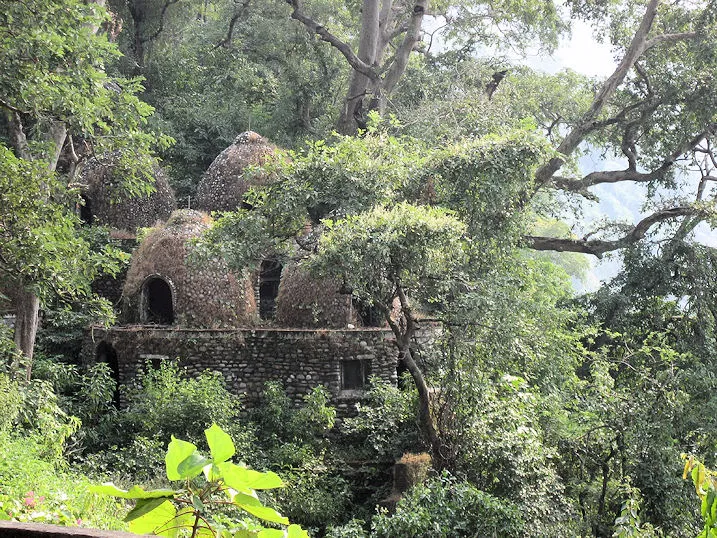
Fig.: आश्रमः
Rishikesh = ऋषिकेश. "This is actually part of the Ashram in Rishikesh where the Beatles stayed. This specific part was not there when they were there, but it does look cool."
(Image source: Details)
कर ३ f. करी । करा : doing, making, causing
कर m.: hand (to कृ 8)
कर m.: payment, tribute, tax (not to कृ, but probably loanword from Tamil - தமிழ்)
क्रिया f.: action, sacred action, sacrificial action, ceremony (to कृ 8)
अधि prefix: over, on, up, with reference to
गम् +अधि 1 P अधिगच्छति : encounter, reach, attain
तनूकृ 8 U तनूकरोति : reduce, weaken
दायक ३ f.: दायिका : giving, bestowing
नृप m.: "protector of men" = king
प्रणिधान n.: application, effort, attention against, helpfulness, reflection, vow
बाधना f.: distress, plague, torment
भार्या f.: "that which is to be maintained" = wife
भावना f.: meditative unfolding (to भू causative)
मही f.: earth, ground, soil
लक्षण n.: feature, sign, attribute
विप्र m.: "trembler" = poet, singer, priest, Brahmin
विषय m.: area, region, object, sense object
अपवर्ग m.: end, liberation
नि prefix: downwards, down, into, backwards
वृत् + नि 1 Ā निवर्तते : turn around, return
सद् 1 P सीदति (!) Pass. सद्यते PPP सन्न : sit, settle down
सद् + प्र 1 P प्रसीदति : to sit, to be seated (in a figurative sense) = to become composed, calm, cheerful; to be gracious to someone (Genitive षष्ठी)
समाधि m.: inner collection, highest attention, meditative "absorption"
स्वाध्याय m.: "self-study", recitation (especially of the Veda), Vedic study
परलौकिक ३ : pertaining to the beyond, otherworldly
तनु ३ : slender
मध्य ३ : middle; n. middle
पृथु ३ (पृथ्वी) : wide, broad, large
श्रोणि । श्रोणी f.: hip
रक्त ३ : dyed, red
ओष्ठ m.: lip
असित ३ : dark, black
ईक्ष् 1 Ā ईक्षते Pass. ईक्ष्यते PPP ईक्षित : see
नम् 1 P नमति Pass. नम्यते PPP नत : bend
उद् Preverb: up, upward, out, out-
नाभि f.: navel
वपुस् n.: beauty, form of the body (declension see later)
स्त्री f.: woman
स्तन m.: breast
दरैद्र ३ : poor
ऋध् 5 P ऋध्नोति Pass. ऋध्यते PPP ऋद्ध : thrive
ऋध् + सम् : thrive; PPP: successful, rich
विचित्र ३ : multicolored, various, beautiful, wonderful, strange
विधि m.(!): order, law, regulation; creation, fate
चेष्ट् 1 Ā चेष्टते Pass. चेष्ट्यते PPP चेष्टित : move
20.10. Exercise 1
Resolve the following compounds into Bahuvrīhi and/or Dvandva and/or Tatpuruṣa in all ways you consider possible in Sanskrit (exception: compounds with adverbial first member). Translate these differently resolved compounds into German, and indicate the gender, case, and number of the entire compound.
- इन्द्रशत्रवः
- दुष्कुलायाः
- जातिमात्रस्य
- प्राप्तोदकाः
- सुनीतिभिः
- मृतपुत्रः
- गतपुण्येन
- आर्यरूपम्
- मुक्तासनया
- तद्रूपः
- कृतफलानाम्
- व्याघ्रबलाः
- प्राप्तकाला
- शूरपुत्राम्
- कृताभिषेकः
- शूरबलान्
- वीतमोहः
- द्ण्डहस्तस्य
- गतमात्रम्
- इन्द्रपुत्रा
- तद्गुणाः
- उपल्ब्धसुखैः
- प्राप्तप्रभावः
- तन्मात्राणि
- प्रभूतरूपा
- कृतोपनयनाः
- विगतनयनम्
- बुद्धमार्गेण
- विजयफलान्
- दुर्गमः
- समयकारः
- सम्पन्नरूपाम्
- रूपसम्पन्नाम्
- अपुण्यानाम्
- मृतगृहाणि
- अजनस्य
- तद्देवतैः
- जातपुत्राः
- दुरन्ताभिः
- भूतसर्गेण
- मतिदर्शनम्
- मुक्तहस्ता
- तदन्तः
- जातिमात्रम्
- तज्जयेन
- लब्धधनानाम्
- सुदर्शः
- सकारणः
- तनादयः
- जातमात्राम्
- दुर्जातयः
- हतपुत्रः
- दुरासितम्
- इष्टदेवतया
- कृतपुण्याभिः
- श्रुत्युदितम्
- गतपापैः
- जितारिणा
- जातकोपा
- जातिधर्मः
- तत्प्रभृतयः
- सुदुर्जयः
- जितक्रोधेन
- दुरुपदेशम्
- लब्धलाभा
- बुद्धदासः
- मुक्तबुद्धिः
- यज्ञकालम्
- जितशत्रून्
- शत्रुजितान्
- तत्फलः
- सुगुणा
- जातक्रोधः
- दृष्टमात्रः
- भूतकालः
- सुनेत्राः
- तदादीनाम्
- जातिस्मरणम्
- सफलम्
- अकरुणस्य
- सोढदुःखाः
20.11. Exercise 2
A) Translate and resolve the compounds in Sanskrit:
इन्द्रशत्र्वनार्या देवेन्द्रेण जीयन्ते ॥१॥
शूरबलक्षत्रिययोधः शूरपुत्रमिच्छति ॥२॥
सुदुर्गममार्गेण स्वर्गं गम्यते । सुगमस्तु नरकमार्गः ॥३॥
मृतपुत्रब्राह्मणी रोदिति ॥४॥
वीतमोहब्राह्मणः सम्पन्नरूपामपि शूद्रां न लुभ्यति ॥५॥
सुनीतिपुत्रः प्राप्तमतिदर्शनसाधुं गच्छति ॥६॥
प्राप्तप्रभावक्षत्रिया दृष्टमात्राञ्छत्रून्घ्नन्ति ॥७॥
जितशत्रुयोधाः शत्रुजितान्मुञ्चन्ति ॥८॥
कृतोपनयनबालः शिवादिदेवपूजां करोति ॥९॥
बुद्धगता दुःखादिसत्यानि शृण्वन्ति ॥१०॥
B) Translate into Sanskrit using compounds:
1. A Kṣatriya, who does not hold the staff in his hand, does not protect the people.
2. Kālidāsa and the other poets are the teachers in Sanskrit.
3. A Kṣatriya has his livelihood through weapons.
4. Likewise, Śūdra women possess as their dharma non-violence, truthfulness, purity, freedom from complaining, absence of malice, and patience.
20.12. Translation Exercise
मैत्रीकरुणामुदितोपेक्षाणां सुखदुःखपुण्यापुण्यविषयाणां भावनतश्चित्तप्रसादनम् ॥योगसूत्र १.३३॥
Explanation: भाव्नातस् = भावना + suffix -tas, which has ablative meaning. Translate: "on account of ..." or similar.
तपःस्वाध्यायेश्वरप्रणिधानानि क्रियायोगः ॥योगसूत्र २.१॥
समाधिभावनार्थः क्लेशतनूकरणार्थश्च ॥योगसूत्र २.२॥
Explanation: तपस् n. (declension later): glow, heat, torment; ascetic glow, penance
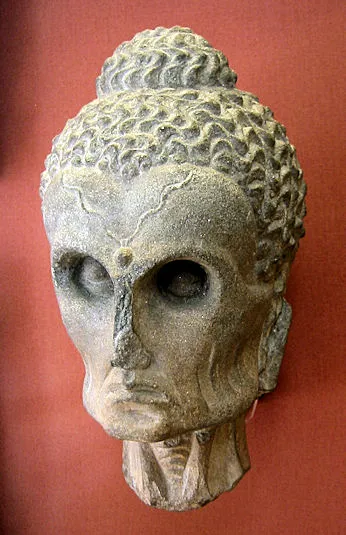
Fig.: तपस्
Buddha as an ascetic before his liberating insight, Gandhara, 2nd/3rd century CE.
(Image source: Details)
त्रिविधदुःखात्यन्तनिवृत्तिरत्यनपुरुषार्थः ॥सांख्यसूत्र १.१॥ (For the Sāṃkhya system see Basham, Wonder pp. 324f.)
Explanation: त्रिविध ३ : "threefold"
Definition of liberation according to the Nyāya system:
बाधनालक्षणं दुःखम् ॥न्यायसूत्र १.२१॥
तदत्यन्तविमोक्षो ऽपवर्गः ॥न्यायसूत्र १.२२॥
Statement of the Materialists according to the सर्वदर्शनसंग्रह :
न स्वर्गो नापवर्गो वा नैवात्मा पारलौकिकः ।
नैव वर्णाश्रमादीnaं क्रियाश्च फलदायिकाः ॥
Explanation: अत्मा = nom. sg. masc. to आत्मन् m. "self, soul; the Absolute, insofar as it is realized in an individual"
A सुभाषितम् :
देवानां करदा विप्रा
विप्राणां करदा नृपाः ।
नृपाणां करदा लोका
लोकानां करदा मही ॥
Explanation: -da at the end of a compound: "giving"
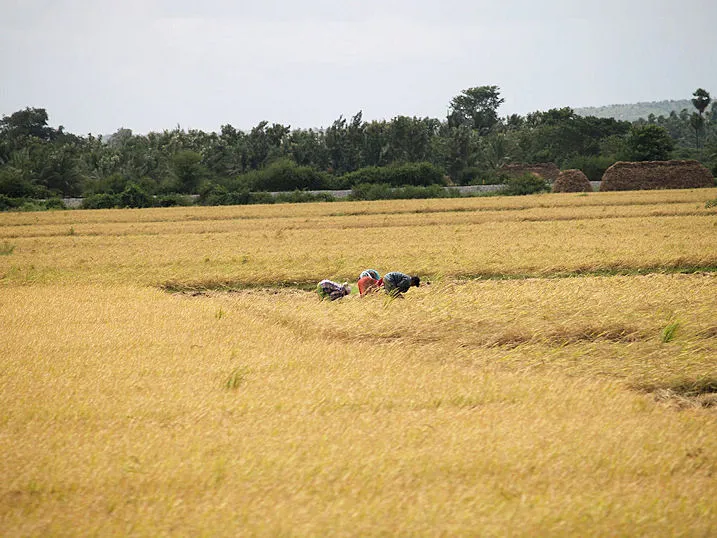
Fig.: लोकानां करदा मही
Karnataka
(Image source: Details)
On matters of ownership:
भार्या पुत्रश्च दासश्च
त्रय एवाधनाः स्मृताः ।
यत्ते समधिगच्छन्ति
यस्य ते तस्य तद्धनम् ॥मनुस्मृति ८.४१६॥
Explanation: त्रयस् = nom. masc. pl. to त्रि "three"
A सुभाषितम् on female beauty:
तनुमध्यं पृथुश्रोणि
रक्तौष्ठमसितेक्षणम् ।
नतनाभि वपुः स्त्रीणां
कं न हन्त्युन्नतस्तनम् ॥
Explanation: all forms except कं and स्त्रीणाम् are nom. sg. neut. and refer to वपुस्.
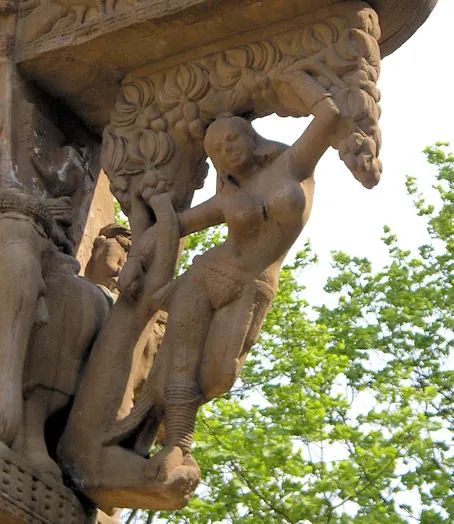
Fig.: तनुमध्यं पृथुश्रोणि
Sanchi = सांची
(Image source: Details)
Yet another सुभाषितम् :
सन्ति पुत्राः सुबहवो
दरिद्राणामनिच्छताम् ।
नास्ति पुत्रः समृद्धानां
विचित्रं विधिचेष्टितम् ॥
Explanation: इच्छताम् = gen. pl. Part Pres. P to इष् : of the desiring
lekt2001: Siemreap (ក្រុងសៀមរាប), Cambodia, 9th century CE [Image source: Wikipedia, Public domain]
lekt2002: [Image source: Contributions to Literary Studies and the History of Ideas in India. -- Bonn, 1926]
lekt2003: Sanchi = सांची [Image source: Wikipedia, Public domain]
lekt2004: Jodhpur = जोधपुर [Image source: Jared Zimmerman. -- http://www.flickr.com/photos/spoinknet/35414570/. -- Accessed on 2008-12-11. -- Creative Commons License (Attribution, Non-commercial, No derivatives)]
lekt2005: Jesus and the other gods, Ahmedabad [Image source: by ganuullu. -- http://www.flickr.com/photos/ganuullu/373131240/. -- Accessed on 2008-12-11. -- Creative Commons License (Attribution, Non-commercial, No derivatives)]
lekt2006: Madhya Pradesh [Image source: dhyanji. -- http://www.flickr.com/photos/dhyanji/147056147/. -- Accessed on 2008-12-11. -- Creative Commons License (Attribution, Non-commercial, No derivatives)]
lekt2007: Chennai = சென்னை [Image source: calamur. -- http://www.flickr.com/photos/gargi/162477734/. -- Accessed on 2008-12-11. -- Creative Commons License (Attribution, Non-commercial, No derivatives)]
lekt2008: Rishikesh = ऋषिकेश. "This is actually part of the Ashram in Rishikesh where the Beatles stayed. This specific part was not there when they were there, but it does look cool." [Image source: by ogimogi. -- http://www.flickr.com/photos/ogimogi/284517677/. -- Accessed on 2008-12-11. -- Creative Commons License (Attribution)]
lekt2009: Karnataka [Image source: mattlogelin. -- http://www.flickr.com/photos/mattlogelin/188758072/. -- Accessed on 2008-12-11. -- Creative Commons License (Attribution, Non-commercial)]
lekt2010: Buddha as an ascetic before his liberating insight, Gandhara, 2nd/3rd century CE. [Image source: Wikipedia, GNU FDL]