
Lectio VIII
A) Explicare hos nominativos per radicem, ex qua derivati sunt, et suffixum nomen faciens. Genus et significationem praebere:
1. lobha: lubh 4 P "cupidum esse" + -a m.: "cupiditas"
2. rakṣa: rakṣ 1 P "custodire" + -a 3: "custodiens, protegens"; m.: "custos"
3. śrotra: śru 5 P "audire" + -tra n.: "auris"
4. mati: man 4 Ā "cogitare" + -ti f.: "sententia, opinio"
5. savana: su 5 U "premere" + -ana n.: "pressura Somae"
6. yodha: yudh 4 ġ "pugnare" + -a m.: "bellator, miles"
7. lābha: labh 1 Ā "accipere" + -a m.: "acceptio, lucrum"
8. kāraṇa: kṛ 8 U "facere" + -ana n.: "causa, ratio"
9. gati: gam 1 P "ire" + -ti f.: "gressus, 'cursus', meta"
10. khādana: khād 1 P "mandere" + -ana n.: "masticatio, consumptio, pabulum"
11. smara: smṛ 1 P "repraesentare" + -a m.: "memoria, memoria, desiderium, amor"
12. sṛṣṭi: sṛj 6 P / 4 A "emanare facere, creare" + -ti: "emanatio, creatio"
13. tantra: tan 8 U "tendere" + -tra n.: "licium, textus"
14. bhāva: bhū 1 P "fieri, esse" + -a m.: "fieri, natura, character"
15. darśana: dṛś (4 P: paśyati) "videre" + -ana n-: "visio, apparitio, conspectus, systema philosophicum"
16. netra: nī 1 U "ducere" + -tra n.: "oculus"
17. veśana: viś 6 P "intrare" + -ana n.: "introitus"
18. kopa: kup 4 P "irasci" + -a m.: "ira"
19. sarga: ṛj 6 P / 4 A "emanare facere, creare" + -a m.: "dimittere, emanatio, creatio"
20. yajana: yaj 1 U "sacrificare" + -ana n.: "sacrificium, locus sacrificii"
21. moha: muḥ 4 P "confusum esse" + -a m.: "confusionis status, caecitas, error"
22. śrava: śru 5 P "audire" + -a m.: "auditus"
23. bhavana: bhū 1 P "fieri, esse" + -ana n.: "fieri, oriri, origo"
24. nīti: nī 1 U "ducere" + -ti f.: "ductus"
25. nartana: nṛt 4 P "saltare" + -ana 3: "saltans, saltator"; n.: "saltatio"
26. jaya: ji 1 P "vincere" + -a m.: "victoria, victoria"
27. nayana: nī 1 U "ducere" + -ana n.: "oculus"
28. śravaṇa: śru 5 P "audire" + -ana n.: "auris"
B) Abstracta formare ad omnia hactenus discita nomina et de eorum significatione cogitare (oraliter)
C) Posita sunt ut objectum directum in singulari et plurali:
kṣatriyas ... rakṣati (brāhmaṇa, vaiśya, śūdra, brāhmaṇī, kṣatriyā)
kṣatriyo brāhmaṇaṃ / brāhmaṇān / vaiśyaṃ / vaiśyān rakṣati. kṣatriyaḥ śūdraṃ / śūdrān. kṣatriyo brāhmaṇīṃ / brāhmaṇī rakṣati. kṣatriyaḥ kṣatriyāṃ / kṣatriyā rakṣati.
क्षत्रियो ब्राह्मणं रक्षति । क्षत्रियो ब्राह्मणान्रक्षति । क्त्रियो वैश्यं रक्षति । क्षत्रियो वैश्यान्रक्षति । क्षत्रियः शूद्रं रक्षति । क्षत्रियः शूद्रान्रक्षति । क्षत्रियो ब्राह्मणीं रक्षति । क्षत्रियो ब्राह्मणी रक्षति । क्षत्रियः क्षत्रियां रक्षति । क्षत्रियः क्षत्रिया रक्षति ॥
D) Traducere
1. Kṣatriyas custodiunt et Brahmanas et Vaiśyas et Śūdras. (2 modi)
kṣatriyā brāhmaṇāṃś ca vaiśyāṃś ca śūdrāṃś ca rakṣanti / kṣatriyā brāhmaṇavaiśyaśūdrān rakṣanti.
क्षत्रिया ब्राह्मणांश्च वैश्यांश्च शूद्रांश्च रक्षन्ति । क्षत्रिया ब्राह्मणवैश्यशूद्रान्रक्षन्ति ।
2. Vir sanctus caelum et inferna videt.
sādhuḥ svargāmś ca narakāmś ca paśyati.
साधुः स्वर्गांश्च नरकांश्च पश्यति ।
3. Eum Kṣatriyas vincit.
kṣatriyāñ jayati.
क्षत्रियञ्जयति ।
4. Illa telam intendit.
tantraṃ tanoti.
तन्त्रं तनोति ।
5. Milites pugnānt.
yodhā yudhyante.
योधा युध्यन्ते ।
6. Brahmanus ignem facit.
brāhmaṇo 'gniṃ karoti.
ब्राह्मणो ऽग्निं करोति ।
7. Brahmanī ignes faciunt.
brāhmaṇā agniṃ kurvanti.
ब्राह्मणा अग्निं कुर्वन्ति ।
8. Quid faciunt hi milites?
ime yodhāḥ kiṃ kurvanti?
इमे योधाः किं कुर्वन्ति ।
9. Quem videt oculus?
netraṃ (nayanaṃ) kaṃ paśyati?
नेत्रं (नयनं) कं पश्यति ।
10. Quid deī concupiscunt?
devāḥ kiṃ lubhyanti?
देवाः किं लुभ्यन्ति ।
11. Quae est causa?
kiṃ kāraṇam?
किं कारणम् ॥
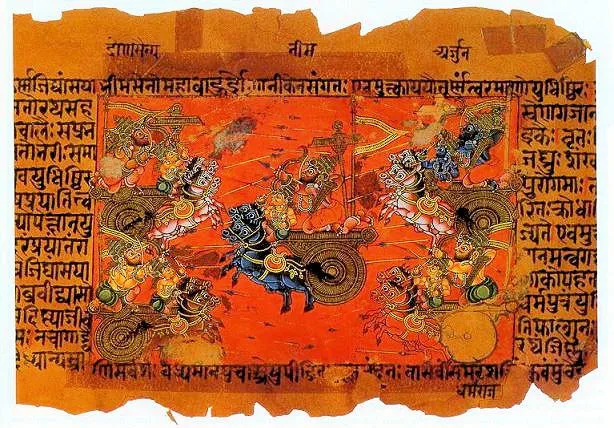
Abb.: इमे योधाः किं कुर्वन्ति ।
(Bildquelle: Details)
Leseexercitium
1. शूद्रो बालं नयति ।
Śūdra puerum ducit.
2. कविर्देवं यजते ।
Poeta deō sacrificat.
3. साधुः फलानि खादति ।
Sanctus fructūs edít.
4. गुरुः क्रोधं जयति ।
Magister iram suam vincit.
5. देवो नरकं सृजति ।
Deus inferna creat.
6. धेनुर्ग्रामं विशति ।
Vaca villum intrat.
7. कामक्रोधलोभा नरकं नयन्ति ।
Concupiscentia, ira et cupiditas ad inferna ducunt.
8. देवतां यजति ।
Ille pro domino sacrificii deī sacrificat.
9. बाला भवति ।
Puella nascitur.
10. सारथी रथं नयति ।
Auriga currum regit.
11. कपयः फलानि खादन्ति ।
Mācī fructūs edunt.
12. बाला लिखति ।
Puella scribit vel pingit.
13. कुमारी गृहं विशति ।
Virgo domum intrat.
14. देवो नागं सृजति ।
Gott schafft den Elefanten bzw. die Schlange bzw. den Nāga.
15. बालो गजं नयति ।
Puer elephāntum ducit.
16. विमला शोचति । (विमला nōmen proprium Vimalā)
Vimalā ist traurig.
17. शुकः पतति ।
Psittacus volat.
18. बालः पत्रिकां लिखति ।
Puer litteram scribit.
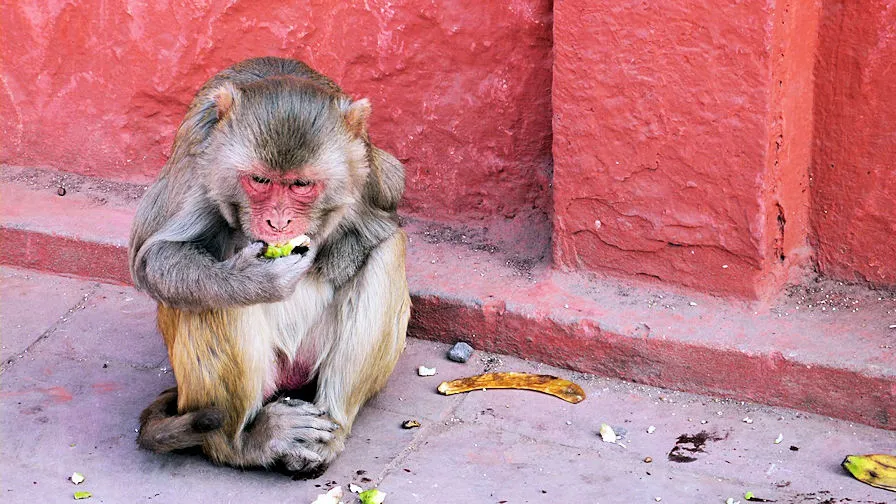
Abb.: कपिः फलं खदति
(Bildquelle: Details)