
Latihan 27
[A] Sisipkan ekspresi dalam kurung ke dalam kalimat-kalimat berikut dalam lokatif (सप्तमी) tunggal dan — jika sesuai — jamak.
रामस् ... वसति । (ग्राम । गुरु । सत्यवान्कविः । पुत्रं लब्धुकामा ब्राह्मणी । गृह । तन्नगरम् । मुह्यञ्छत्रुः)
१. रामो ग्रामे वसति ।
२. रामो गुरौ वसति । (Plural: रामो गुरुषु वसति ।)
३. रामः सत्यवति कवौ वसति । (Plural: रामः सत्यवत्सु कविषु वसति ।)
४. रामः पुत्रं लब्धुकामायाम् ब्राह्मण्याम् वसति । (Plural: रामः पुत्रं लब्धुकामासु ब्राह्मणीषु वसति ।)
५. रामो गृहे वसति । (Plural: रामो गृहेषु वसति ।)
६. रामस् तस्मिन् नगरे वसति ।
७. रामो मुह्यति शत्रौ वसति । (Plural: रामो मुह्यत्सु शत्रुषु वसति ।)
B) Translate and resolve the compounds:
१. धर्मं वदति गुरौ दुर्जना न शृण्वन्ति ॥१॥
Evil people do not listen when the teacher proclaims the Dharma.
२. बुद्धकाले नरैरार्यसत्यानि श्रोतुं शक्यन्ते ॥२॥
(बुद्धस्य काले)
Pada masa seorang Buddha, orang dapat mendengar kebenaran mulia.
३. वसितसुवस्त्रां नरा लुभ्यन्ति । एवं सति सत्यो नरेभ्यः सुवस्त्राणीच्छन्ति ॥३॥
(वसितानि शोभनानि वस्त्राणि यया ताम् । शोभनानि वस्त्राणि)
Men desire a woman who has dressed herself beautifully. Therefore, good women wish for beautiful clothes from men.
४. पुत्रे मृते ऽपुत्रा ब्राह्मणी पुत्रं लब्धुं व्रतं करोति ॥४॥
(पुत्रो नास्ति यस्याः सा)
After her son has died, the childless Brahmin woman makes a vow in order to obtain a son.
५. उपनीतबालैर्गुरुकुल उष्यते ॥५॥
(उपनीतैर्बालैः । गुरोः कुले)
After initiation, the boys reside in the master's family.
६. यज्ञकाले विगते ऽनिष्टदेवा विस्मृतयज्ञब्राह्मणेभ्यः क्रुध्यन्ति ॥६॥
(यज्ञस्य काले । नेष्टा देवाः । विस्मृतो यज्ञो यैस्तेभ्यो ब्राह्मणेभ्यः)
Karena waktu untuk pengorbanan telah lewat, para dewa, yang tidak diberi pengorbanan, marah kepada para Brahmin yang telah lupa akan pengorbanan tersebut.
७. गुरौ तिष्ठति बाल आसितुं नार्हति ॥७॥
While the master stands, a boy must not sit.
८. एवं काले गच्छति स्वाचारक्षत्रिय इष्टं धनं न लभते ॥८॥
(साधुराचारo यस्य सः)
As time passes thus, the Kṣatriya with good conduct does not obtain the desired prosperity.
९. ब्राह्मण्यां महाकवावागच्छन्त्यां ब्राह्मणीपुत्रो ऽप्यागच्छति ॥९॥
(महति कवौ । ब्राह्मण्याः पुत्रः)
As the Brahmin woman arrives at the great poet, her son also arrives.
१०. गुरुषूपदिशत्सु सुनीतबाला वक्तुं नार्हन्ति ॥१०॥
(सुष्ठu नीता बालाः)
When the teachers teach, well-bred children must not chatter (speak).
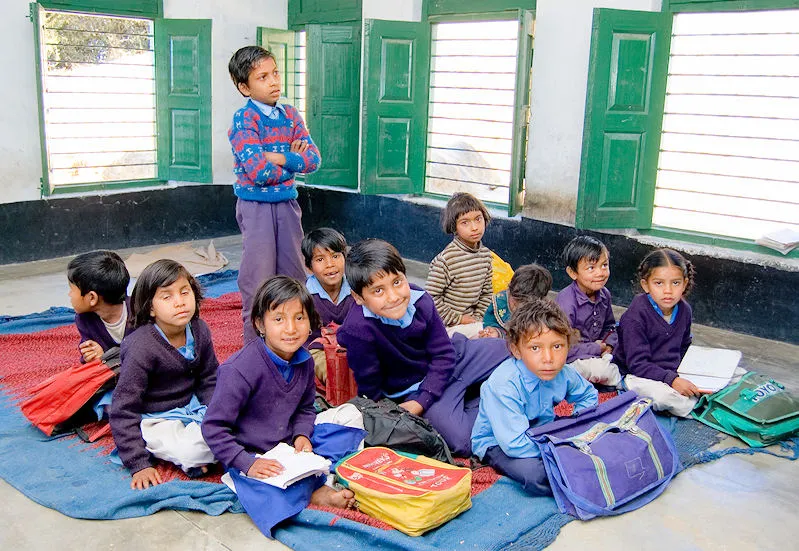
Fig.: गुरुषूपदिशत्सु सुनीतबाला वक्तुं नार्हन्ति
(Image source: Details)